
China's August Trade Data and Global Market Reactions: Navigating Resilience and Risk in a Fractured World


 Aime Summary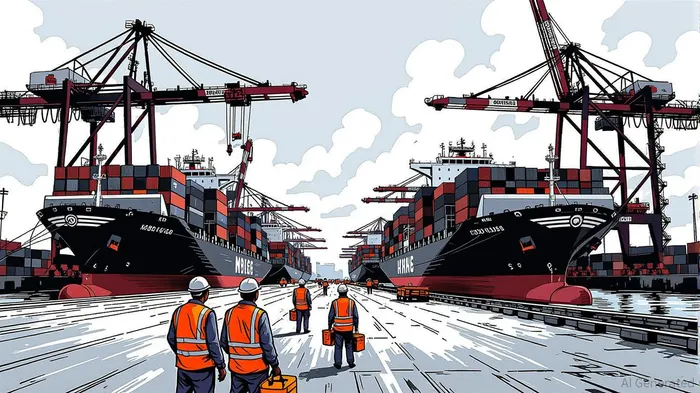
China's August 2025 trade data, released on September 5, 2025, paints a nuanced picture of an economy grappling with U.S. , , and a shifting . , , , reflecting subdued domestic demand. , . These figures underscore a critical question for investors: How is China's export resilience reshaping risk sentiment in Asia-Pacific markets, and what does this mean for global trade-linked equities and commodities?
The U.S. and Export Diversification
The U.S.-China remains a dominant factor. , the threat of 40% penalties on transshipped goods has forced Chinese exporters to pivot to Asia, Africa, and Latin America. However, . Container ship departures to the U.S. , signaling a “mad rat race” to secure alternative buyers. While this diversification may stabilize short-term export volumes, it also exposes vulnerabilities in supply chains reliant on U.S. demand.
For investors, this shift highlights opportunities in regional . Companies like COSCO Shipping (SH:601919) and COSCO Pacific (HK:01172) are likely to benefit from increased intra-Asia logistics demand. Conversely, firms dependent on U.S. markets, such as BYD (HK:1211) and ZTE (SZ:000063), face margin pressures.
: Optimism Amid Caution
Asia-Pacific equities reacted cautiously to the . , . , . This optimism stems from expectations of a prolonged U.S.-China tariff truce and improved corporate earnings in sectors like AI-driven semiconductors (e.g., SK Hynix, KRX:000660).
However, persist. Vietnam's stock market hit record highs, but India's Nifty 50 and Australia's ASX 200 showed mixed performance, reflecting divergent regional exposure to Chinese demand. Investors should monitor central bank policies, particularly in Australia and India, where rate cuts could offset trade-related volatility.
and Geopolitical Risks
China's trade data also reverberated through . Oil prices fell as traders priced in weaker Chinese demand and U.S. tariff impacts, . , however, , reflecting amid geopolitical tensions.
The key takeaway for is the duality of China's role: a stabilizer in gold and a drag on industrial commodities. Producers of high-value-added goods (e.g., , ) may outperform, while coal and steel sectors face headwinds.
for Investors
- : Prioritize companies with diversified export routes and high-value-added products. Avoid firms reliant on U.S. markets without hedging strategies.
- : Allocate to gold and rare earths while cautiously shorting industrial commodities.
- : Overweight Southeast Asian markets (e.g., , Indonesia) as China's accelerates.
The August trade data signals a recalibration of global . While China's shows resilience, the long-term risks from U.S. tariffs and domestic slowdowns remain. Investors must balance optimism about regional trade growth with caution regarding geopolitical and macroeconomic volatility.
In conclusion, the Asia-Pacific market's mixed reaction to China's trade data underscores a . For investors, the path forward lies in hedging against while capitalizing on sectors poised to benefit from China's strategic pivot. The coming months will test the adaptability of both markets and policymakers in this new era of fractured .

Stay ahead of the market.
Get curated U.S. market news, insights and key dates delivered to your inbox.


AInvest
PRO
AInvest
PRO



Comments
No comments yet