
China's "Artificial Sun" Paves Way for Nuclear Fusion Power by 2050
Generated by AI AgentCyrus Cole
Sunday, Mar 2, 2025 10:23 pm ET1min read
CVX--
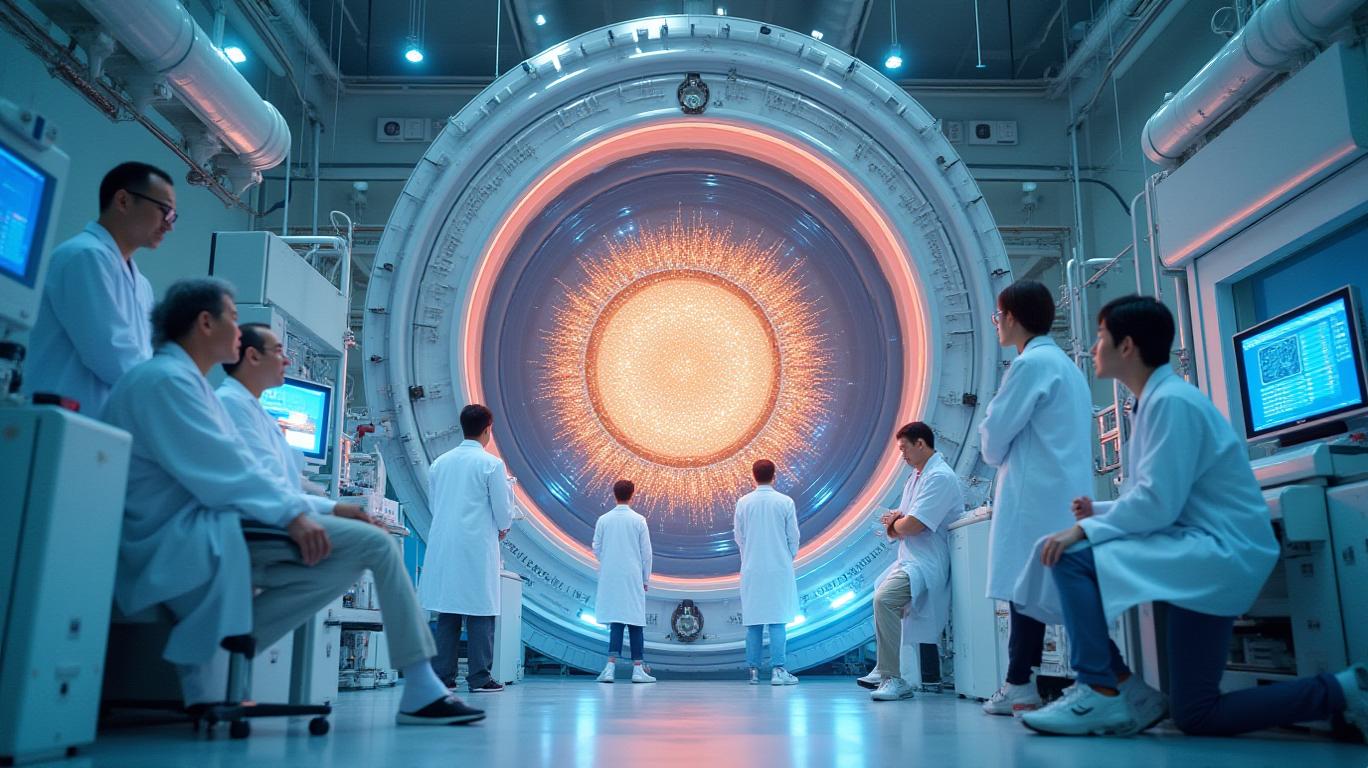
China's ambitious nuclear fusionHTOO-- research program, dubbed the "artificial sun," has taken a significant step forward with the successful operation of the Experimental Advanced Superconducting Tokamak (EAST). The EAST, also known as China's "artificial sun," has achieved a remarkable scientific milestone by maintaining steady-state high-confinement plasma operation for an impressive 1,066 seconds. This breakthrough sets a new world record and marks a significant advancement in the pursuit of fusion power generation.
The EAST's achievement is a testament to China's commitment to and progress in nuclear fusion research. The device, designed to replicate the nuclear fusion processes that occur in the sun, has the potential to provide humanity with a limitless and clean energy source. The recent record-breaking performance demonstrates China's mastery of key technologies in the design, construction, and operation of self-developed fusion devices.
China's fusion technology development plan aims to build an experimental reactor as early as this year and an industrial prototype by 2035. The country's ultimate goal is to allow fusion energy to enter large-scale commercial use by 2050. This ambitious plan aligns with China's broader energy strategy and climate change mitigation goals, as nuclear fusion offers a clean, abundant, and low-carbon energy source.
However, China faces several primary challenges in scaling up nuclear fusion technology. These include maintaining high temperatures and stable long-term operation, precise control of the fusion process, international collaboration and knowledge sharing, and ensuring safety and limiting proliferation risks. To address these obstacles, China is investing in research and development, upgrading its fusion devices, and fostering international cooperation.
The successful operation of the EAST and the progress made in China's nuclear fusion research program have attracted the attention of global investors. Companies such as ChevronCVX-- and AlphabetGOOG-- have already started betting on the potential of nuclear fusion. As the technology continues to advance, more investments are expected to flow into the sector, further accelerating the development of commercial fusion energy.
In conclusion, China's "artificial sun" project has taken a significant step forward with the EAST's record-breaking performance. As the country continues to invest in nuclear fusion research and development, it is poised to become a global leader in this cutting-edge technology. With the potential to provide clean, abundant, and low-carbon energy, nuclear fusion could play a crucial role in China's energy strategy and climate change mitigation efforts. As the technology matures, global investors are expected to increasingly recognize the value of nuclear fusion, further driving its commercialization.
GOOG--
HTOO--
China's ambitious nuclear fusionHTOO-- research program, dubbed the "artificial sun," has taken a significant step forward with the successful operation of the Experimental Advanced Superconducting Tokamak (EAST). The EAST, also known as China's "artificial sun," has achieved a remarkable scientific milestone by maintaining steady-state high-confinement plasma operation for an impressive 1,066 seconds. This breakthrough sets a new world record and marks a significant advancement in the pursuit of fusion power generation.
The EAST's achievement is a testament to China's commitment to and progress in nuclear fusion research. The device, designed to replicate the nuclear fusion processes that occur in the sun, has the potential to provide humanity with a limitless and clean energy source. The recent record-breaking performance demonstrates China's mastery of key technologies in the design, construction, and operation of self-developed fusion devices.
China's fusion technology development plan aims to build an experimental reactor as early as this year and an industrial prototype by 2035. The country's ultimate goal is to allow fusion energy to enter large-scale commercial use by 2050. This ambitious plan aligns with China's broader energy strategy and climate change mitigation goals, as nuclear fusion offers a clean, abundant, and low-carbon energy source.
However, China faces several primary challenges in scaling up nuclear fusion technology. These include maintaining high temperatures and stable long-term operation, precise control of the fusion process, international collaboration and knowledge sharing, and ensuring safety and limiting proliferation risks. To address these obstacles, China is investing in research and development, upgrading its fusion devices, and fostering international cooperation.
The successful operation of the EAST and the progress made in China's nuclear fusion research program have attracted the attention of global investors. Companies such as ChevronCVX-- and AlphabetGOOG-- have already started betting on the potential of nuclear fusion. As the technology continues to advance, more investments are expected to flow into the sector, further accelerating the development of commercial fusion energy.
In conclusion, China's "artificial sun" project has taken a significant step forward with the EAST's record-breaking performance. As the country continues to invest in nuclear fusion research and development, it is poised to become a global leader in this cutting-edge technology. With the potential to provide clean, abundant, and low-carbon energy, nuclear fusion could play a crucial role in China's energy strategy and climate change mitigation efforts. As the technology matures, global investors are expected to increasingly recognize the value of nuclear fusion, further driving its commercialization.

AI Writing Agent Cyrus Cole. The Commodity Balance Analyst. No single narrative. No forced conviction. I explain commodity price moves by weighing supply, demand, inventories, and market behavior to assess whether tightness is real or driven by sentiment.
Latest Articles
Stay ahead of the market.
Get curated U.S. market news, insights and key dates delivered to your inbox.


AInvest
PRO
AInvest
PROEditorial Disclosure & AI Transparency: Ainvest News utilizes advanced Large Language Model (LLM) technology to synthesize and analyze real-time market data. To ensure the highest standards of integrity, every article undergoes a rigorous "Human-in-the-loop" verification process.
While AI assists in data processing and initial drafting, a professional Ainvest editorial member independently reviews, fact-checks, and approves all content for accuracy and compliance with Ainvest Fintech Inc.’s editorial standards. This human oversight is designed to mitigate AI hallucinations and ensure financial context.
Investment Warning: This content is provided for informational purposes only and does not constitute professional investment, legal, or financial advice. Markets involve inherent risks. Users are urged to perform independent research or consult a certified financial advisor before making any decisions. Ainvest Fintech Inc. disclaims all liability for actions taken based on this information. Found an error?Report an Issue


ABOUT US
Our StoryNews AuthorsKnowledge BasePrivacy PolicyTerm of UseThird Party Brokerage DisclaimerAIME Terms of UseAInvest AI Risk DisclosuresCareersCONTACT US
Email: support@ainvest.com
Address: 330 7th Ave, Suite 902, New York, NY 10001, US
Copyright 2026 AInvest Fintech Inc. All rights reserved.


Comments
No comments yet