
U.S. and China Announce One-Year Suspension of Port Fees in Trade Truce Following Trump-Xi Summit
 Aime Summary
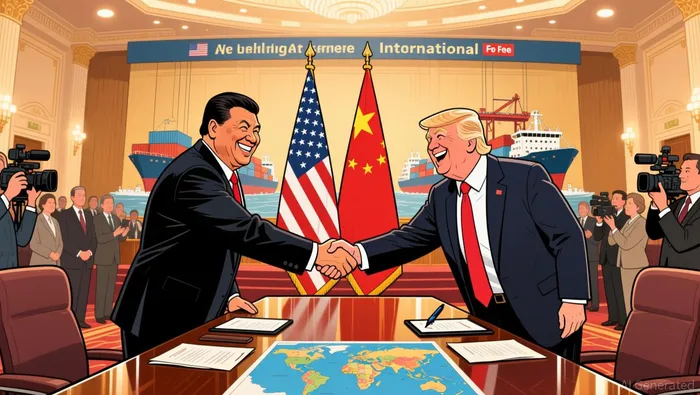
The U.S. and China have reached a mutual agreement to temporarily suspend port fees on each other’s vessels for a one-year period, marking a significant step in their ongoing efforts to de-escalate trade tensions. The decision follows a meeting between U.S. President and Chinese President in South Korea, which produced a broader trade truce.
Under the terms of the agreement, the U.S. will halt its port fees on Chinese-built vessels that dock at American ports, . In a Federal Register notice, the U.S. Trade Representative () outlined plans to pause these actions for a year, , . The notice also specified that tariffs on ship-to-shore cranes and container intermodal chassis will be suspended for the same period.
China has similarly agreed to pause its own retaliatory port fees on U.S.-linked vessels. This move has been welcomed by industry stakeholders who had been affected by the escalating trade-related financial penalties, including companies such as MatsonMATX-- and COSCO.
The U.S. also indicated that it would pursue negotiations with China under of the , addressing the issues raised in its investigation into China’s maritime and shipbuilding practices. While the notice did not specify the structure or objectives of these negotiations, it emphasized that the U.S. will continue efforts to strengthen its domestic shipbuilding industry, including through collaboration with allies.
. The notice also stressed that these actions are part of a broader strategy to reduce U.S. dependence on foreign shipbuilding capacity and to promote a more resilient domestic maritime sector.
The U.S. policy shift reflects ongoing efforts by the administration to recalibrate trade relations with China while maintaining long-term goals of revitalizing American shipbuilding. Meanwhile, the one-year suspension provides a window for both parties to engage in structured negotiations and reassess the broader implications of their respective maritime trade policies.
The global shipping industry has reacted positively to the temporary reprieve, with many observers noting that it offers much-needed stability in a sector that has experienced significant disruption due to escalating trade measures. However, industry leaders and labor representatives have called for clarity on how the U.S. intends to sustain its domestic shipbuilding industry in the long term.

Stay ahead of the market.
Get curated U.S. market news, insights and key dates delivered to your inbox.
AInvest
PRO
AInvest
PRO



Comments
No comments yet