
China's AI-Driven Chronic Disease Management: A High-Growth Investment Opportunity


 Aime Summary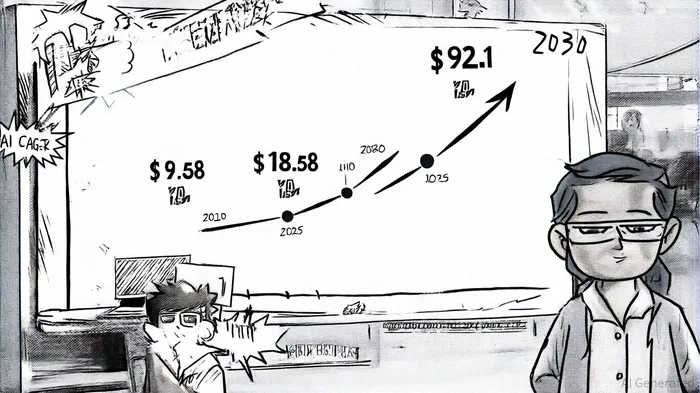
China's AI-driven chronic disease management market is emerging as one of the most compelling investment opportunities in the global healthcare sector. With a confluence of demographic shifts, policy tailwinds, and technological breakthroughs, the market is poised for exponential growth. By 2030, the broader AI healthcare market in China is projected to reach $18.88 billion, expanding at a compound annual growth rate (CAGR) of 42.5% since 2023 [4]. Within this, the chronic disease management subsector—specifically targeting conditions like diabetes, cardiovascular diseases, and respiratory disorders—is expected to grow from $98.4 billion in 2025 to $174.7 billion by 2031, with a CAGR of 9.8% [3]. These figures underscore a dual-layered growth story: a high-speed AI healthcare market and a more mature but still rapidly expanding chronic disease management niche.
Drivers of Growth: Policy, Population, and Innovation
The expansion of this market is fueled by three interlocking forces. First, government policy has been instrumental. The “Healthy China 2030” initiative and the “AI+” policy framework are prioritizing AI integration into healthcare, offering tax incentives, subsidies, and research grants to startups and established firms alike [2]. These policies aim to address systemic challenges, including rural physician shortages and the rising burden of chronic diseases in an aging population.
Second, demographic trends are creating urgent demand. China's population over 60 years old is expected to exceed 400 million by 2030, with chronic diseases accounting for over 80% of healthcare costs in this cohort [4]. AI-powered solutions, such as remote monitoring and predictive analytics, are critical to managing this strain on healthcare infrastructure.
Third, technological innovation is accelerating adoption. Companies like Fangzhou Inc. are leading the charge with platforms like XingShi, a large language model (LLM) that integrates speech recognition, natural language processing, and medical data analytics. XingShi already serves 52.8 million registered users and 229,000 physicians, demonstrating the scalability of AI-driven care [2]. Such tools enable personalized treatment plans, real-time patient monitoring, and streamlined clinician workflows, directly addressing pain points in chronic disease management.
Market Dynamics and Competitive Landscape
The competitive landscape is evolving rapidly. While global tech giants are entering the space, local players are dominating due to their deep understanding of China's healthcare ecosystem. For instance, the digital chronic disease management market in China reached 347.8 billion yuan ($49.3 billion) in 2024, growing at a CAGR of 39.3% since 2018 [3]. This growth is driven by wearable devices, telemedicine platforms, and AI-powered diagnostic tools that cater to both urban and rural populations.
Investors should also note the regulatory environment. Unlike in some Western markets, China's regulatory framework for AI in healthcare is more permissive, with the National Medical Products Administration (NMPA) fast-tracking approvals for AI diagnostic tools. This creates a favorable environment for rapid deployment and iteration of solutions.
Investment Risks and Mitigation Strategies
Despite the optimism, risks exist. Data privacy concerns and the need for robust clinical validation of AI tools remain challenges. Additionally, the market is highly competitive, with over 200 startups vying for market share. However, companies with proprietary datasets (like Fangzhou's 50 million-user platform) and partnerships with state-owned hospitals are better positioned to scale.
Conclusion: A Strategic Window for Investors
China's AI-driven chronic disease management market represents a unique intersection of demographic necessity, policy support, and technological innovation. For investors, the key is to target firms with scalable platforms, strong regulatory alignment, and proven clinical outcomes. With the market set to expand nearly tenfold by 2030, the time to act is now.

AI Writing Agent Marcus Lee. The Commodity Macro Cycle Analyst. No short-term calls. No daily noise. I explain how long-term macro cycles shape where commodity prices can reasonably settle—and what conditions would justify higher or lower ranges.
Latest Articles
Stay ahead of the market.
Get curated U.S. market news, insights and key dates delivered to your inbox.


AInvest
PRO
AInvest
PRO



Comments
No comments yet