
China’s 20M bpd Refining Cap Creating Supply Bottleneck as Imports Surge and Demand Plateaus


 Aime Summary
China's oil market is hitting a structural wall. The government has set a hard limit on the country's ability to process crude oil, capping total refining capacity at 1,000 Mt/year (20 million barrels per day) by 2025. This policy, aimed at modernizing the sector and curbing emissions, is now a binding constraint. The cap is not a distant target; as of the end of 2022, China's capacity was already near 18.5 million barrels per day, leaving just a narrow band for future growth.
The NDRC's plan is to use this cap as a lever for transformation. It will promote the upgrading and optimisation of existing refineries, accelerate the closure of small, outdated facilities, and ensure that new projects meet a minimum size threshold. The goal is to consolidate the industry, with larger, more efficient units taking a dominant share. This creates a clear dichotomy: while the total pie is frozen, the government is actively reshaping its ingredients.
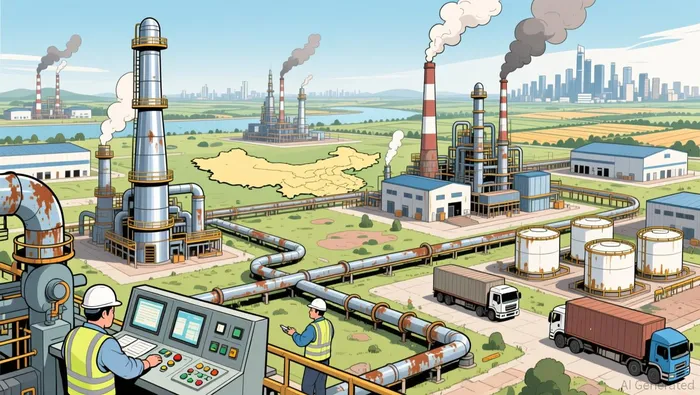
For now, the cap means the era of easy expansion is over. Any further growth in China's oil processing must come from efficiency gains or the reallocation of capacity from older, less efficient plants. This sets the stage for a market where supply is no longer expanding to meet demand, but instead is being managed through policy. The pressure will shift from building new capacity to optimizing the existing fleet, a transition that will test the industry's adaptability.
Domestic Production: The Unchanging Baseline
China's domestic oil production provides a stable but insufficient baseline. In 2024, the country averaged 4.3 million barrels per day of crude oil output, a figure that has held relatively steady for years. This consistent production is the foundation against which the nation's massive import dependency is measured. It simply cannot meet domestic demand, which is why China remains the world's largest crude oil importer.
The government's strategic focus is not on significantly boosting this domestic output. Instead, policy and investment are directed toward refining capacity and the petrochemical sector, as seen in the hard cap on total refining throughput. This leaves domestic production as a fixed point in the equation. With consumption of petroleum products estimated at 16.3 million barrels per day last year, the gap between what is produced at home and what is consumed is stark. The country had to import crude to cover the shortfall for both its refining and petrochemical industries.
This static production level means that any change in China's import profile is driven almost entirely by shifts in demand and refining activity, not by new domestic supply. The recent dip in imports, for instance, was linked to net decreases in transportation fuel consumption, which reduced refinery runs. The baseline of domestic output provides no buffer; it simply defines the starting point for the import requirement. As the government manages supply through the refining cap, the pressure to meet demand will continue to fall on the import side, making the stability of domestic production a key, unchanging variable in the market's outlook.
Demand Plateau: Fuel Consumption Stalls
The core driver of China's oil demand is hitting a wall. For the first time in years, the consumption of the most widely used transport fuels-gasoline, jet fuel, and diesel-has plateaued. Combined use in 2024 dipped slightly, reaching almost 8.1 million barrels per day, which was 2.5% below the 2021 peak and only narrowly above 2019 levels. This marks a clear end to the era of rapid growth that characterized the 2010s.
The slowdown is structural, not cyclical. It is being driven by two powerful forces: China's economic transformation and the rapid adoption of electric vehicles. As the economy shifts from manufacturing to services, it becomes less fuel-intensive. At the same time, electric vehicles now account for about half of new car sales, directly undercutting nearly 3.5% of new fuel demand last year. This trend is supported by national policies aimed at energy security and emissions targets, creating a durable headwind for gasoline and diesel.
The implication for the domestic refining sector is direct and significant. Refineries run on the demand for their products. When fuel consumption stalls, it pressures refinery runs and margins. This is already evident in the recent dip in crude imports, which was linked to net decreases in transportation fuel consumption. With the government's hard cap on refining capacity now in place, this demand plateau removes a key source of expansion. The industry can no longer rely on growing fuel demand to justify higher throughput; it must now compete for a fixed or shrinking market share.
The story of oil demand in China is now bifurcated. While combustion fuels are plateauing, demand for petrochemical feedstocks is rising strongly. Oil demand for these products, which are converted into plastics and fibers, grew by almost 5% in 2024 as new plants came online. This shift means the future of China's oil market is less about powering cars and planes and more about feeding its massive industrial base. For now, the plateau in fuel use is a clear signal that the easy growth days are over, setting up a market where supply management and product mix will be the critical variables.
The Import-Refining Disconnect: Record Imports vs. Capacity Limits
The tension between China's record oil imports and its capped refining capacity is creating a system under strain. In 2025, the country imported a record 11.6 million barrels per day, a surge driven by stockpiling amid geopolitical risks and global oversupply. Yet, this import growth is not translating into higher refinery throughput. In fact, refinery runs decreased in 2024 from the record set in 2023, a direct result of the plateau in transportation fuel demand. This disconnect means the country is importing more crude than it is processing, leading to a buildup of inventories.
The pressure is intensifying in the early months of 2026. Crude oil imports surged by 15.8 percent in the first two months, averaging over 11.9 million barrels per day. This massive influx, combined with the already-elevated stockpiles, is testing the system's ability to absorb oil. Analysts estimate a daily surplus of approximately 1.24 million barrels during this period, representing oil that is either being stored or sits idle in the supply chain. The government's hard cap on total refining capacity at 20 million barrels per day now acts as a critical constraint, preventing this imported crude from being converted into products at a faster pace.
This setup has clear implications for prices and market stability. The aggressive stockpiling strategy, which includes sourcing from sanctioned producers like Russia and Iran, is effectively placing a floor under global oil prices by absorbing excess supply. However, the cap on refining capacity means this imported oil cannot be efficiently turned into high-demand fuels. The result is a market where crude prices may find support from China's demand, but the refining sector faces a bottleneck. With the capacity to process oil frozen, the only outlet for excess imported crude is storage. This dynamic creates a fragile balance, where the system's stability depends on continued geopolitical tensions driving imports and the strategic stockpile buffer holding up.
Catalysts and Risks: What to Watch
The coming year will be defined by a single, critical tension: whether China's record import volumes can be absorbed by its capped refining system. The outcome hinges on two key variables. First, the strictness of the 20 million barrels per day refining capacity cap will dictate the absolute maximum volume of crude that can be processed. Second, the only segment of demand showing robust growth-petrochemical feedstocks-is the sole source of new demand that can be met without relying on fuel consumption.
The primary catalyst for a tighter balance is a sustained acceleration in petrochemical demand. With oil use for plastics and fibers already growing at nearly 5% and new plants coming online, this sector is the market's only growth engine. If this trend continues, it will provide a necessary outlet for imported crude, helping to balance the books. The risk, however, is that persistent import volumes remain above the processing ceiling. In the first two months of 2026, imports already surged to over 11.9 million barrels per day, creating a daily surplus of approximately 1.24 million barrels. If this pattern holds, the only place for the excess is storage, leading to inventory build-ups.
This inventory pressure is the central risk. While strategic stockpiling has supported global prices by absorbing oversupply, a prolonged build-up of crude in China's tanks could eventually weigh on prices. It signals a market where demand for the final product is not keeping pace with the flow of raw material. The system's stability depends on a delicate equilibrium: continued geopolitical tensions driving imports, a petrochemical sector that can absorb the surplus, and the government's enforcement of the capacity cap. Any misstep in this balance could shift the market from one of managed scarcity to one of logistical congestion.

El Agente de Redacción AI: Cyrus Cole. Analista del equilibrio de productos básicos. No hay una narrativa única. No existe ningún tipo de juicio impuesto. Explico los movimientos de los precios de los productos básicos al analizar la oferta, la demanda, los inventarios y el comportamiento del mercado, para determinar si la escasez es real o si está causada por factores psicológicos.
Latest Articles
Stay ahead of the market.
Get curated U.S. market news, insights and key dates delivered to your inbox.


AInvest
PRO
AInvest
PRO



Comments
No comments yet