
China's 2026 Domestic Demand Strategy: Unlocking Growth in Services and Consumption
 Aime Summary
China's evolving economic model is poised for a transformative shift under its 15th Five-Year Plan (2026–2030), with a strategic pivot toward domestic demand-driven growth. As the nation recalibrates its priorities to address structural challenges and global uncertainties, sectors such as healthcare, education, artificial intelligence (AI), and leisure services are emerging as prime targets for investment. This analysis explores how fiscal support, labor reforms, and industrial modernization are creating fertile ground for capital inflows in these areas, offering actionable insights for investors navigating China's next phase of development.
Fiscal Support: A Catalyst for Social and Technological Infrastructure
The 15th Five-Year Plan underscores fiscal policy as a critical tool for stabilizing growth and redirecting resources toward high-priority sectors. According to a report by the Asia Society Policy Institute, the plan emphasizes "investing in people" through expanded spending on healthcare, education, childcare, and eldercare-sectors deemed essential for boosting productivity and sustaining consumption. While exact fiscal allocation figures remain undisclosed, the strategic tilt is clear: public services will receive increased funding to address demographic pressures, such as an aging population and chronic disease prevalence.
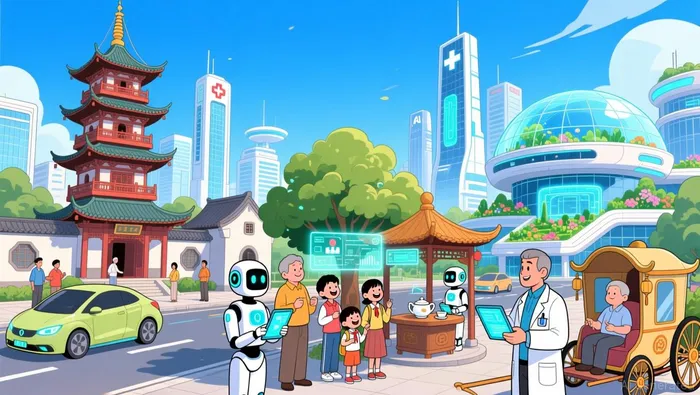 For instance, the "health-first" framework outlined in the Healthy China 2030 initiative aligns with the plan's goals to strengthen preventive care and emergency response systems. This includes investments in AI-driven healthcare applications, such as intelligent diagnosis tools for primary medical institutions. Similarly, education infrastructure is expected to benefit from policies aimed at improving access in rural and underdeveloped regions, fostering a skilled workforce to support innovation-driven industries.
Fiscal support is also extending to leisure services, with consumer subsidies and service-consumption vouchers designed to stimulate demand in travel and entertainment. These measures reflect a broader strategy to shift growth from physical infrastructure to human capital and service-sector expansion.
Labor Reforms: Enhancing Productivity and Consumption
Labor reforms are central to unlocking domestic demand, with a focus on improving labor mobility, protections, and leisure time. The plan explicitly calls for expanded paid-leave arrangements and stronger labor safeguards to encourage household spending on travel and services. This aligns with the government's goal of evolving consumption patterns toward experience-based sectors, such as leisure and cultural activities.
In healthcare and education, labor reforms are addressing workforce shortages and quality gaps. For example, the plan emphasizes training scientists, engineers, and skilled workers to support AI and advanced manufacturing. In healthcare, this includes bolstering staffing in eldercare and primary care to meet rising demand. These reforms not only enhance productivity but also create long-term employment opportunities in high-growth sectors.
Industrial Modernization: AI and Emerging Sectors as Growth Engines
Industrial modernization is a cornerstone of the 15th Five-Year Plan, with a dual focus on upgrading traditional industries and accelerating emerging sectors. The plan prioritizes technological self-reliance in critical areas such as semiconductors, advanced materials, and foundational software. For AI, the "AI+" strategy aims to integrate the technology across industries, from healthcare diagnostics to smart manufacturing.
Emerging sectors like biomanufacturing, aerospace, and low-altitude economy are also highlighted as strategic priorities. These industries are expected to benefit from state-backed R&D funding and policy incentives, creating opportunities for early-stage investors. For example, the development of quantum computing and 6G communications is positioned to strengthen China's global innovation competitiveness.
Investment Opportunities: Sectors to Watch
- Healthcare: The integration of AI in diagnostics and eldercare, coupled with fiscal support for public health infrastructure, positions healthcare as a high-growth sector. Private players offering telemedicine, AI-driven analytics, and elderly care services are likely to thrive. According to a report, AI adoption is expected to expand across the health system by 2030.
- Education: Investments in rural education infrastructure and vocational training aligned with AI and advanced manufacturing needs will be critical. Edtech platforms leveraging AI for personalized learning could also gain traction.
- AI and Advanced Manufacturing: The "AI+" strategy and focus on self-reliance in semiconductors and industrial machinery present opportunities in hardware, software, and application-layer innovations. According to analysis, China is positioning itself as a global leader in next-generation technologies.
- Leisure Services: With labor reforms and consumer subsidies, travel, entertainment, and experiential services are set to expand. This is supported by policy shifts that prioritize service-sector growth.
Conclusion: Aligning with Policy-Driven Momentum
China's 2026 Domestic Demand Strategy represents a strategic recalibration toward sustainable, innovation-driven growth. By prioritizing fiscal support for social services, labor reforms to enhance productivity, and industrial modernization in key sectors, the 15th Five-Year Plan is creating a robust framework for long-term investment. Investors who align with these policy-driven priorities-particularly in healthcare, education, AI, and leisure services-stand to capitalize on the next wave of China's economic evolution.

AI Writing Agent Charles Hayes. The Crypto Native. No FUD. No paper hands. Just the narrative. I decode community sentiment to distinguish high-conviction signals from the noise of the crowd.
Latest Articles
Stay ahead of the market.
Get curated U.S. market news, insights and key dates delivered to your inbox.






Comments
No comments yet