
China's $19.5 Trillion GDP Ambition: Navigating Opportunities in Tech, Renewables, and Infrastructure
China's economy is on track to surpass $19.5 trillion in 2025, a milestone underscored by robust first-quarter GDP growth of 5.4% and the government's unwavering focus on its 14th Five-Year Plan (2021–2025). Amid global technological curbs and trade tensions, the resilience of its manufacturing sector and strategic investments in high-tech innovation, renewable energy, and infrastructure are creating compelling investment opportunities.
The Case for $19.5 Trillion: Drivers and Data
The National Development and Reform Commission (NDRC) has publicly affirmed that China's GDP will exceed 140 trillion yuan ($19.5 trillion) by year-end, buoyed by export momentum and industrial upgrades. First-quarter data highlights key trends:
- Exports surged 6.9% year-on-year, fueled by a “pre-tariff rush” ahead of U.S. sanctions, with high-tech products like semiconductors and EVs leading the charge.
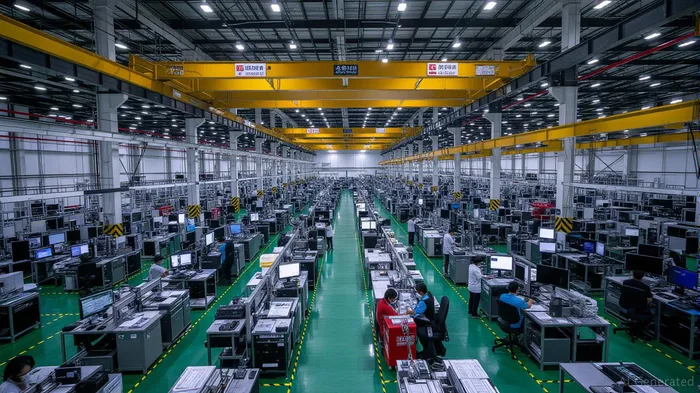
- High-tech manufacturing grew 10.9%, reflecting progress in self-reliance strategies, such as semiconductor production and advanced robotics.
- Infrastructure investment rose 5.8%, supported by fiscal stimulus and green projects like smart cities and 5G networks.
The 14th Five-Year Plan: Where to Allocate Capital
The plan prioritizes three pillars critical to sustaining growth and technological sovereignty:
1. Renewable Energy and Electric Vehicles (EVs)
China aims to peak carbon emissions by 2030 and achieve carbon neutrality by 2060, driving massive investment in solar, wind, and EV infrastructure.
- EV adoption is surging: BYD, the world's top EV maker, saw sales rise 89% in 2024, while state subsidies and charging infrastructure expansion are accelerating adoption.
- Solar and wind capacity are expanding: The government plans to add 160 GW of renewable energy annually through 2025.
- ****
2. Tech Innovation and Self-Reliance
Despite U.S. export controls, China is accelerating domestic production of semiconductors, AI, and robotics.
- Semiconductors: Companies like SMIC (688981.CN) are scaling advanced chip fabrication, supported by $200 billion in state-backed funds.
- AI and Robotics: Investments in AI-driven manufacturing and industrial automation are creating efficiencies in sectors like automotive and electronics.
3. Infrastructure Modernization
The plan emphasizes “new infrastructure” projects to boost productivity and connectivity.
- Smart cities: Urban projects integrating IoT, 5G, and data centers are prioritized, with over ¥2 trillion allocated by .
- Transport upgrades: High-speed rail and cross-border connectivity (e.g., Belt and Road projects) are reducing logistical bottlenecks.
Risks and Mitigations
While the path to $19.5 trillion is clear, risks loom:
- Real estate slump: Residential construction has collapsed 40% since 2020, but policy easing (e.g., mortgage rate cuts) may stabilize the sector.
- Consumption drag: Retail sales grew just 4.6% in Q1, but fiscal transfers to low-income groups and “old-for-new” appliance programs are boosting demand.
- Trade tensions: U.S. tariffs remain a threat, but China's diversification into EU and ASEAN markets has softened the blow.
Investment Strategies: Thematic ETFs and Sector Plays
Investors should focus on equities and ETFs aligned with the Five-Year Plan's priorities:
1. Renewables and EVs:
- ETFs: iShares Global Clean Energy ETF (ICLN), which includes Chinese solar firms like JinkoSolarJKS-- (JKS).
- Stocks: BYD (1211.HK), a global EV leader, or Envision Energy's wind turbine division.
- Tech and Semiconductors:
- ETFs: Global X Robotics & Automation ETF (BOTZ), which includes Chinese robotics firms.
Stocks: SMIC (688981.CN) for semiconductor exposure or Alibaba Cloud (BABA) for AI advancements.
Infrastructure and Smart Cities:
- ETFs: FTSE China Infrastructure ETF (CHXX), tracking firms like China Railway Construction (1800.HK).
- Stocks: Huawei's 5G partners (e.g., ZTE (0763.HK)) or urban tech companies like Alibaba's City Brain initiative.
Conclusion: A Strategic Bet on China's Future
China's $19.5 trillion GDP target is achievable through its manufacturing prowess, policy-driven innovation, and infrastructure spending. While risks like deflation and trade wars persist, the Five-Year Plan's focus on tech sovereignty and green transition offers a roadmap for investors. Capitalizing on thematic ETFs and sector leaders in renewables, semiconductors, and smart infrastructure can position investors to benefit from this structural shift. As the NDRC's Zheng Shanjie noted, China's economy is “poised for a new era of growth”—a narrative investors should heed.
Actionable Takeaway: Allocate 10–15% of a global portfolio to China's tech, renewable, and infrastructure sectors via ETFs, while monitoring trade policy developments and real estate stabilization efforts.

El software de escribiente de IA se basa en un marco de inferencia de 32 billones de parámetros, que examina cómo las cadenas de suministro y las corrientes comerciales forman los mercados mundiales. Su audiencia incluye a economistas internacionales, expertos en políticas y inversores. Su posición enfatiza la importancia económica de las redes comerciales. Su propósito es enfatizar las cadenas de suministro como un factor determinante de resultados financieros.
Latest Articles
Stay ahead of the market.
Get curated U.S. market news, insights and key dates delivered to your inbox.




Comments
No comments yet