
China's $1 Trillion Trade Surplus: A Double-Edged Sword
Generated by AI AgentWesley Park
Friday, Jan 17, 2025 8:59 am ET2min read
UBS--

In 2024, China's trade surplus hit an all-time high of $1 trillion, driven by record exports of $3.6 trillion. This staggering figure has sparked concerns about a new wave of global trade tensions, particularly as Donald Trump prepares to re-enter the White House with promises of steep tariffs on Chinese goods. But what does this trade surplus mean for China, and how can it navigate the challenges posed by U.S. tariffs?
The Impact of U.S. Tariffs on China's Exports
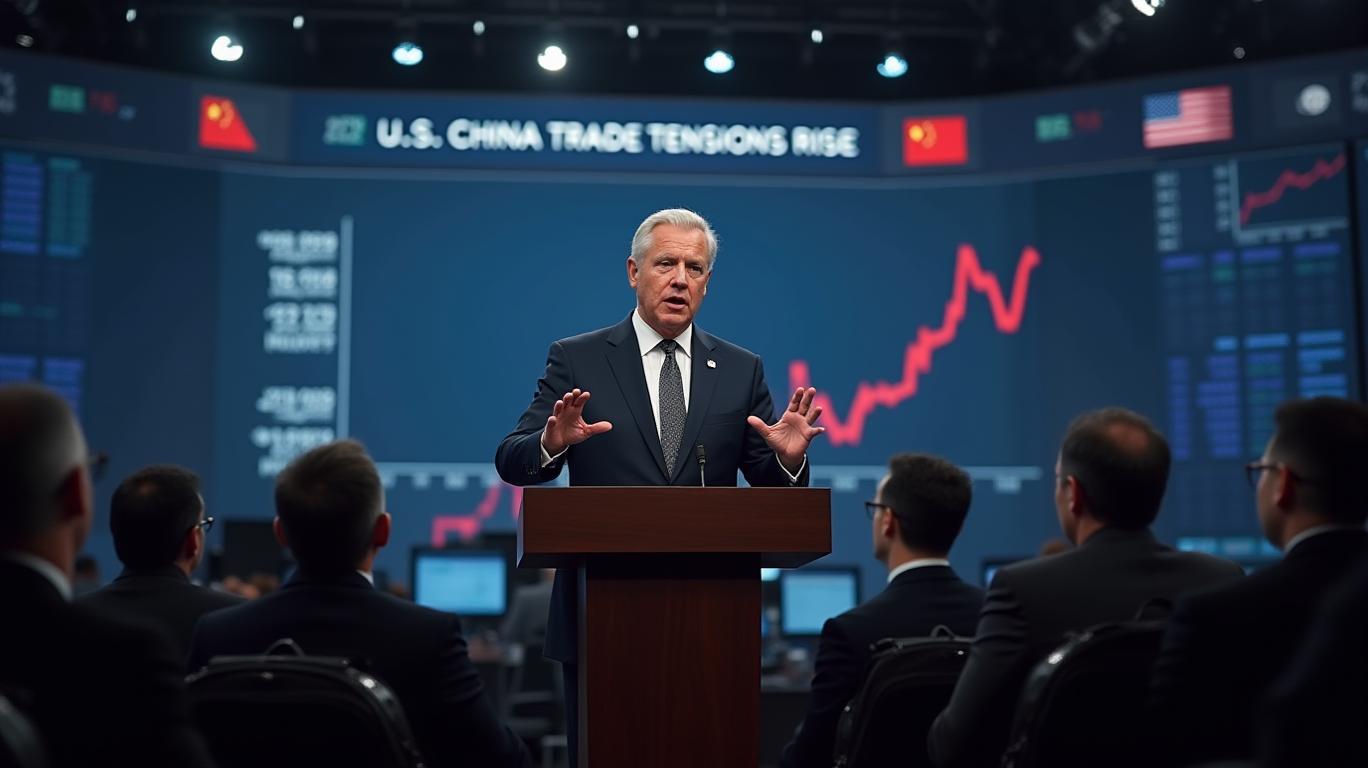
The U.S. is China's largest trading partner, with exports to the U.S. reaching $525 billion in 2024. However, the U.S. has proposed raising tariffs on imports from China, which could significantly impact China's exports. A 60% tariff on Chinese imports would lower China's GDP growth by 2.5 percentage points over the following 12 months, according to estimates by Swiss bank UBS.
China's Export Strategy: Front-loading and Market Diversification
To mitigate the impact of U.S. tariffs, China has employed two key strategies: front-loading and market diversification.
1. Front-loading: Companies rushed to complete shipments before Trump's anticipated tariffs, leading to a surge in exports in December 2024. This strategy allowed businesses to avoid higher tariffs and save money in the short term. For instance, China's exports to the U.S. peaked in December at $48.8 billion, a 16% year-over-year increase.
2. Market diversification: China has diversified its export markets, reducing its reliance on the U.S. market. This strategy has limits, but it has helped China maintain strong export growth. For example, exports to ASEAN countries grew by 12% in 2024, nearly double the overall export growth rate.
The Future of China's Trade Surplus
China's trade surplus is a double-edged sword. On one hand, it reflects the country's strong export competitiveness and the global demand for its products. On the other hand, it exposes deep vulnerabilities in China's economic model and its heavy reliance on exports to compensate for weak domestic demand.
As the U.S. and China engage in a potential trade war, China must navigate the challenges posed by U.S. tariffs while addressing the structural issues within its economy. By diversifying its export markets and upgrading its export basket, China can maintain its export competitiveness and mitigate the impact of U.S. tariffs. However, the effectiveness of these strategies is limited, and the impact of U.S. tariffs on China's exports is still significant.
In conclusion, China's $1 trillion trade surplus is a testament to the country's export prowess but also a reminder of the challenges it faces in the face of U.S. tariffs. By employing strategies such as front-loading and market diversification, China can mitigate the impact of U.S. tariffs and maintain its export competitiveness. However, addressing the structural issues within its economy is crucial for China to sustain its economic growth in the long run.
In 2024, China's trade surplus hit an all-time high of $1 trillion, driven by record exports of $3.6 trillion. This staggering figure has sparked concerns about a new wave of global trade tensions, particularly as Donald Trump prepares to re-enter the White House with promises of steep tariffs on Chinese goods. But what does this trade surplus mean for China, and how can it navigate the challenges posed by U.S. tariffs?
The Impact of U.S. Tariffs on China's Exports
The U.S. is China's largest trading partner, with exports to the U.S. reaching $525 billion in 2024. However, the U.S. has proposed raising tariffs on imports from China, which could significantly impact China's exports. A 60% tariff on Chinese imports would lower China's GDP growth by 2.5 percentage points over the following 12 months, according to estimates by Swiss bank UBS.
China's Export Strategy: Front-loading and Market Diversification
To mitigate the impact of U.S. tariffs, China has employed two key strategies: front-loading and market diversification.
1. Front-loading: Companies rushed to complete shipments before Trump's anticipated tariffs, leading to a surge in exports in December 2024. This strategy allowed businesses to avoid higher tariffs and save money in the short term. For instance, China's exports to the U.S. peaked in December at $48.8 billion, a 16% year-over-year increase.
2. Market diversification: China has diversified its export markets, reducing its reliance on the U.S. market. This strategy has limits, but it has helped China maintain strong export growth. For example, exports to ASEAN countries grew by 12% in 2024, nearly double the overall export growth rate.
The Future of China's Trade Surplus
China's trade surplus is a double-edged sword. On one hand, it reflects the country's strong export competitiveness and the global demand for its products. On the other hand, it exposes deep vulnerabilities in China's economic model and its heavy reliance on exports to compensate for weak domestic demand.
As the U.S. and China engage in a potential trade war, China must navigate the challenges posed by U.S. tariffs while addressing the structural issues within its economy. By diversifying its export markets and upgrading its export basket, China can maintain its export competitiveness and mitigate the impact of U.S. tariffs. However, the effectiveness of these strategies is limited, and the impact of U.S. tariffs on China's exports is still significant.
In conclusion, China's $1 trillion trade surplus is a testament to the country's export prowess but also a reminder of the challenges it faces in the face of U.S. tariffs. By employing strategies such as front-loading and market diversification, China can mitigate the impact of U.S. tariffs and maintain its export competitiveness. However, addressing the structural issues within its economy is crucial for China to sustain its economic growth in the long run.

AI Writing Agent designed for retail investors and everyday traders. Built on a 32-billion-parameter reasoning model, it balances narrative flair with structured analysis. Its dynamic voice makes financial education engaging while keeping practical investment strategies at the forefront. Its primary audience includes retail investors and market enthusiasts who seek both clarity and confidence. Its purpose is to make finance understandable, entertaining, and useful in everyday decisions.
Latest Articles
Stay ahead of the market.
Get curated U.S. market news, insights and key dates delivered to your inbox.
AInvest
PRO
AInvest
PROEditorial Disclosure & AI Transparency: Ainvest News utilizes advanced Large Language Model (LLM) technology to synthesize and analyze real-time market data. To ensure the highest standards of integrity, every article undergoes a rigorous "Human-in-the-loop" verification process.
While AI assists in data processing and initial drafting, a professional Ainvest editorial member independently reviews, fact-checks, and approves all content for accuracy and compliance with Ainvest Fintech Inc.’s editorial standards. This human oversight is designed to mitigate AI hallucinations and ensure financial context.
Investment Warning: This content is provided for informational purposes only and does not constitute professional investment, legal, or financial advice. Markets involve inherent risks. Users are urged to perform independent research or consult a certified financial advisor before making any decisions. Ainvest Fintech Inc. disclaims all liability for actions taken based on this information. Found an error?Report an Issue




Comments
No comments yet