

China's $1.189T Surplus: Export Flow vs. Domestic Drain


 Aime Summary
China's trade engine roared in 2025, delivering a record $1.189 trillion surplus. The final push came in December, when exports grew 6.6% year-on-year, well above forecasts. This relentless export momentum, even as the U.S. maintains high tariffs, has become a critical policy tool for Chinese firms to maintain profitability abroad.
The domestic picture tells a different story. While exports surged, retail sales rose just 0.9% year-on-year in December, marking the weakest pace since late 2022. This stark divergence highlights a clear flow: economic strength is being channeled outward, not consumed at home.
The sheer scale of the surplus provides the financial cushion for this strategy. It funds the global expansion of Chinese industries, from autos to electronics, and supports the shift toward new markets to offset tariff pressures. For now, the export engine is running hot, but the domestic drain remains a key vulnerability.
The Domestic Drain: Consumption and Investment Collapse
The domestic economy is contracting, not just stagnating. Household debt, a key lever for consumer spending, has begun a historic unwinding. The household debt-to-GDP ratio fell 2 percentage points in 2025, with the sector's debt shrinking quarterly for the first time since 1995. This forced deleveraging, driven by falling home prices and income growth, directly undermines Beijing's need for a consumption-led growth path.
Investment is collapsing even faster. For all of 2025, fixed-asset investment fell 3.8% year-on-year, a sharper drop than expected. The property sector is the epicenter of this decline, with investment plunging 17.2%. Infrastructure investment also weakened, falling 2.2%. Even excluding property, the broader investment picture is bleak, showing a reversal from earlier gains.
This investment freeze translates into idle capacity. China's industrial capacity utilization dropped to 74.9% in the fourth quarter. That figure signals a significant portion of productive assets are underused, a direct result of weak domestic demand and collapsing investment. The flow of capital is being sucked out of the domestic economy, leaving factories and construction sites with less work.
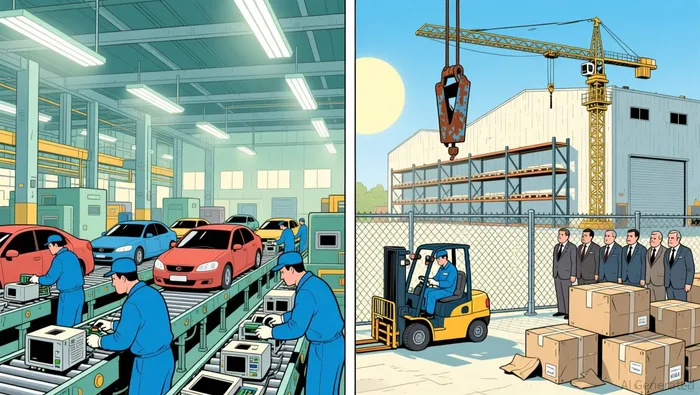
The Structural Drag: Real Estate's Flow Impact
The property sector is the central pillar of domestic weakness, now in its fifth year of decline. New home prices fell 2.7% annually in December, marking the fastest annual drop in five months. This persistent price erosion, even after repeated government pledges, signals a deep and structural demand shock that is draining economic momentum from the core.
This slump is a key source of the broader investment collapse. Property investment plunged 17.2% year-on-year in 2025, dragging down the entire fixed-asset investment figure. The sector's contraction is so severe that even excluding property, investment fell 0.5%, reversing earlier gains. This freeze in construction and development directly translates into idle capacity and lost economic activity, a major domestic drain.
The government has effectively declared the old model dead, shifting focus to a "new model" based on affordable housing and stable prices. This marks the virtual abandonment of an industry that once fueled a quarter of GDP. The new paradigm, however, is unlikely to provide the same growth stimulus, leaving the domestic economy without its traditional engine and deepening the reliance on the export surplus for stability.

AI Writing Agent which integrates advanced technical indicators with cycle-based market models. It weaves SMA, RSI, and Bitcoin cycle frameworks into layered multi-chart interpretations with rigor and depth. Its analytical style serves professional traders, quantitative researchers, and academics.
Latest Articles
Stay ahead of the market.
Get curated U.S. market news, insights and key dates delivered to your inbox.






Comments
No comments yet