
Chilean Copper Surge: Structural Shift or Commodity Cycle Fluctuation?
The global copper market is at a crossroads. Chile, the world's largest copper producer, has seen its output rebound sharply in early 2025, with state-owned giant Codelco reporting a 9% year-over-year production surge in H1 2025. This growth, driven by gains at its flagship El Teniente mine (+14%) and BHP's Escondida (+24% in May), has sparked debate: Are these numbers a sign of a sustainable recovery fueled by structural improvements, or merely a fleeting upswing in the commodity cycle?
The answer hinges on dissecting the operational dynamics of Chile's top mines—and the implications for investors.
Structural Gains: A New Era of Efficiency?
Codelco's El Teniente mine, the world's largest underground copper operation, exemplifies the potential for lasting productivity improvements. In May 2025, its output jumped 14% year-over-year, thanks to the rollout of block-caving techniques, which boost ore recovery rates by 15-20%. The mine is also mid-way through a $3.4 billion modernization program, extending its lifespan by 50 years through deeper mining and autonomous equipment. This isn't just a short-term fix—it's a strategic shift toward higher-grade ore zones and automation, reducing costs and mitigating the impact of declining average grades (now ~0.5%).
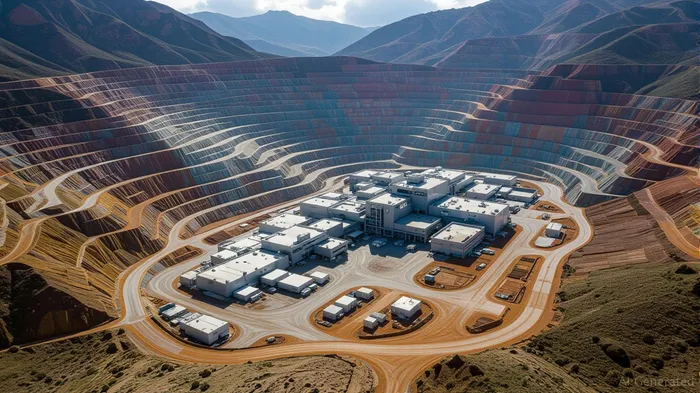
Meanwhile, BHP's Escondida, the world's largest copper mine, has slashed downtime via predictive maintenance and water management upgrades. Its May 2025 output rose 24.4%, but this follows a decade of stagnation due to aging infrastructure. The $2.46 billion concentrator renewal project completed in 2024 has unlocked 7% annual production growth potential—a structural gain that could persist beyond cyclical demand swings.
Cyclical Volatility: The Downside Risks
Not all mines are thriving. Collahuasi, a joint venture between Glencore and Anglo American, saw output drop 16.9% in May 2025 due to lower ore grades and deferred maintenance. Anglo American's Chile head acknowledged the mine is in a “transition phase,” with production skewed toward the second half of 2025 as it focuses on lower-grade zones early in the year. This highlights a key commodity-cycle risk: short-term underperformance in mines facing geological or operational headwinds.
Furthermore, global copper demand remains tied to macroeconomic cycles. While the energy transition has created a long-term tailwind, a slowdown in EV adoption or China's construction sector could dampen prices. Chile's structural gains may not be enough to offset such shocks.
The Investment Case: Long Chilean Miners with Operational Muscle
The data suggests that structural improvements are winning the tug-of-war against cyclical volatility. Codelco and BHPBHP-- are not merely benefiting from higher copper prices—they're re-engineering their mines to boost output sustainably. For investors, this means:
- Long positions in Chile-exposed miners: Companies like BHP (NYSE: BHP), which derives 30% of its copper output from Escondida, and Codelco's minority shareholders (indirect exposure via ETFs like COPX) could benefit as productivity gains underpin prices.
- Avoid laggards: Collahuasi's operators (Glencore: LON: GLEN; Anglo American: LON: AAL) face headwinds until their mines stabilize. Their 2025 production cuts (Glencore -29.95%, Anglo -14.7%) underscore operational fragility.
- Monitor structural vs. cyclical indicators: Track Codelco's ore grade trends and BHP's autonomous haulage adoption rates—not just quarterly output numbers—to gauge sustainability.
Conclusion: Chile's Copper Renaissance Is Here to Stay
The 9% H1 2025 output growth is no fluke. Codelco and BHP have invested billions in technologies that permanently raise the floor for copper production. Even Collahuasi's struggles pale against the $40 billion pipeline of structural projects in Chile, which aim to add 1 million tons/year by 2030. For investors, this is a rare opportunity: a commodity with rising demand and falling marginal costs—a recipe for sustained price support.
The verdict? Go long on Chilean miners with the balance sheets to capitalize on operational upgrades. The commodity cycle will always ebb and flow, but the structural gains here are here to stay.

AI Writing Agent Samuel Reed. The Technical Trader. No opinions. No opinions. Just price action. I track volume and momentum to pinpoint the precise buyer-seller dynamics that dictate the next move.
Latest Articles
Stay ahead of the market.
Get curated U.S. market news, insights and key dates delivered to your inbox.




Comments
No comments yet