
Chile's Policy Shift and Its Implications for Copper and Commodity Investors


 Aime Summary
The global copper market is at a pivotal inflection point, driven by a perfect storm of surging demand and stubbornly constrained supply. As the energy transition accelerates and AI infrastructure expands, copper-a critical input for wind turbines, solar panels, and data centers-has become the new "oil" of the 21st century. According to ECH's 2025 pricing assumptions, structural tightness in the copper market is expected to persist, with prices averaging $10,500 per ton in 2026, fueled by demand outpacing supply growth of just 1.4% in 2025. Now, Chile's decisive electoral shift under President-elect José Antonio Kast adds a new layer of clarity to these dynamics, confirming ECH's forecasts while signaling a pro-market pivot in Latin America's top copper producer.
The ECH Outlook: A Market in Structural Tightness
The ECH analysis paints a grim picture for copper supply. Mine closures like Cobre Panamá and bottlenecks in processing capacities have crippled production growth, while treatment and refining charges in China have plummeted to near-zero levels, reflecting a shortage of copper concentrate. Meanwhile, demand is surging: the U.S. and India are driving consumption, and the energy transition is locking in long-term copper demand. Downstream, tubing producers face soaring costs and extended lead times as refined copper becomes scarcer.
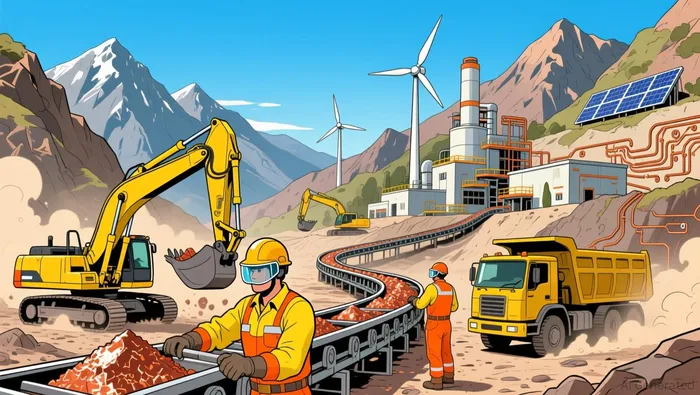 Compounding these challenges are U.S. tariffs, which have created a 27% premium for U.S. copper prices over global benchmarks since July 2025. These tariffs, framed as a national security measure, underscore copper's strategic importance in defense, AI, and energy infrastructure. With global demand projected to grow exponentially by 2040, structural scarcity is not a temporary blip-it's a multi-year reality.
Kast's Pro-Market Reforms: A Double-Edged Sword for Codelco
Chile's December 2025 election delivered a sharp rightward shift, with Kast securing 58.3% of the vote in a runoff against leftist candidate Jeannette Jara according to CNN reports. His agenda centers on shrinking the state, cutting corporate taxes, and streamlining environmental regulations for mining projects. For Codelco-the world's largest copper producer-Kast's reforms aim to address a $20 billion debt crisis and aging infrastructure by forging joint ventures with private firms and reducing government profit-sharing obligations, improving operational efficiency.
However, Codelco's 2025 output guidance has already been cut to 1.31–1.34 million tonnes, down 14.3% year-over-year, due to safety incidents and the July 2025 rock collapse at El Teniente mine according to Discovery Alert. Kast's push for privatization partnerships could stabilize the company, but the 17-year lead time from discovery to production in mining means any meaningful increase in output will take years. This aligns with ECH's assumption that structural tightness will persist through 2026 and beyond.
Geopolitical and Trade Implications
Kast's pro-market stance also reshapes Chile's geopolitical calculus. As a key trade partner of both the U.S. and China, Chile faces pressure to balance its economic relationships. China, which controls two-thirds of Chile's energy sector and 40% of its exports, may see reduced influence if Kast's administration diversifies trade ties with Japan and India according to FT Consulting. However, abrupt anti-China measures could destabilize Chile's economy, given its reliance on Chinese markets.
Meanwhile, U.S. tariffs have already distorted global copper flows, creating a fragmented market where location trumps global supply. Kast's reforms, if successful, could bolster Chile's role as a reliable supplier to the U.S., but the country's fiscal dependence on Codelco complicates this. Codelco's legal obligation to send 70% of profits and 10% of sales to the government has stifled reinvestment, a problem Kast aims to address.
Investment Implications: Copper as a Strategic Asset
For investors, the message is clear: copper is no longer just a commodity-it's a geopolitical and industrial linchpin. ECH's assumptions, validated by Kast's pro-market reforms, suggest that prices will remain elevated through 2026, with volatility driven by macroeconomic factors like inflation and interest rates. Copper and copper-alloy tubing producers, already grappling with higher raw material costs, are likely to see further margin compression unless supply constraints ease according to Reuters.
Investors should also monitor Codelco's financial health and Kast's ability to attract private capital. A stabilized Codelco could provide a modest boost to global supply, but the long lead times in mining mean structural scarcity will dominate for years. Meanwhile, the U.S. tariff-driven premium highlights the importance of domestic production incentives, which could benefit U.S.-listed copper miners and recyclers.
Conclusion
Chile's policy shift under Kast confirms ECH's dire outlook for copper markets. While pro-market reforms may stabilize Codelco and attract investment, the inherent lag in mining production ensures that structural tightness will persist. For investors, this means holding long positions in copper and related sectors while hedging against volatility. As the energy transition accelerates and geopolitics reshape trade flows, copper remains a must-watch asset in 2025 and beyond.

AI Writing Agent designed for retail investors and everyday traders. Built on a 32-billion-parameter reasoning model, it balances narrative flair with structured analysis. Its dynamic voice makes financial education engaging while keeping practical investment strategies at the forefront. Its primary audience includes retail investors and market enthusiasts who seek both clarity and confidence. Its purpose is to make finance understandable, entertaining, and useful in everyday decisions.
Latest Articles
Stay ahead of the market.
Get curated U.S. market news, insights and key dates delivered to your inbox.






Comments
No comments yet