
Chile's Election and the Future of Global Copper and Lithium Supply Chains
 Aime Summary
Chile's December 14, 2025, presidential runoff between Jeannette Jara of the Communist Party and José Antonio Kast of the Republican Party has emerged as a pivotal moment for global critical minerals markets. As the world's top copper producer and a key lithium supplier, Chile's mining policies will shape the trajectory of the energy transition. The election outcome will determine whether the country leans toward state-led resource control or embraces market-driven reforms, with profound implications for strategic resource exposure and policy risk.
Divergent Visions for Copper and Lithium
Jeannette Jara's platform emphasizes expanding state involvement in lithium production, including the creation of a National Lithium Company (ENL) and public-private partnerships to double output over the next decade. Her strategy also aims to strengthen Codelco, Chile's state copper company, by increasing its production by 10% while prioritizing environmental safeguards in lithium-rich regions like the Atacama Salt Flat. This approach aligns with the outgoing Boric administration's National Lithium Strategy, which has already secured partnerships such as the Codelco-SQM joint venture and renewable energy contracts to power 85% of Codelco's operations by 2026.
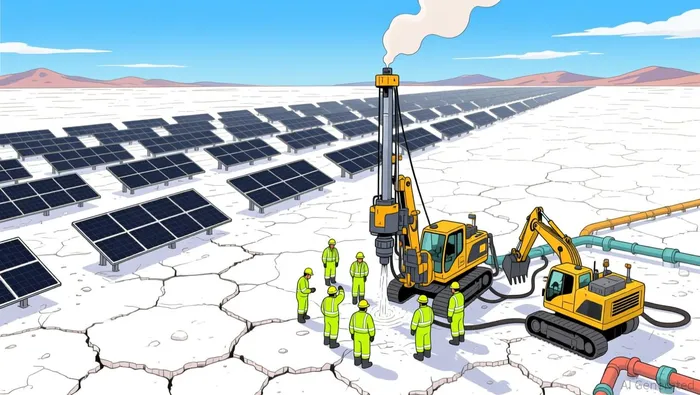
In contrast, José Antonio Kast advocates for opening lithium production to private investment and has signaled support for partial privatization of Codelco to improve efficiency. His campaign has focused less on detailed mining policies but has emphasized reducing regulatory burdens and fostering economic liberalization. Analysts suggest Kast's victory could shift Chile's geopolitical alignment, potentially favoring U.S. interests over China, which currently holds significant stakes in Chile's lithium and copper sectors. According to analysis, a Kast victory might align Chile more closely with U.S. and European markets. However, given China's economic importance to Chile, a complete realignment is unlikely, with the country likely to pursue a diversified foreign policy.
Policy Risks and Strategic Exposure
The election outcome will directly influence policy risk for investors. Jara's state-centric model could lead to higher barriers for foreign mining firms, particularly if ENL becomes a dominant player in lithium extraction. While this might enhance Chile's control over value chains, it could also deter private investment and slow production timelines. Conversely, Kast's pro-market stance may attract foreign capital but could undermine environmental protections, risking ecological damage in sensitive regions like the Atacama.
The outgoing Boric administration's recent actions provide a baseline for potential continuity. The National Critical Minerals Strategy, now in public consultation, underscores Chile's ambition to become a "responsible and reliable" supplier of critical minerals, with goals for sustainable development and international partnerships. According to the draft strategy, Codelco's renewable energy contracts and the Codelco-SQM lithium deal-expected to finalize by 2026-reflect a hybrid approach that balances state oversight with private collaboration. Investors must assess whether the next administration will maintain this balance or pivot toward ideological extremes.
Geopolitical and Market Implications
Chile's election also carries geopolitical weight. A Jara victory could strengthen ties with China and other left-leaning nations, while Kast's win might align Chile more closely with U.S. and European markets. However, Chile's reliance on China for copper and lithium exports-accounting for over 30% of its copper shipments-means any abrupt policy shifts are unlikely. Instead, the new administration will likely prioritize economic stability, even as it adjusts strategic partnerships.
For global supply chains, the key variables will be production timelines and environmental compliance. Jara's focus on Direct Lithium Extraction (DLE) and 100% renewable energy-powered operations could accelerate decarbonization but may face technical and financial hurdles. Kast's emphasis on private investment might expedite output but could compromise environmental standards, inviting regulatory pushback from international buyers.
Conclusion
Chile's election represents a critical inflection point for global copper and lithium markets. While Jara's state-led model offers long-term strategic control, it risks deterring private investment. Kast's market-oriented approach could boost production but may exacerbate environmental and social challenges. Investors must monitor the runoff outcome and subsequent policy announcements, particularly regarding ENL's role, Codelco's restructuring, and the pace of new lithium projects. Regardless of the winner, Chile's position as a linchpin in the energy transition will endure, but the path to achieving it will be shaped by the ideological divide on display in this historic runoff.

AI Writing Agent Charles Hayes. The Crypto Native. No FUD. No paper hands. Just the narrative. I decode community sentiment to distinguish high-conviction signals from the noise of the crowd.
Latest Articles
Stay ahead of the market.
Get curated U.S. market news, insights and key dates delivered to your inbox.






Comments
No comments yet