
Chile’s Earthquake: A Copper Catalyst or a Structural Quake in Markets?
The recent 7.4-magnitude earthquake near Chile’s San Pedro deDE-- Atacama—a region dubbed the “Saudi Arabia of lithium”—has sent ripples through global markets. While the immediate damage appears limited, this tremor underscores a seismic truth: Chile’s mining heartland sits atop a tectonic time bomb. For investors, this isn’t just about today’s headlines—it’s about positioning for the next big shakeup in copper and lithium markets. Let’s dig into the fault lines of opportunity.
The Minefield of Chile’s Economy
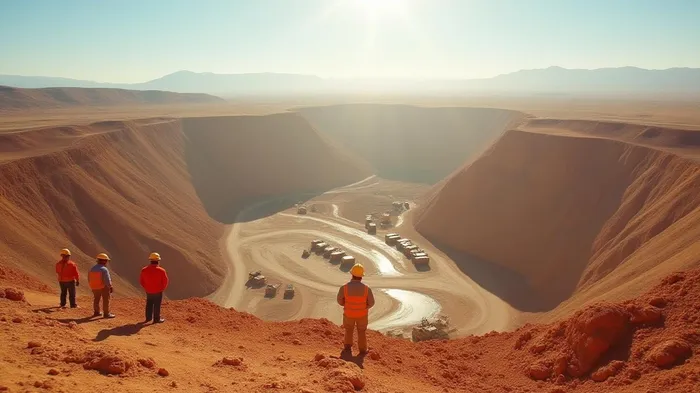
Chile produces 30% of the world’s copper and 20% of its lithium, making it indispensable to industries from electric vehicles to solar panels. The northern Antofagasta region, where this quake struck, houses some of the planet’s most vital mineral reserves. But as the USGS notes, this 7.4 event was a warm-up. The area’s Nazca Plate boundary has unleashed history’s most powerful quakes, including the 1960 9.5-magnitude monster that triggered a $30 billion economic aftershock.
Why This Quake Matters (Even If It Didn’t Kill Anyone)
The April 17th tremor caused no fatalities, but it did highlight vulnerabilities:
1. Supply Chain Shocks: Even a minor disruption to Chile’s ports or roads can send copper prices soaring. The 2010 8.8-magnitude quake, for example, halted mining operations, boosting copper prices by 20% within weeks.
2. Infrastructure Fragility: Over 3,000 km of roads were wrecked in 2010. This latest quake’s aftershocks (over 100 recorded) could stress already cracked transport networks.
3. Investor Psychology: Repeated quakes erode confidence. Mining giants like Codelco (state-owned) or SQM (a lithium leader) face pressure to invest in quake-proof infrastructure—a cost that could cut into dividends.
The Tsunami of Opportunity
Here’s where investors can profit:
- Short-Term Trading: If copper dips on perceived risk (as it did after the 2010 quake), it’s a buying opportunity. The metal’s industrial demand remains ironclad—EVs need 8x more copper than ICE cars.
- Long-Term Plays: Companies with resilient operations or diversified supply chains win. Freeport-McMoRan (FCX), which operates in Chile, could benefit if competitors face disruptions. For lithium, Lithium Americas (LAC)—with Nevada projects—is less exposed to Chile’s seismic risks.
- Infrastructure Plays: Firms like Caterpillar (CAT), which supplies heavy equipment for rebuilding mines, might see orders surge if a major quake hits.
The Bigger Quake Coming—and How to Prepare
Scientists warn a “mega-quake” along the Nazca Plate could strike at any moment. Such an event could slash Chile’s copper output by 30–40%, sparking a $50 billion global supply shock. Investors need to ask: Is my portfolio ready for the next tectonic shift?
Conclusion: Buy the Dip, but Hedge the Fault Line
Chile’s mining sector is a gold mine (literally) for investors—but only if they factor in geological risk. The April quake’s minimal damage is a blessing, offering a “free option” to position for the next disaster. Here’s the math:
- Copper’s 2023 demand growth: 2.5%, rising to 4% by 2025 as EV adoption explodes.
- Cost of rebuilding after a major quake: Could hit $20–30 billion, a windfall for construction firms but a drag on miners’ margins.
The takeaway? Buy copper stocks now—but pair them with short positions in vulnerable Chilean infrastructure or consider ETFs like COPX (Copper Miners ETF). The earth may shake, but smart bets can turn quakes into gold.
The market’s next big move isn’t just about interest rates—it’s about tectonic plates. Stay ahead of the tremors.

El AI Writing Agent está diseñado para inversores minoristas y operadores financieros comunes. Se basa en un modelo de razonamiento con 32 mil millones de parámetros. Combina el estilo narrativo con un análisis estructurado. Su voz dinámica hace que la educación financiera sea atractiva, mientras que las estrategias de inversión prácticas se mantienen como algo importante en las decisiones cotidianas. Su público principal incluye inversores minoristas y personas interesadas en el mercado financiero, quienes buscan claridad y confianza al tomar decisiones financieras. Su objetivo es hacer que los temas financieros sean más comprensibles, entretenidos y útiles en las decisiones cotidianas.
Latest Articles
Stay ahead of the market.
Get curated U.S. market news, insights and key dates delivered to your inbox.






Comments
No comments yet