
Chick-fil-A's Strategic Shift in Licensed Restaurants: A Blueprint for Franchise Optimization and Brand Value Enhancement


 Aime Summary
Operational Realignment: From Licensing to Local Ownership
Chick-fil-A's move to replace licensed locations with owner-operator units is driven by the need to standardize operations and integrate its proprietary technology across all outlets. Licensed locations, which accounted for 425 domestic units as of 2024, have historically lacked access to key tools like the Chick-fil-A App, the Chick-fil-A One® Membership program, and branded gift cards-features that are central to the brand's digital engagement strategy according to the company's update. By transitioning to the owner-operator model, the company ensures that these tools are universally available, fostering a seamless guest experience.
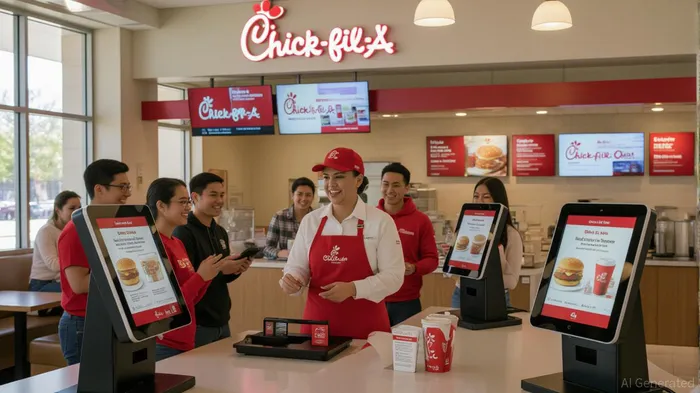 This shift also aligns with Chick-fil-A's emphasis on community engagement. Owner-operators, who manage single units and share profits with the company, are deeply embedded in local operations, a model that has proven successful in traditional franchising according to restaurant industry analysis. The company's Franchise Disclosure Document (FDD) highlights that owner-operators retain ownership of business assets, further incentivizing operational excellence and customer satisfaction as stated in the FDD. For instance, the Purdue University location, already operating under this model, demonstrates how owner-operators can support student employees through Chick-fil-A's Remarkable Futures Scholarships, a benefit previously unavailable at licensed sites according to recent news coverage.
Financial Implications: Boosting Unit Volumes and Revenue
The financial rationale for this transition is compelling. According to industry data, licensed locations typically generate average annual sales of $1.4 million, significantly lower than the $9 million average for traditional franchised units as reported by QSR magazine. By replacing underperforming licensed sites with owner-operator units, Chick-fil-A aims to close this gap, potentially unlocking millions in incremental revenue.
The company's 2024 financials underscore the urgency of this move. Total revenue reached $9.06 billion, with systemwide sales hitting $22.75 billion-a testament to the strength of its core franchise model according to the company's press release. However, the 425 licensed units, with 312 on college campuses and 97 in airports and other non-traditional settings, represent a drag on unit-level performance. Analysts suggest that the transition could enhance profitability by leveraging the owner-operator model's proven scalability and operational discipline according to financial analysis.
Brand Value and Customer Experience: A Sustained Competitive Edge
Chick-fil-A's brand equity, consistently ranked at the top of the American Customer Satisfaction Index (ACSI) for 11 consecutive years, hinges on its ability to deliver a "remarkable" experience as reported by BCG. The shift to owner-operators reinforces this promise by ensuring that all locations-regardless of their setting-adhere to the same high standards. For example, the integration of the Chick-fil-A App and loyalty program across all units will deepen customer engagement, a critical factor in an industry where digital adoption is increasingly synonymous with brand loyalty according to company updates.
Moreover, the transition aligns with Chick-fil-A's broader ethos of community investment. By extending scholarship access to employees at owner-operator sites, the company strengthens its reputation as a socially responsible employer, a factor that resonates with both consumers and investors as noted in recent coverage.
Future Outlook: A Gradual but Strategic Transition
Chick-fil-A has emphasized that the transition will occur gradually, with existing licensed agreements honored as they expire. Each site will be evaluated individually in collaboration with current licensees and administrators, ensuring a smooth handover as detailed in the company's statement. While airport locations remain unaffected, the company's focus on college campuses and other non-traditional settings reflects a calculated expansion strategy.
For investors, the long-term benefits are clear. The owner-operator model's track record of operational consistency and financial performance positions Chick-fil-A to outpace competitors in an increasingly fragmented market. As the transition unfolds over several years, the company is poised to capitalize on its strengths-brand loyalty, technological innovation, and community-centric operations-to drive sustainable growth.
Conclusion
Chick-fil-A's strategic shift in licensed restaurants is more than an operational adjustment; it is a masterclass in franchise optimization. By prioritizing local ownership, integrating digital tools, and enhancing employee benefits, the company is not only addressing current inefficiencies but also future-proofing its business model. For investors, this move reaffirms Chick-fil-A's commitment to maintaining its position as a leader in brand value and operational excellence-a rare combination in the fast-food sector. As the transition progresses, the market will likely view this strategic realignment as a catalyst for long-term value creation.

Delivering real-time insights and analysis on emerging financial trends and market movements.
Latest Articles
Stay ahead of the market.
Get curated U.S. market news, insights and key dates delivered to your inbox.


AInvest
PRO
AInvest
PRO



Comments
No comments yet