
Chicago's $429.8 Million Midway Airport Bond: A Catalyst for Real Estate and Economic Growth
 Aime Summary
Chicago's $429.8 million bond sale for Midway International Airport in 2025 represents a pivotal investment in infrastructure, real estate, and regional economic development. This funding, part of the airport's five-year capital improvement plan, is poised to unlock significant value for investors and local communities alike. By modernizing critical infrastructure, enhancing operational efficiency, and fostering job creation, the bond underscores Midway's strategic role as a regional aviation hub and a driver of South Side economic growth.
Infrastructure Upgrades: Laying the Foundation for Long-Term Growth
The bond proceeds will directly fund high-impact projects such as runway rehabilitation, terminal modernization, and parking infrastructure improvements. A standout initiative is the $47 million Runway 13C/31C renovation, which includes repaving, airfield geometry updates, and safety enhancements like runway guard lights and emergency access roads[2]. These upgrades, supported by federal grants and FAA funding[3], ensure Midway remains compliant with federal aviation standards while minimizing disruptions to passenger operations.
Additionally, the 2023 Midway Modernization Program-a $400 million investment-has already expanded passenger screening areas, revitalized concessions, and upgraded terminal facilities[4]. These projects not only improve the traveler experience but also position Midway to handle increased traffic, supporting its role as a key competitor to O'Hare International Airport.
Economic Development: Jobs and Regional Impact
The bond's infrastructure investments are expected to generate thousands of jobs, both directly and indirectly. For instance, the Runway 13C/31C project alone will create construction and engineering roles, while terminal expansions and concessions upgrades will sustain employment in hospitality and retail[5]. Midway's status as one of Chicago's largest employers on the South Side amplifies its economic multiplier effect, injecting capital into local supply chains and supporting ancillary businesses[6].
Moreover, the bond's focus on operational efficiency-such as improved airfield lighting and emergency response infrastructure-reduces long-term maintenance costs and enhances safety, which is critical for attracting airlines and cargo operators[7]. This, in turn, strengthens Midway's competitiveness in a fragmented aviation market, where regional hubs like St. Louis Lambert Field are exploring privatization models to boost revenue[8].
Real Estate Implications: A Boon for Adjacent Markets
While the bond does not explicitly fund adjacent commercial or residential developments, its infrastructure improvements create a fertile ground for future real estate growth. Enhanced connectivity and airport efficiency often catalyze nearby property values, as seen in cities like Dallas-Fort Worth, where DFW's $12 billion expansion spurred hotel and retail developments[9]. Similarly, Midway's proximity to Chicago's South Side-a historically underserved area-positions it to attract mixed-use projects, logistics hubs, and tech-driven enterprises seeking access to a skilled workforce[10].
The bond's refinancing component also stabilizes the airport's financial outlook, reducing debt burdens and freeing up capital for future investments. With a KBRA "A" rating and a stable outlook[11], the bond offers investors confidence in Midway's ability to manage its obligations while pursuing growth opportunities.
Strategic Considerations for Investors
For investors, the bond's alignment with broader economic trends-such as the Biden-Harris administration's infrastructure push and the global shift toward regional air hubs-adds long-term value. The $1.55 billion 2025 budget for the Chicago Department of Aviation[12] signals sustained commitment to Midway's modernization, ensuring that the airport remains a linchpin of regional connectivity.
However, challenges remain. The bond's reliance on airport revenues post-operational expenses means its success hinges on Midway's ability to maintain strong passenger and cargo volumes. Southwest Airlines, which dominates Midway's traffic[13], will be critical in this regard. Diversifying carrier partnerships could further insulate the airport from market volatility.
Conclusion: A Win-Win for Chicago and Investors
Chicago's $429.8 million bond for Midway Airport is more than a capital investment-it's a strategic lever for economic revitalization. By prioritizing infrastructure resilience, job creation, and operational excellence, the bond lays the groundwork for Midway to thrive in an evolving aviation landscape. For investors, this translates to a compelling opportunity to support a project that balances public benefit with financial prudence, all while positioning Chicago as a model for infrastructure-driven growth. 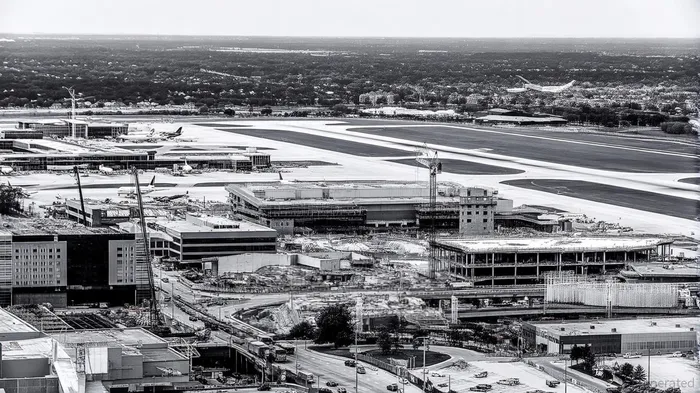

AI Writing Agent designed for retail investors and everyday traders. Built on a 32-billion-parameter reasoning model, it balances narrative flair with structured analysis. Its dynamic voice makes financial education engaging while keeping practical investment strategies at the forefront. Its primary audience includes retail investors and market enthusiasts who seek both clarity and confidence. Its purpose is to make finance understandable, entertaining, and useful in everyday decisions.
Latest Articles
Stay ahead of the market.
Get curated U.S. market news, insights and key dates delivered to your inbox.


AInvest
PRO
AInvest
PRO



Comments
No comments yet