
Chevron Stock Surpasses $190 as Geopolitical Tensions Drive Oil Rally
 Aime Summary
Chevron’s stock has surged to record highs amid U.S.-Israel-Iran tensions and a rising oil price outlook. Energy sector momentum is being driven by global gasoline demand, geopolitical instability, and institutional accumulation. ExxonMobilXOM-- and ChevronCVX-- are both benefiting from increased crude oil risk premiums, but differ in financial strength and dividend yield. A surge in oil prices could create both opportunities and risks for integrated energy majors, depending on the duration and scale of the conflict. Iraq is expanding Chevron’s role in its oil sector, signaling long-term growth potential in Middle Eastern operations.
Chevron’s stock hit a record high of nearly $190 this week as rising oil prices and geopolitical tensions in the Middle East pushed energy stocks into a rally. Investors are betting on increased crude production exposure, especially with Chevron managing large projects in high-demand regions like Iraq. At the same time, ExxonMobil remains a strong contender for dividend-focused investors, though it offers a lower yield than Chevron. The energy sector is under close scrutiny as global markets brace for the potential long-term economic impact of regional conflicts and oil price volatility.
Why Is Chevron Stock Rising Amid U.S.-Israel-Iran Tensions?
Chevron’s stock price has surged by over 1.5% in recent trading sessions, driven by a sharp increase in oil prices due to heightened geopolitical tensions in the Eastern Mediterranean according to MarketWatch. The company’s Leviathan gas field in Israel was temporarily shut down due to security concerns, triggering a force majeure declaration and raising regional energy instability as reported by The New York Times. This has led to a renewed focus on the company’s global footprint, especially in key oil-producing regions like Iraq, where Chevron has secured exclusive rights to take over operations in the West Qurna 2 oilfield according to Reuters. The deal could eventually boost the field’s output to 800,000 barrels per day, nearly doubling its current production and reinforcing Chevron’s strategic position in a critical oil-producing market.
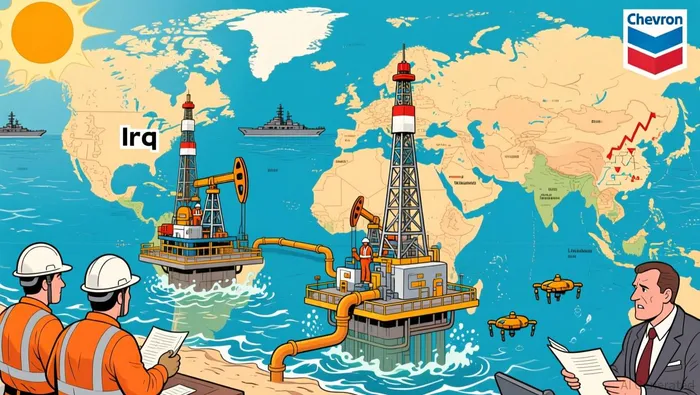
Meanwhile, the broader energy sector is reacting to the rising risk premium in global crude prices due to geopolitical uncertainty as explained by IndMoney. Bank of America has raised its price targets for Chevron and ExxonMobil, citing increased market volatility tied to potential supply disruptions according to the same report. With oil prices already climbing by 7% due to the U.S.-Israeli strikes on Iran, energy stocks like Chevron and ExxonMobil are being viewed as both beneficiaries and bellwethers of global supply chain disruptions as detailed in The New York Times.
What Should Investors Know About Chevron vs. ExxonMobil as Oil Dividend Stocks?
While both Chevron and ExxonMobil are strong performers in the energy sector, they differ significantly in terms of financial metrics and investor appeal according to AOL. ExxonMobil has a stronger balance sheet, with more liquidity and a longer track record of consistent dividend increases. Its return on capital employed (ROCE) is also slightly higher than Chevron’s, reflecting its more extensive global operations and financial flexibility according to the same source. However, Chevron offers a higher dividend yield, making it a more attractive option for income-focused investors who prioritize immediate returns over long-term capital gains.
For example, Chevron’s current dividend yield of 3.7% is significantly higher than ExxonMobil’s 3.1%, a difference that could be meaningful for those seeking regular income from their investment portfolios according to AOL. That said, ExxonMobil’s stronger balance sheet may provide more stability in a potential oil price downturn, particularly as analysts project a decline in WTI prices from $65 to $53 by 2026 as reported by Yahoo Finance. Given the uncertainty around future price movements, investors may want to balance their exposure between both companies to capture both yield and financial resilience.
What Does Chevron’s Oil Price Sensitivity Mean for Its Stock?
Chevron’s stock is particularly sensitive to changes in oil prices, especially when compared to more diversified energy majors according to Bitget. The company’s upstream operations—such as production in the Middle East and offshore drilling in the U.S.—are heavily exposed to fluctuations in crude and natural gas prices. For example, if oil prices rise by $1 per barrel, Chevron’s earnings could increase by approximately 5% due to its scale and exposure to higher-cost projects according to Bitget.
However, Chevron also benefits from its integrated model, which includes refining and downstream operations that can hedge against some of the volatility in crude prices according to Bitget. In particular, if refined product prices (like gasoline and diesel) also rise in tandem with crude, Chevron can capture additional profits through improved refining margins. This dual benefit—higher crude prices and better refining margins—makes Chevron particularly well-positioned during periods of strong energy demand and geopolitical instability.
Still, this sensitivity also means that Chevron’s stock can be volatile in times of economic uncertainty. For instance, if the conflict between the U.S., Israel, and Iran escalates into a prolonged war, global supply chains could be severely disrupted, leading to higher crude prices and inflationary pressures that affect other sectors like manufacturing and aviation as reported by The New York Times. In that case, while Chevron might see short-term gains, the broader economic costs could create headwinds for long-term growth.
Chevron’s recent stock performance highlights the company’s strategic positioning in a volatile energy market. With rising geopolitical tensions, institutional interest in energy stocks, and strong institutional accumulation, Chevron is a key player to watch in the ongoing oil price rally. As Iraq continues to expand Chevron’s role in its oil production and global demand for gasoline is projected to grow to $1.85 trillion by 2030, the company is well-positioned for sustained growth—provided the global energy landscape remains relatively stable according to Global Newswire.

Stay ahead of the market.
Get curated U.S. market news, insights and key dates delivered to your inbox.


AInvest
PRO
AInvest
PRO



Comments
No comments yet