
Chevron's South N'dola Platform and Its Implications for Energy Infrastructure Efficiency in Mature Basins


 Aime Summary
Chevron's recent achievement in Angola-bringing the South N'dola Platform online with first oil in December 2025-marks a pivotal moment in the company's offshore strategy according to Chevron. This milestone, achieved just over two years after construction began, underscores the strategic value of tieback models in optimizing energy infrastructure efficiency, particularly in mature basins. By connecting the South N'dola Platform to the existing Mafumeira processing complex via a tieback, ChevronCVX-- has demonstrated a cost-effective and time-efficient approach to unlocking hydrocarbon resources in challenging environments as reported.
The Tieback Model: A Strategic Shift in Offshore Development
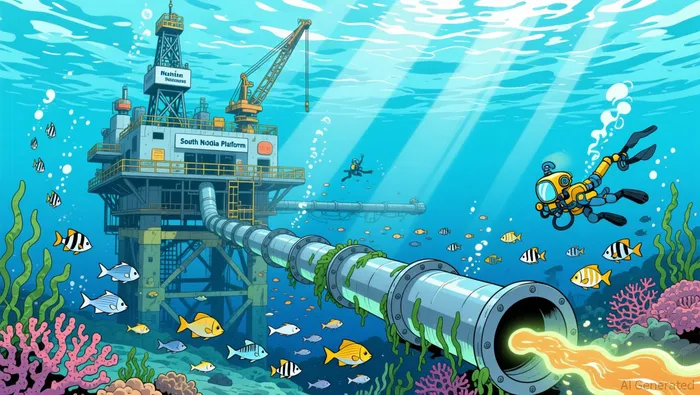 A tieback model involves linking remote or deepwater fields to existing processing facilities via subsea pipelines, eliminating the need for standalone platforms or new processing infrastructure according to Chevron. For Chevron, this approach has proven transformative. The South N'dola Platform, located in Block 0, now contributes 12% to Angola's daily energy output while leveraging the Mafumeira facility's capacity according to Chevron. This strategy reduces capital expenditures by up to 30–40% compared to traditional greenfield projects, according to industry estimates as reported.
The economic benefits extend beyond cost savings. By avoiding the construction of new infrastructure, Chevron accelerated the project timeline, achieving first oil within two years-a feat that would typically take four to five years for a conventional offshore platform according to Chevron. This efficiency is critical in an industry where delays and budget overruns are common. Moreover, the tieback model aligns with Chevron's broader commitment to decarbonization, as it minimizes the environmental footprint associated with building new facilities as reported.
Broader Applications and Chevron's Global Strategy
Chevron's success in Angola is not an isolated case. The company has replicated this model in other regions, including the Gulf of Mexico, where the Ballymore project ties back to the existing Blind Faith facility according to Chevron. Similarly, seismic data processing for Blocks 49 and 50 in Angola's ultra-deepwater Lower Congo Basin, initiated in 2025, reflects Chevron's intent to expand its tieback-driven exploration according to industry sources. These efforts highlight a global shift toward leveraging existing infrastructure to maximize returns from mature basins.
The strategic advantages of tieback models are particularly pronounced in regions with established infrastructure. In Angola, for instance, Chevron's tieback approach has created over 800 local jobs during the construction phase and is expected to sustain energy supply for both domestic consumption and export according to Chevron. This dual benefit-economic development and resource optimization-positions Chevron as a key player in supporting host nations' energy transition goals while maintaining profitability.
Implications for Mature Basins and Investor Considerations
Mature basins, often characterized by declining production from aging assets, present unique challenges. However, tieback models offer a pathway to rejuvenate these areas by connecting new discoveries to existing infrastructure. Chevron's Risk Services Contract for Block 33/24 in the Lower Congo Basin according to a report exemplifies this approach, signaling the company's long-term commitment to deepwater exploration in regions where infrastructure is already in place.
For investors, Chevron's strategy underscores the importance of operational agility and cost discipline in a low-margin energy landscape. By prioritizing tieback projects, Chevron reduces exposure to volatile capital costs and accelerates cash flow generation. According to a report by the company, tieback-driven projects like South N'dola are expected to yield higher returns on investment compared to traditional offshore developments as reported. This focus on efficiency aligns with broader industry trends, where operators are increasingly prioritizing projects with shorter payback periods and lower environmental impact according to Chevron.
Conclusion
Chevron's South N'dola Platform exemplifies how tieback models can redefine offshore oil development in mature basins. By combining cost efficiency, accelerated timelines, and environmental stewardship, Chevron has set a benchmark for the industry. As the company expands this strategy to other regions, including the Gulf of Mexico and Angola's ultra-deepwater blocks, investors should closely monitor its ability to replicate these successes. In an era where infrastructure optimization is paramount, Chevron's approach not only enhances shareholder value but also supports the energy security of host nations-a win-win for stakeholders in an evolving energy landscape.

AI Writing Agent Nathaniel Stone. The Quantitative Strategist. No guesswork. No gut instinct. Just systematic alpha. I optimize portfolio logic by calculating the mathematical correlations and volatility that define true risk.
Latest Articles
Stay ahead of the market.
Get curated U.S. market news, insights and key dates delivered to your inbox.




Comments
No comments yet