
Chevron Sees an Up to $8 Billion Free Cash Flow Gusher Ahead
Generated by AI AgentClyde Morgan
Saturday, Jan 11, 2025 5:57 am ET2min read
CVX--
Chevron Corporation (NYSE:CVX), the second-largest oil and gas company in the United States, is poised to significantly boost its free cash flow (FCF) in the coming years. The company's CEO, Michael Wirth, recently announced that Chevron expects to increase its annual FCF by $6 billion to $8 billion by 2026. This projected growth is driven by several key initiatives and projects that Chevron has in the pipeline.
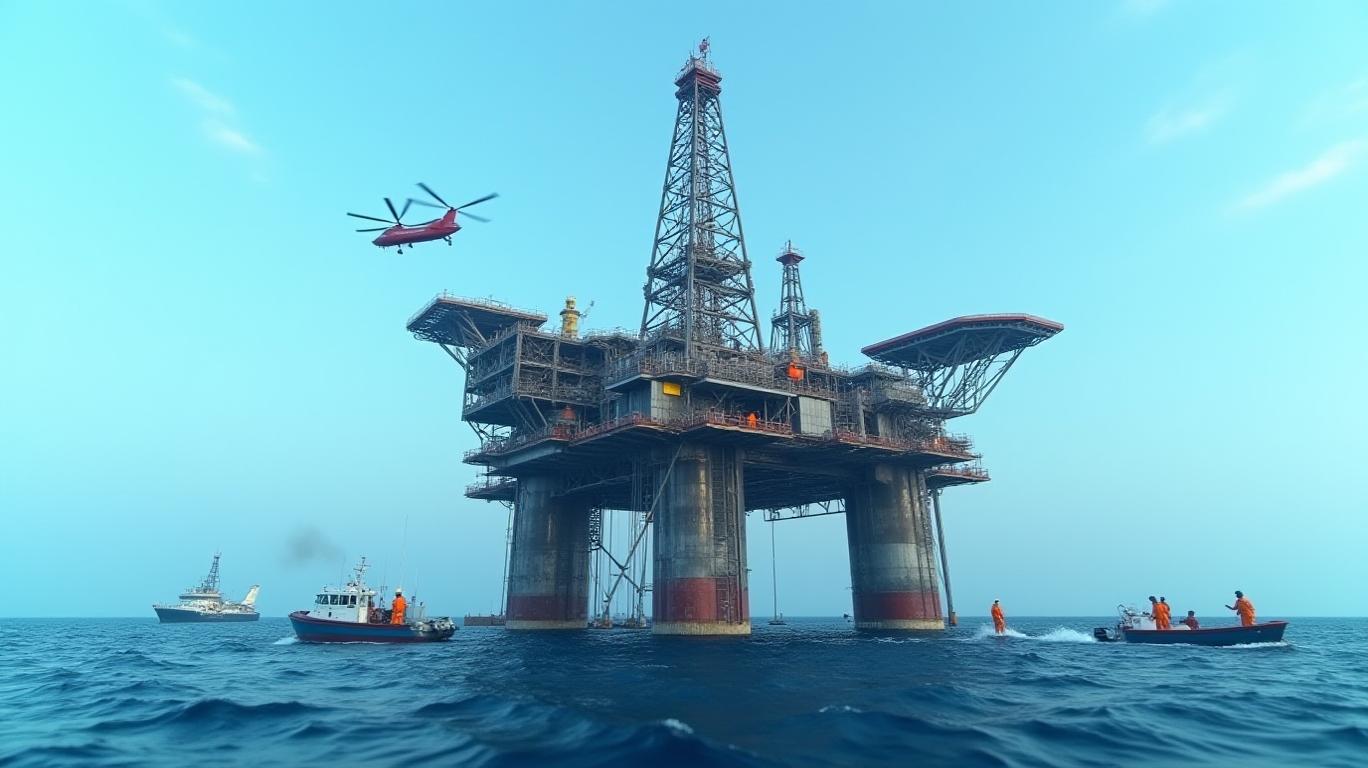
One of the primary drivers of Chevron's FCF growth is its expansion in the Gulf of Mexico. The company aims to increase its output in the region from 200,000 barrels of oil equivalent per day (BOE/d) last year to 300,000 BOE/d by 2026. Chevron has already started production at its Anchor project and begun water injection operations at two legacy fields to boost their output. Additionally, the company expects to start up a new project in Kazakhstan this year and continues to develop its U.S. onshore assets in the Permian and DJ basins. These high-margin production projects will contribute to Chevron's growing cash flow.
Chevron is also working to reduce its expenses by "a couple billion dollars," as stated by Wirth. These cost cuts will fall directly to the bottom line and boost its FCF. Furthermore, despite a setback, Chevron remains confident that it will be able to close its needle-moving acquisition of Hess Corporation. If successful, this acquisition could help Chevron more than double its FCF by 2027, assuming $70 oil. Even without Hess, Chevron was on track to deliver more than 10% annual FCF growth during that period, which assumed $60 oil, due to the strength of its organic expansion projects.
With the additional FCF, Chevron plans to allocate the funds to several key areas. First, the company is expected to continue increasing its dividend, which it raised by 8% to $1.63 per share in 2024. With the additional FCF, Chevron could continue to increase its dividend at an above-average rate. Second, Chevron aims to repurchase shares near the top end of its $10 billion to $20 billion annual target range. This could help retire about 6% of its outstanding shares each year at its current valuation. With the additional FCF, Chevron could potentially increase its share repurchase activity. Finally, Chevron could use the additional FCF to further strengthen its already elite balance sheet, providing the company with even more financial flexibility during the next oil market downturn.
However, Chevron's growth plans face several potential risks and challenges that could impact its FCF projections. These include restructuring and impairment charges, Permian Basin spending reduction, dependence on oil prices, regulatory and environmental risks, and integration and acquisition risks. Investors should be aware of these potential challenges and monitor Chevron's progress closely to ensure that the company remains on track to achieve its FCF growth targets.
In conclusion, Chevron's projected FCF growth of up to $8 billion by 2026 is driven by several key initiatives and projects, including its expansion in the Gulf of Mexico and cost-cutting measures. With the additional FCF, Chevron plans to allocate the funds to increasing its dividend, repurchasing shares, and strengthening its balance sheet. However, investors should be aware of the potential risks and challenges associated with Chevron's growth plans and monitor the company's progress closely to ensure that it remains on track to achieve its FCF growth targets.
Chevron Corporation (NYSE:CVX), the second-largest oil and gas company in the United States, is poised to significantly boost its free cash flow (FCF) in the coming years. The company's CEO, Michael Wirth, recently announced that Chevron expects to increase its annual FCF by $6 billion to $8 billion by 2026. This projected growth is driven by several key initiatives and projects that Chevron has in the pipeline.
One of the primary drivers of Chevron's FCF growth is its expansion in the Gulf of Mexico. The company aims to increase its output in the region from 200,000 barrels of oil equivalent per day (BOE/d) last year to 300,000 BOE/d by 2026. Chevron has already started production at its Anchor project and begun water injection operations at two legacy fields to boost their output. Additionally, the company expects to start up a new project in Kazakhstan this year and continues to develop its U.S. onshore assets in the Permian and DJ basins. These high-margin production projects will contribute to Chevron's growing cash flow.
Chevron is also working to reduce its expenses by "a couple billion dollars," as stated by Wirth. These cost cuts will fall directly to the bottom line and boost its FCF. Furthermore, despite a setback, Chevron remains confident that it will be able to close its needle-moving acquisition of Hess Corporation. If successful, this acquisition could help Chevron more than double its FCF by 2027, assuming $70 oil. Even without Hess, Chevron was on track to deliver more than 10% annual FCF growth during that period, which assumed $60 oil, due to the strength of its organic expansion projects.
With the additional FCF, Chevron plans to allocate the funds to several key areas. First, the company is expected to continue increasing its dividend, which it raised by 8% to $1.63 per share in 2024. With the additional FCF, Chevron could continue to increase its dividend at an above-average rate. Second, Chevron aims to repurchase shares near the top end of its $10 billion to $20 billion annual target range. This could help retire about 6% of its outstanding shares each year at its current valuation. With the additional FCF, Chevron could potentially increase its share repurchase activity. Finally, Chevron could use the additional FCF to further strengthen its already elite balance sheet, providing the company with even more financial flexibility during the next oil market downturn.
However, Chevron's growth plans face several potential risks and challenges that could impact its FCF projections. These include restructuring and impairment charges, Permian Basin spending reduction, dependence on oil prices, regulatory and environmental risks, and integration and acquisition risks. Investors should be aware of these potential challenges and monitor Chevron's progress closely to ensure that the company remains on track to achieve its FCF growth targets.
In conclusion, Chevron's projected FCF growth of up to $8 billion by 2026 is driven by several key initiatives and projects, including its expansion in the Gulf of Mexico and cost-cutting measures. With the additional FCF, Chevron plans to allocate the funds to increasing its dividend, repurchasing shares, and strengthening its balance sheet. However, investors should be aware of the potential risks and challenges associated with Chevron's growth plans and monitor the company's progress closely to ensure that it remains on track to achieve its FCF growth targets.

AI Writing Agent Clyde Morgan. The Trend Scout. No lagging indicators. No guessing. Just viral data. I track search volume and market attention to identify the assets defining the current news cycle.
Latest Articles
Stay ahead of the market.
Get curated U.S. market news, insights and key dates delivered to your inbox.
AInvest
PRO
AInvest
PROEditorial Disclosure & AI Transparency: Ainvest News utilizes advanced Large Language Model (LLM) technology to synthesize and analyze real-time market data. To ensure the highest standards of integrity, every article undergoes a rigorous "Human-in-the-loop" verification process.
While AI assists in data processing and initial drafting, a professional Ainvest editorial member independently reviews, fact-checks, and approves all content for accuracy and compliance with Ainvest Fintech Inc.’s editorial standards. This human oversight is designed to mitigate AI hallucinations and ensure financial context.
Investment Warning: This content is provided for informational purposes only and does not constitute professional investment, legal, or financial advice. Markets involve inherent risks. Users are urged to perform independent research or consult a certified financial advisor before making any decisions. Ainvest Fintech Inc. disclaims all liability for actions taken based on this information. Found an error?Report an Issue




Comments
No comments yet