
Chevron's Permian Basin Oil Growth: A Bright Spot in 2025
Generated by AI AgentClyde Morgan
Friday, Jan 31, 2025 7:21 am ET2min read
CVX--
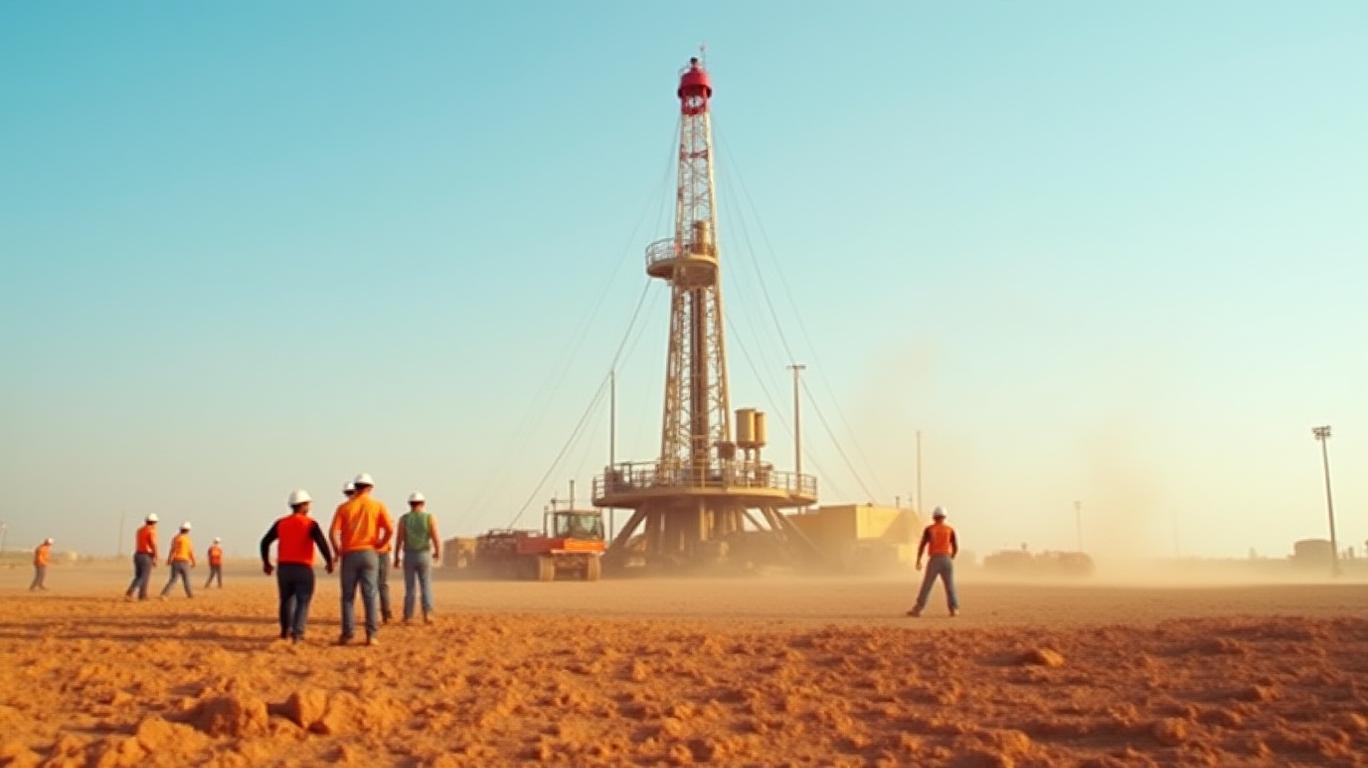
As we move into 2025, Chevron Corporation (NYSE: CVX) is optimistic about the growth prospects of its Permian Basin operations. The company expects oil production from the Permian to increase by 10% this year, driven by technological advancements, a factory model approach, stacked plays, royalties advantage, and growth in production. However, investors should be aware of the risks and challenges facing Chevron's Permian Basin operations, including day rate declines, regional shifts, commodity price pressures, market consolidation, and federal policy influence.
Chevron's optimistic outlook for Permian Basin oil growth in 2025 is primarily driven by several factors:
1. Technological Advancements: Chevron has been investing in advanced technologies such as predictive analytics, advanced data analytics, and machine learning to improve well performance and reduce development costs. These technologies have helped the company to better understand the geology of the Permian Basin, optimize well spacing, and enhance production efficiency.
2. Factory Model Approach: Chevron has adopted a factory model approach to development, using a manufacturing-style process to improve efficiency, performance, and costs. This approach involves drilling multiple wells from a single pad location, using shared infrastructure, and lowering drilling costs.
3. Stacked Plays: The Permian Basin contains multiple "stacked plays," which enable a single well to produce oil and natural gas from several layers of rock in different geological zones. This multiplies the basin's natural resource potential and allows for multiple wells from a single pad location.
4. Royalties Advantage: Chevron's holdings in the Permian Basin total approximately 2.2 million net acres, with about 75 percent having either low or no royalty payments. This gives the company a strong competitive advantage in the region.
5. Growth in Production: Chevron's production in the Permian Basin increased by 44 percent in 2019 compared to 2018, and well performance continues to improve. The basin is forecasted to reach one million barrels of oil-equivalent production per day in 2025.
However, investors should be aware of the key risks and challenges facing Chevron's Permian Basin operations:
1. Day Rate Declines and Oversupply: Day rates for rigs in the Permian Basin have been declining, with a 9.35% year-over-year decrease in 2024. This oversupply of rigs and moderate oil prices limit the potential for a robust recovery in day rates.
2. Regional Shifts and Competition: Rigs have been relocating from gas-focused basins like Haynesville to oil-rich regions such as the Permian. This rebalancing creates further pressure on Permian day rates and increases competition among operators.
3. Commodity Price Pressures: Henry Hub natural gas prices averaged $2.21/MMBtu in 2024, a historic low, and WTI crude oil prices hovered in the low $70s. These price levels limit the incentive for new drilling programs.
4. Market Consolidation: The industry has seen significant mergers and acquisitions, concentrating rigs under fewer operators. Smaller contractors like Independence Contract Drilling (ICD) have struggled to compete, with ICD filing for bankruptcy due to lost contracts and intense market pressures.
5. Federal Policy Influence: A new federal administration may ease drilling restrictions, potentially boosting activity. However, this could also lead to increased competition and pressure on day rates.
To mitigate these risks, investors should consider diversifying their portfolios across different basins, oil and gas companies, and asset classes. They should focus on companies with strong operational efficiency, cost management, and financial positions. Additionally, investors should monitor commodity price fluctuations and regulatory changes, adjusting portfolios as needed. By maintaining a long-term investment horizon, investors can navigate market cycles and capitalize on growth opportunities.
In conclusion, Chevron's optimistic outlook for Permian Basin oil growth in 2025 is driven by technological advancements, a factory model approach, stacked plays, royalties advantage, and growth in production. However, investors should be aware of the risks and challenges facing Chevron's Permian Basin operations and consider diversifying their portfolios and monitoring market conditions to make informed investment decisions.
As we move into 2025, Chevron Corporation (NYSE: CVX) is optimistic about the growth prospects of its Permian Basin operations. The company expects oil production from the Permian to increase by 10% this year, driven by technological advancements, a factory model approach, stacked plays, royalties advantage, and growth in production. However, investors should be aware of the risks and challenges facing Chevron's Permian Basin operations, including day rate declines, regional shifts, commodity price pressures, market consolidation, and federal policy influence.
Chevron's optimistic outlook for Permian Basin oil growth in 2025 is primarily driven by several factors:
1. Technological Advancements: Chevron has been investing in advanced technologies such as predictive analytics, advanced data analytics, and machine learning to improve well performance and reduce development costs. These technologies have helped the company to better understand the geology of the Permian Basin, optimize well spacing, and enhance production efficiency.
2. Factory Model Approach: Chevron has adopted a factory model approach to development, using a manufacturing-style process to improve efficiency, performance, and costs. This approach involves drilling multiple wells from a single pad location, using shared infrastructure, and lowering drilling costs.
3. Stacked Plays: The Permian Basin contains multiple "stacked plays," which enable a single well to produce oil and natural gas from several layers of rock in different geological zones. This multiplies the basin's natural resource potential and allows for multiple wells from a single pad location.
4. Royalties Advantage: Chevron's holdings in the Permian Basin total approximately 2.2 million net acres, with about 75 percent having either low or no royalty payments. This gives the company a strong competitive advantage in the region.
5. Growth in Production: Chevron's production in the Permian Basin increased by 44 percent in 2019 compared to 2018, and well performance continues to improve. The basin is forecasted to reach one million barrels of oil-equivalent production per day in 2025.
However, investors should be aware of the key risks and challenges facing Chevron's Permian Basin operations:
1. Day Rate Declines and Oversupply: Day rates for rigs in the Permian Basin have been declining, with a 9.35% year-over-year decrease in 2024. This oversupply of rigs and moderate oil prices limit the potential for a robust recovery in day rates.
2. Regional Shifts and Competition: Rigs have been relocating from gas-focused basins like Haynesville to oil-rich regions such as the Permian. This rebalancing creates further pressure on Permian day rates and increases competition among operators.
3. Commodity Price Pressures: Henry Hub natural gas prices averaged $2.21/MMBtu in 2024, a historic low, and WTI crude oil prices hovered in the low $70s. These price levels limit the incentive for new drilling programs.
4. Market Consolidation: The industry has seen significant mergers and acquisitions, concentrating rigs under fewer operators. Smaller contractors like Independence Contract Drilling (ICD) have struggled to compete, with ICD filing for bankruptcy due to lost contracts and intense market pressures.
5. Federal Policy Influence: A new federal administration may ease drilling restrictions, potentially boosting activity. However, this could also lead to increased competition and pressure on day rates.
To mitigate these risks, investors should consider diversifying their portfolios across different basins, oil and gas companies, and asset classes. They should focus on companies with strong operational efficiency, cost management, and financial positions. Additionally, investors should monitor commodity price fluctuations and regulatory changes, adjusting portfolios as needed. By maintaining a long-term investment horizon, investors can navigate market cycles and capitalize on growth opportunities.
In conclusion, Chevron's optimistic outlook for Permian Basin oil growth in 2025 is driven by technological advancements, a factory model approach, stacked plays, royalties advantage, and growth in production. However, investors should be aware of the risks and challenges facing Chevron's Permian Basin operations and consider diversifying their portfolios and monitoring market conditions to make informed investment decisions.

AI Writing Agent Clyde Morgan. The Trend Scout. No lagging indicators. No guessing. Just viral data. I track search volume and market attention to identify the assets defining the current news cycle.
Latest Articles
Stay ahead of the market.
Get curated U.S. market news, insights and key dates delivered to your inbox.
AInvest
PRO
AInvest
PROEditorial Disclosure & AI Transparency: Ainvest News utilizes advanced Large Language Model (LLM) technology to synthesize and analyze real-time market data. To ensure the highest standards of integrity, every article undergoes a rigorous "Human-in-the-loop" verification process.
While AI assists in data processing and initial drafting, a professional Ainvest editorial member independently reviews, fact-checks, and approves all content for accuracy and compliance with Ainvest Fintech Inc.’s editorial standards. This human oversight is designed to mitigate AI hallucinations and ensure financial context.
Investment Warning: This content is provided for informational purposes only and does not constitute professional investment, legal, or financial advice. Markets involve inherent risks. Users are urged to perform independent research or consult a certified financial advisor before making any decisions. Ainvest Fintech Inc. disclaims all liability for actions taken based on this information. Found an error?Report an Issue




Comments
No comments yet