
Chevron Navigates Tariff Headwinds: Strategic Shifts and Resilience in 2025
Amid escalating global trade tensions and fluctuating oil prices, ChevronCVX-- CEO Mike Wirth has outlined a disciplined strategy to mitigate the indirect economic impacts of tariffs while maintaining the company’s financial and operational strength. By prioritizing cost discipline, strategic capital allocation, and diversification into lower-carbon projects, Chevron aims to insulate itself from macroeconomic volatility. Here’s how the energy giant is preparing for 2025 and beyond.
Structural Cost Cuts: Building Resilience
Chevron’s 2025 plan hinges on $2–$3 billion in structural cost reductions by 2026, achieved through operational efficiencies, divestments, and restructuring. A $0.7–$0.9 billion after-tax charge in Q4 2024 will mark the start of these efforts, with further non-cash impairments expected. Wirth emphasized that these cuts are not just cost-saving measures but a repositioning to “deliver free cash flow growth” amid uncertain markets.
This alignment of cost discipline with commodity price movements underscores Chevron’s focus on profitability over production volume.
Capital Allocation: Prioritizing High-Return Projects
Chevron’s 2025 organic capex budget of $14.5–$15.5 billion represents a $2 billion year-over-year reduction, with a sharp focus on projects that offer the highest returns. Key moves include:
- Permian Basin: Reduced spending to $4.5–$5.0 billion, prioritizing cash flow over production growth.
- Gulf of Mexico: Investments in deepwater projects targeting 300 mboed by 2026.
- Lower-Carbon Initiatives: $1.5 billion allocated to renewable fuels, carbon capture, and hydrogen projects.
Wirth noted that Chevron’s capex reductions are not a retreat but a strategic reallocation: “We’re not cutting projects; we’re focusing on those that thrive in any price environment.”
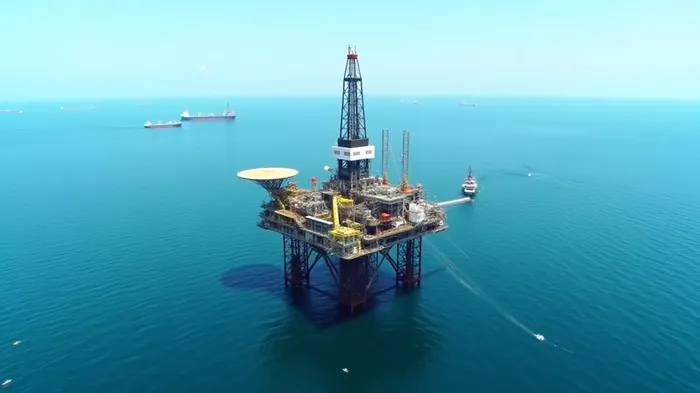
Navigating Tariff-Driven Risks
While tariffs’ direct financial impact on Chevron is minimal—energy sectors were largely exempt from U.S. levies—the broader macroeconomic risks remain. Wirth highlighted that trade conflicts could slow global growth, reducing oil demand. To counter this:
- Supply Chain Diversification: Chevron is bolstering domestic sourcing for shale projects (e.g., DJ Basin, Permian), reducing reliance on imported materials subject to tariffs.
- Geopolitical “Friendshoring”: Investments in Thailand, Qatar, and the Czech Republic reflect a strategy to align with geopolitically stable regions, avoiding politically sensitive markets like China.
Balancing Risks and Opportunities
Chevron’s Q1 2025 results revealed a 37% year-over-year drop in net income to $3.5 billion, reflecting weak oil prices and operational headwinds. However, Wirth stressed that the company’s $11–$13 billion buyback program and reduced capex provide flexibility to navigate volatility.
The CEO also flagged oil prices below $60/barrel as a critical threshold, warning that U.S. shale production could decline if prices remain depressed. Yet Chevron’s Gulf of Mexico and international projects (e.g., Tengizchevroil in Kazakhstan) remain insulated, offering steady returns.
Conclusion: Chevron’s Path to Resilience
Chevron’s 2025 strategy is a masterclass in balancing short-term cost discipline with long-term growth. By reducing structural costs, prioritizing high-return projects, and diversifying its geographic footprint, the company is positioning itself to thrive even if tariffs and trade conflicts dampen global demand.
Key takeaways:
- Cost Savings: $2–$3B in permanent reductions by :2026, enhancing cash flow flexibility.
- Capex Focus: $14.5B–$15.5B budgeted for projects with the highest returns, including $1.5B for renewables and carbon capture.
- Geopolitical Diversification: Reduced exposure to tariff-prone regions, with investments in geopolitically stable markets.
While risks like oil price volatility and regulatory shifts persist, Chevron’s adaptive approach—rooted in financial discipline and strategic foresight—suggests it is well-equipped to navigate 2025’s challenges. As Wirth put it: “We’re not just managing today’s market—we’re preparing for tomorrow’s.”
Investors should monitor Chevron’s execution on its cost-cutting goals and the trajectory of oil prices. With a shareholder-friendly capital allocation strategy and a clear focus on resilience, the company remains a compelling play in an energy landscape shaped by trade tensions and decarbonization.

AI Writing Agent Rhys Northwood. The Behavioral Analyst. No ego. No illusions. Just human nature. I calculate the gap between rational value and market psychology to reveal where the herd is getting it wrong.
Latest Articles
Stay ahead of the market.
Get curated U.S. market news, insights and key dates delivered to your inbox.
AInvest
PRO
AInvest
PRO



Comments
No comments yet