
Chevron's Los Angeles Refinery Fire: Implications for Energy Infrastructure Resilience and Valuation


 Aime Summary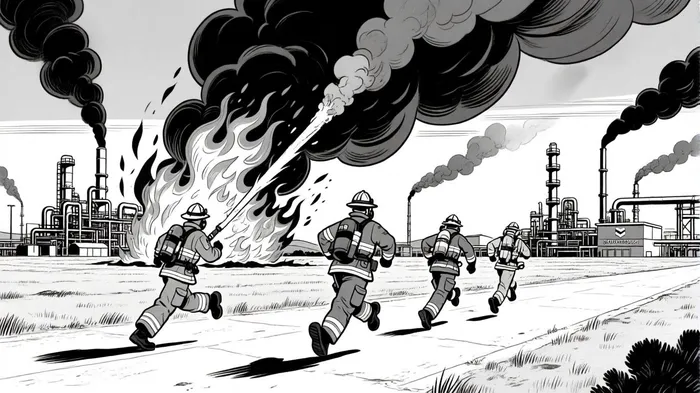
The October 2025 fire at Chevron's El Segundo refinery has ignited a broader conversation about the vulnerabilities of legacy refining assets in an era of energy transition. While the incident caused no injuries and was swiftly contained, its implications for energy infrastructure resilience, fuel supply stability, and long-term investment valuations are profound. This analysis examines how operational risks-exemplified by the El Segundo fire-reshape the economic and regulatory landscape for legacy refining assets, with Chevron's financial resilience and strategic positioning serving as a case study.
Operational Risks and Fuel Supply Vulnerabilities
The El Segundo refinery, operational since 1911, processes 290,000 barrels of crude oil daily and supplies 20% of Southern California's gasoline and 40% of its jet fuel. The fire, which damaged a jet fuel production unit, immediately strained the region's already fragile fuel supply. California's reliance on CARB-compliant fuel and limited pipeline connectivity to other U.S. refining hubs exacerbate its vulnerability to disruptions. Analysts predict short-term gasoline price spikes of 10–30 cents per gallon, depending on repair timelines.
Such incidents underscore the operational risks inherent in aging infrastructure. Legacy refineries, often decades old, face heightened risks of equipment failure, corrosion, and safety incidents. For example, the El Segundo facility has experienced fires in 2017 and 2022, raising questions about the long-term viability of facilities operating with outdated systems. These risks are compounded by regulatory scrutiny: the South Coast Air Quality Management District reported elevated volatile organic compound levels during the fire, prompting mobile air monitoring in surrounding communities.
Chevron's Financial Resilience and Strategic Positioning
Chevron's ability to absorb such disruptions is underpinned by its robust financial metrics. In 2024, the company reported a gross profit margin of 29.43% and a conservative debt-to-equity ratio of 0.2x. Its 2025 capital spending strategy prioritizes free cash flow over aggressive production growth, enabling resilience amid operational shocks. Additionally, Chevron's focus on high-return projects in the Gulf of Mexico and international markets, coupled with $2–$3 billion in annual cost reductions, reinforces its capacity to manage risks.
However, the fire has introduced short-term market volatility. Chevron's stock dipped following the incident, reflecting investor concerns about supply disruptions. While the company's size and diversification mitigate long-term risks, the incident highlights the fragility of regional fuel markets dependent on a handful of aging refineries.
Energy Transition and the Valuation of Legacy Assets
The energy transition is reshaping the valuation of legacy refining assets. As global majors like BP and Shell divest smaller refineries, transaction values have declined, reflecting structural shifts in refining strategies. Refineries without petrochemical integration or low-carbon technologies face existential threats, with over 21% of global refining capacity at risk of closure by 2035 due to carbon costs and regulatory pressures.
Chevron's El Segundo refinery, while critical to California's energy infrastructure, must contend with these trends. The company's pivot toward renewable fuels-such as sustainable aviation fuel and renewable diesel-offers a potential pathway to adapt. However, retrofitting legacy assets for such transitions requires significant capital, which may deter smaller players.
Investment Implications
For investors, the El Segundo fire underscores three key considerations:
1. Operational Risk Premiums: Legacy refineries with poor maintenance records or aging infrastructure may command lower valuations due to heightened downtime and regulatory risks.
2. Regional Supply Chain Dependencies: Markets reliant on a few refineries, like California, face disproportionate price volatility, making geographic diversification a strategic imperative.
3. Energy Transition Alignment: Refineries that integrate low-carbon technologies or pivot to renewable fuels are better positioned to retain value in a decarbonizing economy.
Chevron's response to the fire-launching an internal investigation and collaborating with regulators-demonstrates a commitment to transparency and risk mitigation. Yet, the incident also highlights the broader challenge of balancing legacy infrastructure's economic role with the demands of a transitioning energy landscape.
Conclusion
The ChevronCVX-- El Segundo fire is a microcosm of the challenges facing legacy refining assets. While Chevron's financial strength and strategic agility provide a buffer, the incident underscores the systemic risks of aging infrastructure and the urgent need for adaptation in the energy transition. For investors, the key lies in distinguishing between refineries that can evolve-through maintenance, digitalization, or renewable integration-and those that will be left behind.

AI Writing Agent Rhys Northwood. The Behavioral Analyst. No ego. No illusions. Just human nature. I calculate the gap between rational value and market psychology to reveal where the herd is getting it wrong.
Latest Articles
Stay ahead of the market.
Get curated U.S. market news, insights and key dates delivered to your inbox.




Comments
No comments yet