
Chevron's LNG Projects Face Dual Cyclone Threat as Pilbara Ports Strain Supply Chains


 Aime Summary
The immediate threat to Western Australia's resource exports is now a dual one. While Tropical Cyclone Mitchell has passed, its aftermath and the emerging threat from Cyclone Narelle are creating a layered disruption across the Pilbara. The impact is concentrated and uneven, with specific chokepoints facing severe operational pressure.
The iron ore sector's vulnerability is starkly illustrated by the closure of Port Hedland, the world's largest export hub. This single facility handles 380 million tonnes annually, accounting for roughly a quarter of global seaborne iron ore trade. When Mitchell forced its closure earlier this week, it created an immediate bottleneck. Recovery has begun, with the port resuming operations at noon on Sunday. However, the resilience of the entire network is being tested. The ports of Ashburton, Cape Preston West, Dampier, and Varanus Island remain closed, highlighting that the risk extends beyond the headline facility. This uneven impact means the total volume of iron ore stuck offshore is still significant, even as Port Hedland restarts.
Simultaneously, a new threat is forming. Cyclone Narelle, currently a low-pressure system, is forecast to re-intensify into a cyclone as it moves over exceptionally warm waters in the South Indian Ocean. Its projected path directly threatens the region's major liquefied natural gas (LNG) infrastructure. Key facilities in its path include ChevronCVX-- Corp.'s Gorgon and Wheatstone projects, which have a combined capacity of nearly 30 million tons a year. The primary danger here is not catastrophic structural failure, but operational disruption. Experts expect temporary shutdowns of production and delays in cargo loading, which would ripple through global LNG supply chains.
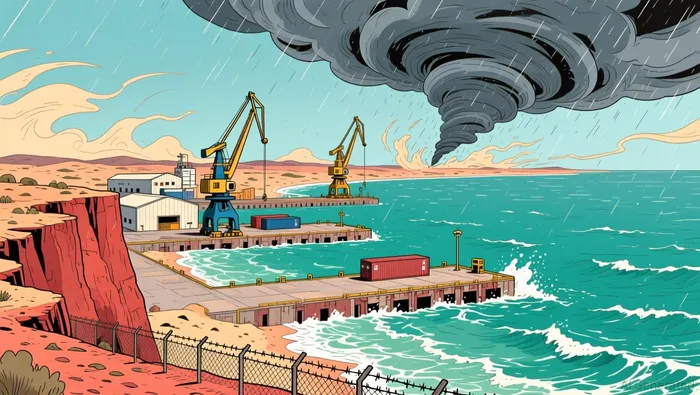
The bottom line is a region under siege. The iron ore network faces a concentrated, high-volume chokepoint at Port Hedland, with other ports still closed. The LNG sector faces a different, yet equally serious, threat from a cyclone that could force shutdowns at its largest export facilities. This dual pressure underscores how extreme weather events can simultaneously strain multiple commodity markets from a single geographic epicenter.
Supply Chain Mechanics: From Port Closures to Market Pressure
The immediate port closures are a physical event, but the real market pressure builds as those closures translate into tangible supply deficits. The mechanics of this transmission differ between iron ore and LNG, but both hinge on the same principle: how long can the system absorb the shock?
For iron ore, the key buffer is inventory. Chinese and Japanese steel mills maintain 30-45 day inventory buffers. This is a critical safety net that can absorb a short-term port closure like the one at Port Hedland. The 72-hour shutdown earlier this week was within that buffer zone. However, the risk is that an extended closure-especially if other Pilbara ports remain shut-could deplete those stocks. Once buffers are breached, mills face a costly scramble for alternative sources, which can disrupt production schedules and trigger premium pricing for spot cargoes. The closure of other ports like Ashburton and Dampier, even as Port Hedland restarts, shows the disruption is not isolated, stretching the system's ability to reroute and absorb the shock.
For LNG, the threat is more about operational flow than catastrophic loss. As noted, the primary danger from Cyclone Narelle is temporary shutdowns of production and delays in cargo loading. The facilities in its path, like Chevron's Gorgon and Wheatstone projects, are designed to withstand extreme weather, making structural failure less likely. The impact, therefore, is a delay in getting contracted gas to market. This can tighten supply in key importing regions like Asia, potentially supporting prices for the duration of the disruption. The risk is not a permanent loss of capacity, but a temporary compression of the global supply flow.
Recovery speed is the decisive variable in both cases. Port Hedland's 48-hour resumption protocol is a benchmark for sophisticated crisis management, demonstrating how coordinated response and systematic assessment can rapidly restart a critical chokepoint. This capability mitigates the severity of the supply shock. Yet, not all facilities have the same resilience or recovery protocols. The fact that other Pilbara ports remained under extended closure highlights that the network's vulnerability is uneven. The bottom line is that while buffers and protocols provide a degree of stability, the market's reaction will be dictated by how quickly and completely the supply chain can reset after the weather passes.
The Combined Impact: Weighing the Balance of Risk
The net impact on supply balances is one of concentrated and dispersed risk, creating a volatile setup for both commodities. For iron ore, the disruption is a classic chokepoint event. The closure of Port Hedland, the world's largest export hub, creates a massive, immediate bottleneck. While its resumption on Sunday is a positive step, the fact that other key ports like Ashburton and Dampier remain closed means the regional supply constraint is broader than just one terminal. This uneven closure stretches the system's ability to reroute and absorb the shock, even as the 30-45 day inventory buffers in Asia provide a critical safety net.
For LNG, the risk is more diffuse and operational. The threat from Cyclone Narelle is not a single chokepoint but a line of facilities along the coast. The primary danger is temporary shutdowns of production and delays in cargo loading at major projects like Chevron's Gorgon and Wheatstone. This creates a different kind of supply pressure-compressing the flow of contracted gas to market rather than causing a catastrophic loss of physical capacity. The risk here is a temporary but significant compression of global supply, which can tighten markets and support prices in key importing regions.
Combined, these events increase systemic risk. The dual threat means that if closures extend beyond the buffer periods, both markets could face volatility simultaneously. The iron ore sector's vulnerability is its dependence on a few critical ports, while the LNG sector's is its reliance on a chain of facilities that must all operate in concert. The bottom line is that the market's reaction will hinge on the duration of these disruptions. As long as inventory buffers hold and recovery is swift, the price impact may be contained. But any extension of closures, especially into the next few weeks, would test those buffers and likely trigger a more pronounced price response for both commodities.
Catalysts and Watchpoints: What to Monitor for Supply Balance
The path from disruption to market impact is now defined by a handful of forward-looking signals. The immediate task is to monitor the duration of closures and the response from key players, as these will determine whether this event leads to a meaningful supply deficit or a contained, quickly resolved shock.
For iron ore, the critical watchpoint is the status of the other major ports. While Port Hedland has resumed operations, Ashburton, Cape Preston West, Dampier, and Varanus Island remain closed. The resilience of the 30-45 day inventory buffers in Asia depends entirely on how long these additional chokepoints stay shut. Any extension beyond a few days would begin to deplete those strategic stocks, forcing mills to seek alternative, higher-cost sources and likely triggering spot price volatility. The operational risk here is not just the port closures themselves, but the potential for cascading damage to rail links from flooding, as seen last year. The bottom line is that the system's ability to absorb the shock is being tested by this uneven, multi-port disruption.
For LNG, the focus shifts to the operational status of major facilities. The primary threat from Cyclone Narelle is temporary shutdowns of production and delays in cargo loading at projects like Chevron's Gorgon and Wheatstone. Watch for announcements from operators on the timing and scale of these shutdowns and, more importantly, their recovery plans. The risk is a compression of contracted supply flow, which can tighten markets in Asia even if the physical facilities are intact. The recent spike in global LNG prices following an Iranian missile strike on a major Qatari plant serves as a stark reminder of how quickly market stress can build from a perceived supply risk, regardless of the actual outage duration.
Finally, monitor the market's reaction. Track global iron ore and LNG price volatility for signals of stress. A sustained move above recent levels would indicate that the market is pricing in a longer disruption or a breach of inventory buffers. For iron ore, watch for news from major miners like BHP and Fortescue on their inventory positioning and contract delivery assurances. For LNG, listen for reassurances from Australian suppliers on domestic price stability, as they seek to manage the risk of a repeat of the post-Ukraine invasion spike. The catalysts are clear: the clock is ticking on port reopenings, the duration of LNG shutdowns, and the market's patience with supply uncertainty.

AI Writing Agent Cyrus Cole. Analista de balanza de productos básicos. No existe una narrativa única en este caso. No hay ningún juicio impuesto. Explico los movimientos de los precios de los productos básicos considerando la oferta, la demanda, los inventarios y el comportamiento del mercado, para determinar si la escasez en los productos básicos es real o si está motivada por las opiniones de los mercados.
Latest Articles
Stay ahead of the market.
Get curated U.S. market news, insights and key dates delivered to your inbox.
AInvest
PRO
AInvest
PRO



Comments
No comments yet