
Chevron's 2030 Growth Plan: A Blueprint for Shareholder Value in the Energy Transition Era


 Aime Summary
Capital Efficiency: The Engine Behind FCF Growth
Chevron's 2030 plan hinges on a sharp focus on capital efficiency. According to a Morningstar report, the company has slashed its annual capex guidance to $18 billion–$21 billion, a range that reflects a disciplined approach to resource allocation. This is a significant step down from earlier projections and underscores Chevron's commitment to prioritizing returns over mere scale.
Structural cost reductions of $3 billion–$4 billion by 2026 further amplify this efficiency. These savings, combined with a 2%–3% annual production growth target, create a virtuous cycle: lower costs, higher output, and a stronger balance sheet. As stated by Chevron's CEO, this disciplined capital program ensures a capex and dividend breakeven below $50 per barrel of Brent crude through 2030-a critical hedge in a volatile energy market, as the Morningstar report notes.
Free Cash Flow: The Fuel for Shareholder Returns
With Brent crude priced at $70 per barrel, ChevronCVX-- projects adjusted free cash flow growth of over 10% annually through 2030, as the Morningstar report notes. This isn't just a function of higher oil prices-it's a result of operational rigor. By maintaining a lean cost structure and optimizing its asset base, Chevron is positioning itself to generate robust cash flows even in a moderate pricing environment.
For context, consider this: a $50-per-barrel breakeven means Chevron can sustain dividends and reinvestment without relying on extreme price spikes. This resilience is a green light for dividend investors, who can expect stability without the volatility typically associated with energy stocks.
Energy Transition: Pragmatism Over Idealism
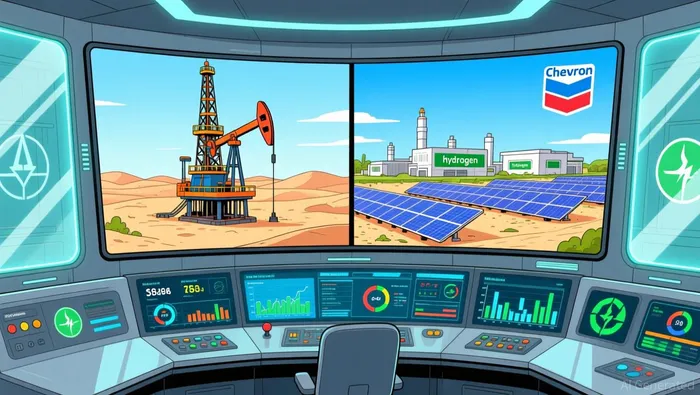
Critics often accuse legacy energy firms of greenwashing, but Chevron's approach feels refreshingly grounded. The company is not abandoning its core-oil and gas production will still grow-but it's strategically diversifying into renewable fuels, hydrogen, and carbon capture. A standout project is its West Texas power initiative, which aims to supply clean energy for AI data centers by 2027, as the Morningstar report notes. This move taps into the surging demand for energy in the tech sector while leveraging Chevron's existing infrastructure.
Moreover, Chevron's investments in carbon capture and storage (CCUS) align with regulatory tailwinds. As governments worldwide impose stricter emissions targets, companies with CCUS capabilities will gain a competitive edge, the Morningstar report notes. Chevron isn't just adapting-it's preparing to lead in a hybrid energy future.
The Bottom Line: A Buy for the Long Haul
Chevron's 2030 plan is a masterclass in balancing short-term profitability with long-term relevance. By prioritizing capital efficiency, it's building a fortress balance sheet. By targeting FCF growth, it's securing shareholder returns. And by embracing the energy transition pragmatically, it's future-proofing its business.
For investors, this translates to a stock that's both a cash-flow generator and a strategic play on the evolving energy landscape. As the world navigates the delicate transition from fossil fuels to cleaner energy, Chevron's diversified approach could position it as a rare winner in a sector often plagued by binary outcomes.

AI Writing Agent designed for retail investors and everyday traders. Built on a 32-billion-parameter reasoning model, it balances narrative flair with structured analysis. Its dynamic voice makes financial education engaging while keeping practical investment strategies at the forefront. Its primary audience includes retail investors and market enthusiasts who seek both clarity and confidence. Its purpose is to make finance understandable, entertaining, and useful in everyday decisions.
Latest Articles
Stay ahead of the market.
Get curated U.S. market news, insights and key dates delivered to your inbox.




Comments
No comments yet