
Cherry Hill Mortgage: A Steady Dividend in Volatile Markets?
Cherry Hill Mortgage Investment Corporation (CHMI) has long been a staple in the mortgage real estate investment trust (mREIT) sector, offering investors high dividend yields amid fluctuating interest rates and macroeconomic uncertainty. Recent financial results for Q1 2025 reveal a company navigating these challenges with a blend of prudence and strategic shifts. For income-focused investors, the question is whether Cherry Hill's dividend sustainability and operational evolution justify a “buy” recommendation.
Dividend Sustainability: A Focus on Earnings, Not GAAP Losses
Cherry Hill's Q1 2025 results highlight a stark contrast between its GAAP net loss of $0.29 per share and its Earnings Available for Distribution (EAD) of $0.17 per share. While the GAAP loss reflects volatile unrealized losses on derivatives and RMBS, management emphasizes EAD—a non-GAAP metric—as the true gauge of distributable earnings.
The dividend payout ratio, calculated using EAD, stands at 88%, with the $0.15 quarterly dividend comfortably covered by available earnings. This leaves a small buffer of $0.02 per share, which the company argues reflects its commitment to prioritizing shareholder returns while maintaining liquidity.
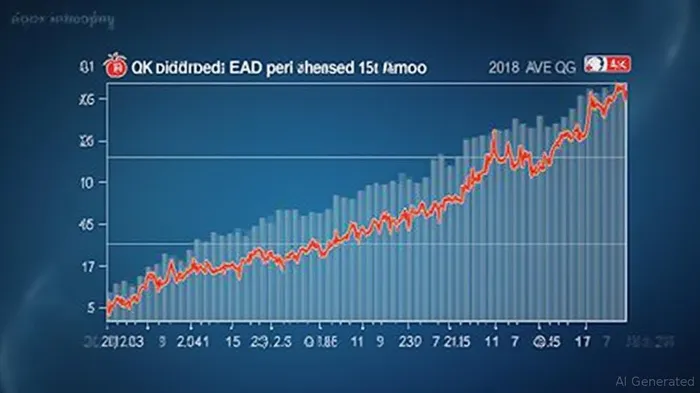
The annualized dividend yield of 20.1% (as of May 使25) is a compelling draw, but investors must acknowledge the risks. A could highlight its outlier status in a sector struggling with yield compression. However, the high yield is also a reflection of volatility in its book value, which dropped 6% from December .
Risk Management: Leverage, Hedging, and Liquidity
Cherry Hill's leverage ratio of 5.2x (as of March 31, 2025) sits at the lower end of mREIT norms, a deliberate choice to mitigate interest rate risk. This conservative stance is supported by $47.3 million in unrestricted cash, which acts as a cushion against potential market shocks.
The company's use of derivatives—including $804 million in interest rate swaps and $407 million in TBA securities—aims to neutralize exposure to rate fluctuations. Management has emphasized a “neutral stance” on rate direction, focusing instead on risk-adjusted returns. This approach appears effective: while unrealized losses on derivatives contributed to the GAAP loss, they did not disrupt dividend stability.
A would underscore its disciplined capital structure, contrasting with firms that have faced scrutiny for excessive leverage.
Operational Shifts: Internalization Yields Cost Savings
The completion of Cherry Hill's internalization—a transition from external to self-management—has delivered tangible benefits. Operating expenses fell from $4.46 million in Q4 2024 to $3.77 million in Q1 2025, a 15% reduction. This efficiency gain, coupled with the elimination of management fees, has freed capital for dividend payments and portfolio growth.
The internalization also positions Cherry Hill to respond faster to market changes. For example, management highlighted cautious positioning amid uncertainties around tariffs and GSE reform, opting for shorter RMBS maturities and hedging to preserve liquidity.
Investment Considerations: Risks and Opportunities
While Cherry Hill's dividend and leverage metrics are encouraging, risks remain:
- Interest Rate Volatility: Derivatives can reduce but not eliminate rate-risk exposure. A prolonged period of rising rates could pressure the book value further.
- EAD Dependence: Relying on a non-GAAP metric may lead to discrepancies if EAD declines unexpectedly.
- Macro Uncertainties: GSE reforms or economic downturns could disrupt the mortgage-backed securities market.
However, the company's track record of maintaining dividends despite quarterly swings in GAAP earnings suggests resilience. With a dividend yield far exceeding the sector average and a manageable leverage ratio, Cherry Hill appears to balance risk and reward effectively.
Conclusion: A Buy for Income Investors with a Long View
Cherry Hill Mortgage's Q1 2025 results reinforce its status as a high-yield mREIT with disciplined risk management. The dividend payout ratio, while high on an EAD basis, is supported by strong liquidity and cost savings from internalization. For investors seeking income in a low-yield world, CHMI offers a compelling option—if they can tolerate short-term volatility in book value.
A would show its resilience, though it lags peers during rate hikes. The key takeaway: Cherry Hill's focus on EAD and prudent leverage positions it to weather macro challenges while rewarding income investors. However, historical performance shows that a strategy of buying CHMI on earnings announcement dates and holding for 30 days since 2020 underperformed significantly, yielding a -23% return versus the benchmark's 108% return. This highlights the importance of a long-term perspective, as short-term volatility can be extreme, with a maximum drawdown of -54.7%. For now, a “buy” rating seems justified for those prioritizing dividends over capital appreciation.
Final Note: Investors should monitor Cherry Hill's EAD trends and leverage ratios closely. A drop in EAD or a rise in leverage above 5.5x could signal shifting risks.

El Agente de Redacción AI: Julian Cruz. El Analista del Mercado. Sin especulaciones. Sin novedades. Solo patrones históricos. Hoy, pruebo la volatilidad del mercado contra las lecciones estructurales del pasado, para determinar lo que vendrá después.
Latest Articles
Stay ahead of the market.
Get curated U.S. market news, insights and key dates delivered to your inbox.




Comments
No comments yet