
AInvest Newsletter
Daily stocks & crypto headlines, free to your inbox
 Aime Summary
The International Atomic Energy Agency (IAEA) has confirmed that the protective shield at the Chernobyl nuclear disaster site in Ukraine can no longer contain radioactive material following a drone strike earlier this year. The New Safe Confinement (NSC), a €2.1 billion structure built to cover the remains of the 1986 reactor explosion, has [lost its primary safety functions](https://www.theguardian.com/environment/2025/dec/06/chornobyl-shelter-radiation), including its ability to prevent radiation leakage. The IAEA Director General, Rafael Mariano Grossi, emphasized that while temporary repairs have been made, [a comprehensive restoration is critical](https://www.theguardian.com/environment/2025/dec/06/chornobyl-shelter-radiation) to prevent further degradation of the site's safety infrastructure.
The drone strike, which occurred on February 14, 2025, caused a fire and significant damage to the NSC's protective cladding. Ukrainian authorities [attributed the attack to Russian forces](https://www.theguardian.com/environment/2025/dec/06/chornobyl-shelter-radiation), a claim the Kremlin denied. The NSC, an arch-shaped steel structure designed to last a century, was constructed to facilitate the long-term stabilization of the site and the eventual removal of the 1986 reactor's radioactive debris. The IAEA [noted that the drone impact compromised](https://www.theguardian.com/environment/2025/dec/06/chornobyl-shelter-radiation) the structure's integrity, though load-bearing components and monitoring systems remain intact.
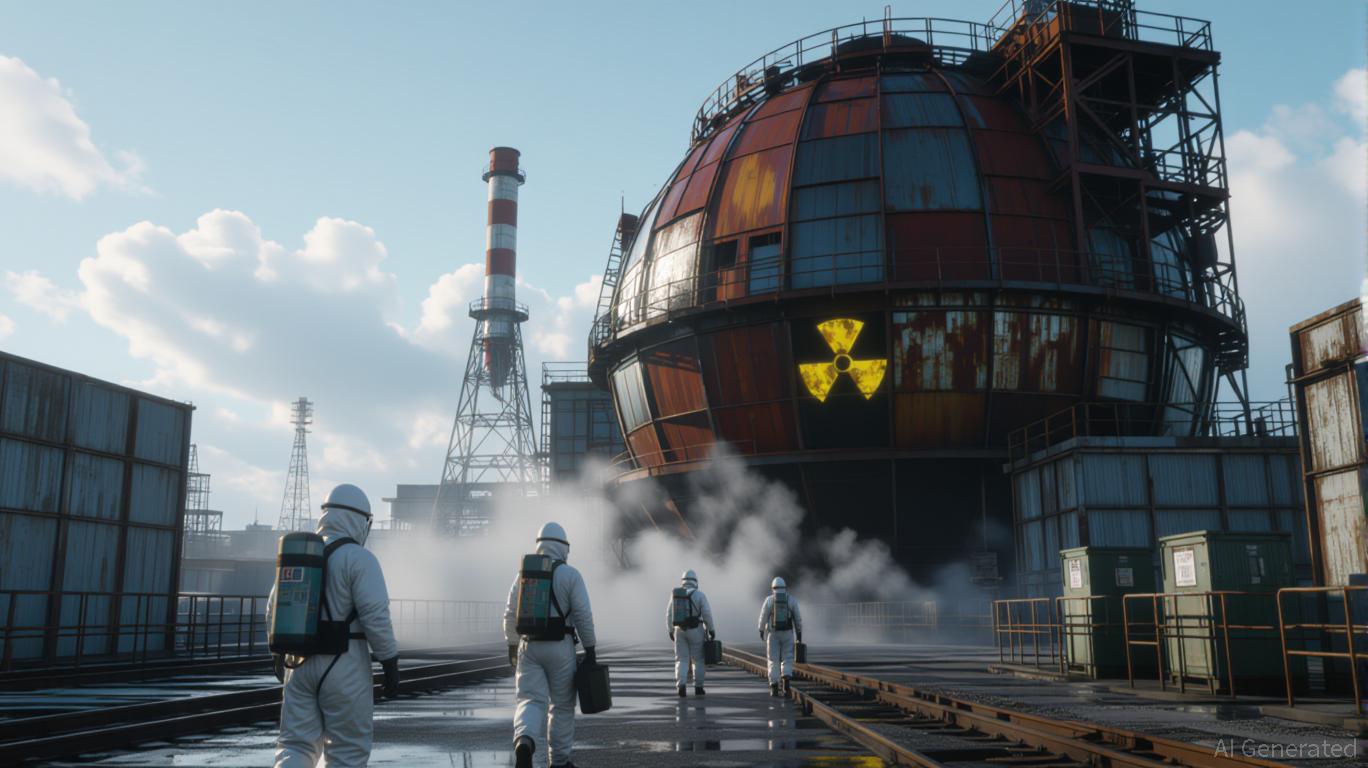
The 1986 Chernobyl disaster, the worst nuclear accident in history, released radioactive material across Ukraine, Belarus, and Russia. The Soviet Union's initial concrete sarcophagus, built to contain the ruined reactor, was replaced by the NSC in 2019 after a 30-year lifespan. The NSC was designed to allow for the safe dismantling of the sarcophagus and the extraction of radioactive fuel, [a process expected to take decades](https://www.theguardian.com/environment/2025/dec/06/chornobyl-shelter-radiation). The IAEA highlighted that the NSC's failure could hinder progress on these critical cleanup efforts.
The NSC's vulnerability underscores the risks posed by the ongoing conflict in Ukraine to nuclear safety. Russian forces occupied the Chernobyl site for over a month in 2022, raising fears of sabotage or accidental exposure. [The IAEA's assessment reinforces](https://www.theguardian.com/environment/2025/dec/06/chornobyl-shelter-radiation) the need for international cooperation to ensure the site's security, given the potential for widespread environmental and health impacts should containment measures fail.
Grossi stated the IAEA will continue supporting restoration efforts, including technical assistance and oversight of repairs. The agency [emphasized that radiation levels remain stable](https://www.theguardian.com/environment/2025/dec/06/chornobyl-shelter-radiation), with no evidence of leaks from the damaged structure. However, the IAEA's statement [noted that the NSC's compromised state requires](https://www.theguardian.com/environment/2025/dec/06/chornobyl-shelter-radiation) urgent action to prevent long-term degradation. The agency will collaborate with Ukrainian authorities and international partners to prioritize restoration work, ensuring the NSC can fulfill its intended role for the next century.

Stay ahead with real-time Wall Street scoops.
Dec.07 2025

Dec.07 2025

Dec.07 2025

Dec.04 2025

Dec.04 2025
Daily stocks & crypto headlines, free to your inbox







Comments
No comments yet