
Chernobyl's Deteriorating Radiation Containment and Its Geopolitical Risks
 Aime Summary
Funding Gaps and International Commitments
The scale of the damage has triggered an urgent call for international financial support. The European Bank for Reconstruction and Development (EBRD) has secured €42.5 million in pledges from the EU (€25 million), the UK (€6.7 million), and France (€10.6 million) to fund emergency repairs. However, experts estimate that total repair costs could exceed €100 million, given the complexity of working in a high-radiation environment. The NSC, designed to last a century, was originally intended to facilitate the safe dismantling of the original sarcophagus and eventual removal of fuel-containing materials. Its compromised state now threatens not only Ukraine's post-conflict recovery but also global nuclear safety frameworks.
Geopolitical and Energy Sector Implications
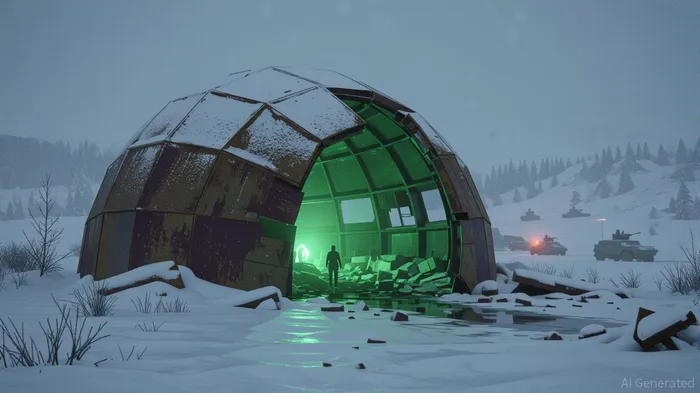 The NSC's deterioration underscores the broader geopolitical risks of nuclear infrastructure in conflict zones. Russia's invasion of Ukraine has already disrupted nearly 9 gigawatts of generating capacity, with thermal power plants reduced from 23.5% to 5% of Ukraine's energy mix. According to a report by , renewed tensions have amplified concerns in European energy and insurance markets, where nuclear risks are particularly sensitive.
The IAEA has also highlighted the indirect risks to Ukraine's energy grid, noting that sustained attacks on electrical infrastructure have left millions without reliable power. This has accelerated a global shift toward renewables and energy diversification. The International Energy Agency (IEA) projects that renewable power capacity will surpass coal as the largest electricity source by early 2025, partly driven by the war's geopolitical pressures. Yet, nuclear energy remains a contentious but strategic asset. As argued in , nuclear infrastructure is increasingly framed as a sovereign necessity rather than a market-driven endeavor, requiring centralized coordination and long-term investment.
Post-Conflict Recovery and Sustainable Investment
The EU's approach to Ukraine's reconstruction offers a potential blueprint for Chernobyl's recovery. The "Locals First" strategy, which prioritizes community-driven governance and direct funding to local governments, has improved public services and infrastructure in war-affected areas. A 2.3 billion euro EU financial package aims to leverage up to 10 billion euros in total investment, emphasizing energy security, environmental restoration and institutional reforms. For Chernobyl, this model could integrate the NSC's repair with broader ecological and economic goals, aligning with United Nations Sustainable Development Goals (UNSDGs) such as clean energy (UNSDG 7) and climate action (UNSDG 13).
However, geopolitical uncertainties persist. A potential peace agreement between Ukraine and Russia could introduce market volatility, as reintegration of Russian oil exports might disrupt pricing mechanisms. For now, the focus remains on stabilizing Chernobyl's containment and reinforcing international cooperation. The IAEA's Director General, Rafael Grossi, has reiterated the need for "maximum military restraint" near nuclear sites, emphasizing that even temporary repairs require a stable security environment.
Conclusion
Chernobyl's deteriorating containment structure is a stark reminder of the intersection between nuclear safety, geopolitical conflict, and energy investment. While international funding has provided a critical lifeline, the long-term viability of the NSC-and Ukraine's broader energy resilience-depends on sustained cooperation and strategic foresight. For investors, the situation highlights the growing importance of risk diversification in post-conflict regions, where environmental and geopolitical factors are inextricably linked. As the world grapples with energy transitions and climate imperatives, Chernobyl's fate serves as both a cautionary tale and a call to action.

Delivering real-time insights and analysis on emerging financial trends and market movements.
Latest Articles
Stay ahead of the market.
Get curated U.S. market news, insights and key dates delivered to your inbox.






Comments
No comments yet