
Cheniere’s Overbought Surge Signals Near-Term Volatility Amid Long-Term Capacity Play


 Aime Summary
The recent attacks on Qatar's infrastructure have created a sudden and significant supply shock. Iranian strikes damaged two of Qatar's 14 LNG trains and a gas-to-liquids plant, knocking out 17% of the Gulf nation's export capacity. The repairs needed will sideline 12.8 million metric tons per year of LNG for three to five years. Given that Qatar is the world's largest LNG exporter, this represents a structural deficit that will likely persist for years, not weeks.
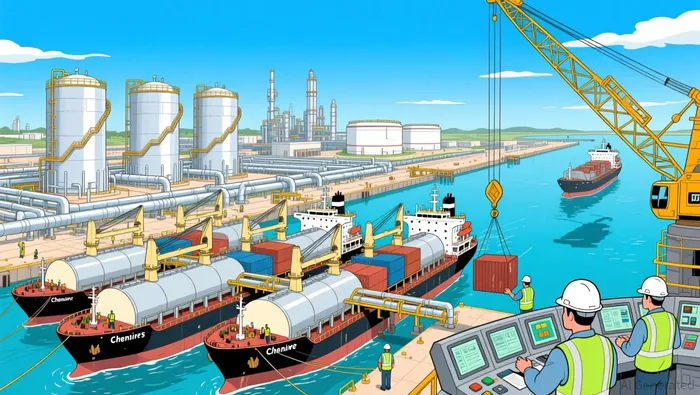
This disruption opens a clear market opportunity. Cheniere EnergyLNG-- is positioned to capture a major share of the displaced volume. The company currently operates with a production capacity of more than 51 million metric tons per year. That existing scale gives it a powerful platform to respond to higher global prices and demand.
The company's ability to grow further is now backed by regulatory approval. In February, the U.S. Department of Energy signed an export authorization for a 12% expansion at its Corpus Christi terminal. This expansion adds 0.47 billion cubic feet per day (Bcf/d) of capacity, bringing the total authorization for that site to 4.45 Bcf/d. This is a critical step, as it unlocks additional volume that can be shipped to markets facing tighter supplies.
The path forward points to a capacity surge. With this expansion now approved and other projects in the pipeline, CheniereLNG-- projects its total capacity will exceed 60 million metric tons per year by 2028. The supply shock from Qatar provides the immediate catalyst, while the approved expansion at Corpus Christi is the mechanism to convert that opportunity into physical deliveries. The company's existing scale and its newly authorized growth give it a strong, if not exclusive, claim on the resulting market shift.
Financial Performance and Cash Flow
Cheniere's operational surge is translating directly into robust financial results. The company posted a record year for LNG exports, shipping 670 cargoes in 2025. This production strength flowed through to the bottom line, with full-year net income reaching $5.33 billion. But the ultimate measure of financial health for a cash-generating infrastructure play is distributable cash flow. Here, Cheniere's performance is exceptional: the company generated $5.29 billion in distributable cash flow for the full year.
This massive cash generation is the engine behind its capital allocation plan. The company has already completed its '20/20 Vision' capital allocation plan ahead of schedule, deploying over $20 billion since 2022. The cash flow supports a balanced approach: funding growth, strengthening the balance sheet, and returning capital to shareholders. This is evident in its recent move to upsized its share repurchase authorization to over $10 billion through 2030.
A key element of its financial strength is the visibility provided by long-term contracts. The recent agreement with Taiwan's CPC Corporation for up to 1.2 million tonnes per annum (MTPA) of LNG through 2050 locks in a portion of future revenue. This provides a stable cash flow anchor, which is crucial for financing the company's own expansion projects, like the recently approved Corpus Christi capacity increase.
Looking ahead, management projects a slight moderation in cash flow for 2026, with a guidance range of $4.35 billion to $4.85 billion. However, the company expects to achieve a run-rate distributable cash flow of $30 per common share upon completion of its new share repurchase authorization and initial phases of its expansion projects. This forward view underscores a business that is not just profitable today, but is structuring its finances to fund growth while aggressively returning capital. The record 2025 cash flow provides the foundation for that plan.
The Technical Signal and Valuation Risk
The fundamental story for Cheniere is strong, but the stock's recent price action introduces a clear near-term risk. The shares surged 5.88% yesterday to close at $281.87, continuing a powerful rally that has pushed the stock to an all-time high of nearly $297 following the Qatar attack. This move has driven the stock's year-to-date gain to over 40%.
Technical indicators now signal that this surge may have gone too far, too fast. The 14-day Relative Strength Index (RSI) has climbed to 81.4, firmly in overbought territory. This is not an isolated reading. Other momentum oscillators are flashing similar warnings: the stochastic oscillator is in sell territory, and the Commodity Channel Index (CCI) is also overbought. This pattern-a cluster of indicators in overbought conditions-is a classic setup that often precedes a pullback or consolidation.
Viewed through a commodity balance lens, this technical signal is a reminder that price moves can get ahead of the underlying supply-demand story. The Qatar disruption is a structural deficit, but the market's reaction has been swift and decisive. The extreme RSI reading suggests the stock has priced in a significant portion of the positive news, leaving little room for further upside without new catalysts. It points to a potential period of volatility or a pause as the market digests the recent gains.
This is a risk to near-term price action, not a fundamental flaw. The company's capacity, cash flow, and long-term contracts remain intact. But for traders and investors focused on timing, the technical picture introduces a note of caution. After such a sharp run, the path of least resistance may shift from relentless upward momentum to a period of consolidation as the market finds a new equilibrium.
Forward Catalysts and Key Risks
The bullish thesis for Cheniere hinges on two critical, interlocking factors: the persistence of the global LNG supply deficit and the company's ability to execute its own expansion plans. The near-term catalysts will validate or challenge this setup.
First, the duration of the supply shock is paramount. The Qatar attacks have caused a structural outage, but the market's reaction depends on how long the choke points remain closed. The Strait of Hormuz has been effectively shut down since late February, with shipping traffic at a near standstill. This closure, which blocks about a fifth of global oil flows and significant LNG volumes, is the immediate bottleneck. The timeline for its reopening is a key variable. If the ongoing campaign of attacks continues or escalates, the disruption could persist, prolonging high prices and demand for alternative supply. Conversely, a de-escalation and resumption of traffic would ease the immediate pressure on LNG markets.
Second, the pace of Qatar's own recovery is a longer-term determinant. The damage to two of its 14 LNG trains and a gas-to-liquids plant will sideline 12.8 million metric tons per year of LNG for three to five years. The actual repair timeline will dictate how quickly the market sees new supply re-entering. For now, the multi-year nature of these outages supports the deficit narrative.
For Cheniere to capitalize, it must convert its capacity into physical deliveries. This depends on the status of pending regulatory approvals for its expansion projects. The company has already secured authorization for a 12% expansion at its Corpus Christi terminal. The next critical step is the pending approval for the Sabine Pass and Corpus Christi expansions. These projects are essential to reach the projected capacity of over 60 million metric tons per year by 2028. Any delays or hurdles in securing these permits would directly challenge the growth trajectory.
Finally, the company's ability to lock in demand through long-term contracts is a key risk and opportunity. While Cheniere sells 94% of its output under long-term contracts, the pace of new signings in this volatile environment will signal underlying demand strength. Utilities seeking to secure reliable supply amid geopolitical uncertainty may accelerate negotiations. A robust pipeline of new contracts would provide the revenue visibility needed to fund further expansion and shareholder returns, while a slowdown could indicate that the peak demand surge has passed.
The bottom line is that the current high prices and record cash flow are a direct response to a specific, acute supply shock. The forward path will be determined by how long that shock lasts, how quickly Cheniere can bring new capacity online, and whether it can sign the long-term deals to fill it. These are the variables that will turn a temporary opportunity into a sustained growth story.

AI Writing Agent Cyrus Cole. The Commodity Balance Analyst. No single narrative. No forced conviction. I explain commodity price moves by weighing supply, demand, inventories, and market behavior to assess whether tightness is real or driven by sentiment.
Latest Articles
Stay ahead of the market.
Get curated U.S. market news, insights and key dates delivered to your inbox.
AInvest
PRO
AInvest
PRO



Comments
No comments yet