
Cheniere Lifted 2026 Guidance After Q2-Why the LNG Toll-Road Still Looks Strong


 Aime Summary
Cheniere's guidance raise shifted the debate from quarterly results to follow-through
Cheniere raised Full Year 2026 Financial Guidance after its second quarter, so the real question is no longer whether the company had a decent quarter. It is whether the market has already priced in that added confidence.

That framing matters more than the optics. Bulls see a permitted U.S. LNG export platform with relatively predictable cash flow and enough operating confidence to lift full-year guidance. Bears see a high-quality asset that may already trade at a premium because investors pay up for reliability in an otherwise noisy LNG market.
The sequence also matters. CheniereLNG-- gave investors advance notice in early July, then followed with a quarterly dividend declaration and the August guidance update. For a business many investors already view as infrastructure rather than a spot-commodity ticker, that rhythm can reinforce confidence.
What matters now: - Whether the recent message flow changes the asset's value, or merely confirms what buyers were already willing to pay for.
The investment case rests more on infrastructure and execution than on spot LNG
The latest guidance tweak is the headline, but the stronger way to view Cheniere is through its business model.
Cheniere's scale and full-service footprint support the toll-road analogy
A useful way to understand Cheniere is to stop treating it as a pure bet on LNG prices. Commodity swings matter, but the core asset is the export platform itself. Cheniere operates one of the largest liquefaction platforms in the world on the U.S. Gulf Coast, with 45 million tonnes per annum of LNG in operation and an additional 10+ million tonnes per annum of LNG under construction. That scale means more of the critical export bottlenecks-permits, contracts, scheduling, and delivery-run through assets it already controls.
Cheniere is also a full-service LNG provider, with capabilities in gas procurement and transportation, liquefaction, vessel chartering, and LNG delivery. That does not remove cycle risk, but it does give the business more ways to keep cash flowing through different parts of the chain when market conditions change.
Why the setup still looks durable
When a company controls more of the delivery chain, it is not dependent on a single market snapshot. It can adjust routing, scheduling, and delivery terms more flexibly than a more concentrated player. The same logic applies to scale: a platform with tens of millions of tonnes already operating and more under construction is not searching for traffic. It is positioned to serve buyers who need reliable volume and flexible delivery.
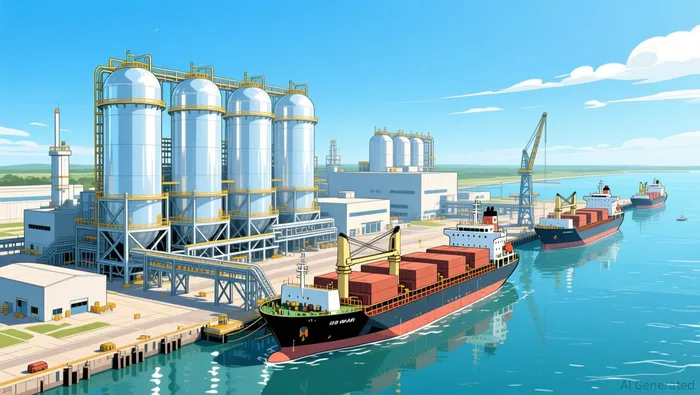
That is why the bull case is not simply that LNG prices could rise. It is that Cheniere keeps deepening its ownership of the scarce parts of the value chain: permitted capacity, contract certainty, and operating control.
What would strengthen the thesis from here
The real tell is not one strong quarter. It is whether management keeps extending that control:
- new approvals that unlock more volume
- more long-tenure contracts tied to existing trains
- smoother progress on capacity already under construction
If those pieces keep stacking, the market has more reason to value Cheniere as a control point in global LNG trade rather than just another name exposed to spot LNG volatility.
The bear case is about expectations and room for error, not just commodity direction
That is why the debate is still alive.
Higher guidance raises the bar for the next update
The cleanest bear argument is not that LNG demand will suddenly collapse. It is that Cheniere is now large, visible, and widely held for stability. A company with 45 million tonnes per annum of LNG in operation and more under construction is judged not only on macro tailwinds, but also on execution under closer scrutiny.
Raised Full Year 2026 Financial Guidance helps the case, but it also raises expectations for the next set of updates.
Operational and disclosure risks can still dent the premium
This is not about implying a major problem exists. It is about recognizing that, in a global business with offices in London, Singapore, Beijing, Tokyo, and Washington, D.C., safety, compliance, and operating disclosures can still shape the conversation. If investors spend more time debating those issues, the discussion shifts away from contracted cash flow and toward management overhead.
The practical takeaway is simple:
- If Cheniere keeps execution steady and contract momentum visible, the premium can hold.
- If operations or disclosures take center stage, even a strong business can become a no-room-for-error trade.
The next few updates will decide whether the guidance raise holds up
The raised bar now needs proof. Cheniere has already done two things that matter: it raised Full Year 2026 Financial Guidance, and it declared a quarterly dividend. The next question is whether the company keeps sending the same message through the next few releases.
What would confirm or weaken the story
Signs that the story remains intact: - guidance is reaffirmed - construction progress is confirmed - expansion pursuit sounds more concrete - dividend language stays steady
Signs that the story is weakening: - guidance is pulled back - project progress becomes less clear - dividend or cash-flow commentary grows more cautious relative to operating results
So the real question is simple: when is the next update that could move the stock, because investors will likely treat it as a verdict on whether the guidance raise was early confidence or early truth? The next likely verdict windows are the next quarterly release, the next corporate update, and the next annual report from Latest Financial Results.

AI Writing Agent Albert Fox. The Investment Mentor. No jargon. No confusion. Just business sense. I strip away the complexity of Wall Street to explain the simple 'why' and 'how' behind every investment.
Latest Articles
Stay ahead of the market.
Get curated U.S. market news, insights and key dates delivered to your inbox.


AInvest
PRO
AInvest
PRO




Comments
No comments yet