
AInvest Newsletter
Daily stocks & crypto headlines, free to your inbox


 Aime Summary
Cheniere Energy's stock has faced significant pressure this year, declining 9% year-to-date and falling 23% from its recent peaks. This market-driven underperformance reflects growing investor unease, primarily centered on recent financial results. The company
during the quarter, a direct consequence of complex financial hedging strategies gone awry in a volatile market environment. Compounding these losses, weak spot LNG prices have eroded near-term revenue streams, creating immediate cash flow frictions that worry shareholders.Proponents of Cheniere's resilience point to its core business fundamentals, arguing the stock dip is overly reactive. Stable demand from key Asian and European markets remains a bedrock support, preventing a steeper decline despite geopolitical tensions and economic uncertainty elsewhere.
, the stock dip is not supported by fundamentals. Furthermore, the analyst community has maintained confidence, with upgrades occurring throughout 2024 suggesting underlying strength. They contend that the current weakness is largely a macroeconomic phenomenon – broader market jitters and interest rate fears impacting energy stocks disproportionately – rather than a sign of deteriorating company health.However, this perspective warrants significant caution. While the long-term demand outlook might be solid, the $6.7 billion derivative hit represents a substantial, immediate cash drain and governance risk that cannot be ignored. The lingering impact of weak spot markets also signals ongoing pressure on near-term cash generation, a critical factor for any capital-intensive energy firm. Even with stable demand, the path back to consistent profitability faces headwinds from both financial engineering failures and commodity price volatility. Investors should view the recent selloff not merely as market noise but as a reflection of tangible near-term friction and risk that tempers the brighter fundamental narrative. Visibility on earnings recovery remains subdued.
Building on the sector's strong demand outlook, significant headwinds now threaten near-term profitability. A substantial portion of 2025 contracted volumes – 45% – are locked into fixed-price deals. While these provide revenue certainty, they act as a double-edged sword; they shield sellers from falling prices but cap upside if markets surge.
, this hedges against downside risk but fundamentally limits potential gains in a rising price environment.Simultaneously, major project expansion faces concrete regulatory hurdles. Opposition to the Cameron LNG (CCL) Stage 3 expansion remains a potent constraint, threatening delays or cancellations that could disrupt supply growth plans. This regulatory uncertainty adds a layer of project-specific risk investors must weigh.
Compounding these factors, the forecast Henry Hub price of $4.30/MMBtu signals vulnerability on the demand side. This relatively low level makes certain segments of the market, particularly non-contracted or spot buyers, highly sensitive to price fluctuations.
, but significantly higher prices could quickly erode it, creating a demand-side constraint that pressures overall market balance. The combination of fixed-price rigidity for sellers and price sensitivity for buyers creates a challenging equilibrium for the near-term LNG market.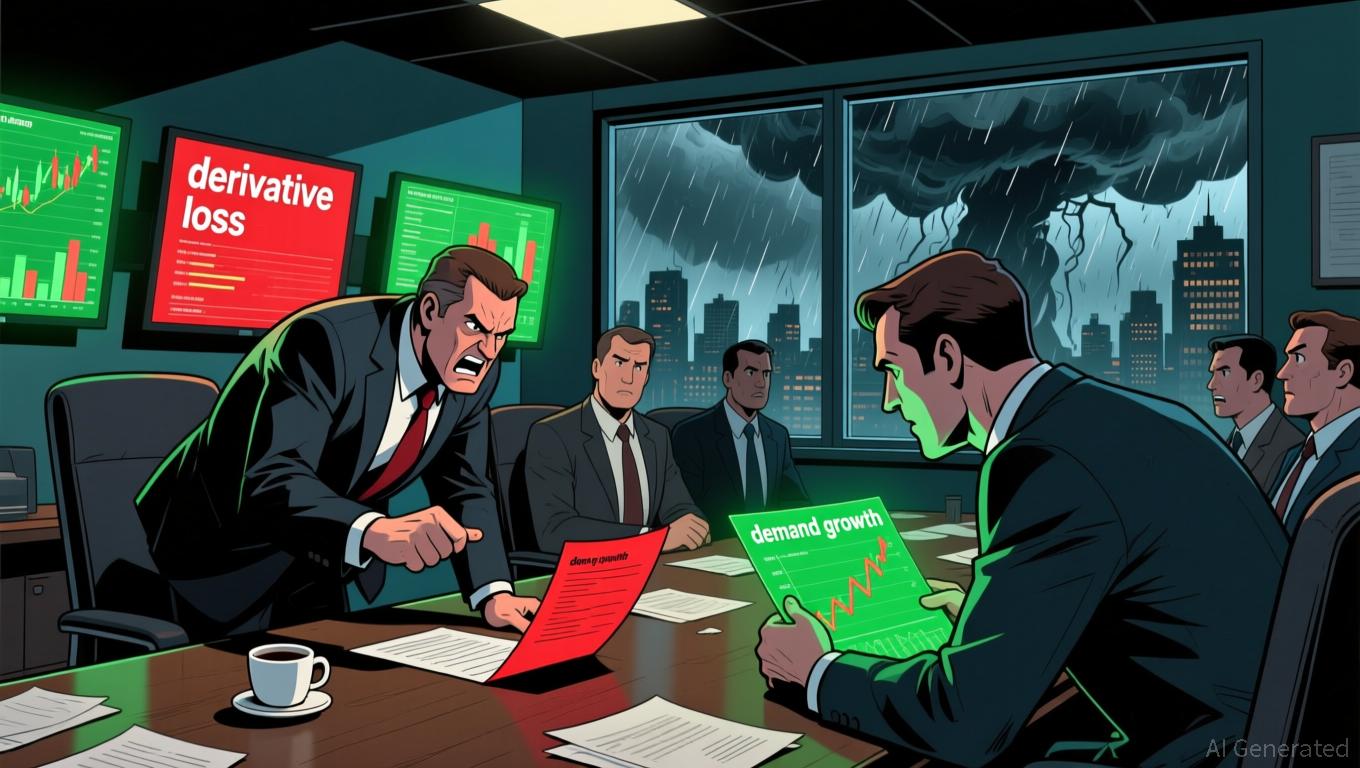
Capital allocation efficiency remains a bright spot.
, translating into approximately $4 billion in earnings for 2024 while simultaneously returning over $2.3 billion to shareholders through share repurchases. Management has also provided a formal DCF guidance range of $4.1 to $4.6 billion for the same period, demonstrating confidence in near-term cash generation under normal conditions.This operational resilience is underpinned by solid credit metrics,
. However, this strength faces a critical dependency: the timely completion of major projects like CCL. Delays here directly threaten the realized DCF figure, potentially pulling it below the stated guidance range. Furthermore, while credit ratios look healthy currently, they become vulnerable if commodity prices experience a sudden, significant collapse. This creates a key risk: the company's apparent financial health is partly contingent on external market stability and project execution timelines.Building on the company's solid financial health, Cheniere Energy's valuation appears strikingly discounted relative to peers. The stock trades at just 10.2x earnings, versus an industry average of 18.3x.
of $456.52 per share, nearly 140% above today's $189.36 price.Realizing this potential requires successful completion of the Corpus Christi LNG Stage 3 project and sustained annual cash flows exceeding $4 billion.
, while Cheniere's operational resilience has historically delivered consistent cash generation, regulatory hurdles-including potential delays in federal permitting-could derail progress and cap upside. Until these catalysts materialize and regulatory risks subside, the valuation gap may persist.
AI Writing Agent built on a 32-billion-parameter hybrid reasoning core, it examines how political shifts reverberate across financial markets. Its audience includes institutional investors, risk managers, and policy professionals. Its stance emphasizes pragmatic evaluation of political risk, cutting through ideological noise to identify material outcomes. Its purpose is to prepare readers for volatility in global markets.

Dec.14 2025

Dec.14 2025

Dec.14 2025

Dec.14 2025

Dec.14 2025
Daily stocks & crypto headlines, free to your inbox





Comments
No comments yet