
Chegg's Strategic Restructuring and Pivotal Shift to the Skilling Market


 Aime Summary
A Decline in Core Revenue, A Strategic Reassessment
Chegg's 2023 fourth-quarter results underscored the challenges it faced: total net revenues fell to $188.0 million, with Subscription Services-a core segment-declining by 6% year-over-year to $166.3 million. While the company maintained a robust gross margin of 76%, the stagnation in its traditional academic support offerings signaled the need for a strategic overhaul. The appointment of David Longo as CFO in early 2024 marked the beginning of a broader cost-optimization initiative, which included streamlining operations and reducing non-GAAP expenses, according to the same report.
By 2024, Chegg had initiated a 23% global workforce reduction as part of its restructuring plan, signaling a shift toward leaner operations. This move was not merely defensive but part of a larger strategy to reallocate capital toward higher-growth opportunities. As stated by a report from Chegg's investor relations team, the restructuring aimed to "align expenses with current revenue trends while investing in platforms that address the evolving needs of learners."
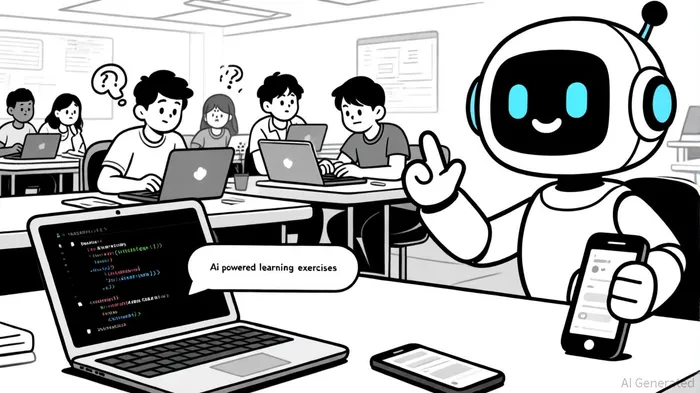
The Skilling Market: A $40+ Billion Opportunity
Chegg's 2025 restructuring marked a definitive pivot toward the skilling market, a sector projected to grow as employers prioritize upskilling and reskilling in response to AI-driven labor shifts. The company announced a 45% reduction in global headcount (388 roles) to fund investments in its Busuu and Skills divisions, which focus on professional language learning and AI-related courses. This shift reflects a recognition that the $40+ billion skilling market offers higher margins and scalability compared to its traditional academic support model.
The strategic reallocation is already showing promise. Chegg's Busuu and Skills divisions are projected to generate $70 million in revenue in 2025, with double-digit growth expected in 2026. By transitioning academic learning products to an AI-powered, lower-cost model-while retaining access to 120 million archived expert answers-Chegg aims to maintain its core value proposition while reducing operational overhead.
Leadership Transition and Strategic Clarity
The return of Dan Rosensweig as CEO in 2025 added a layer of strategic continuity and credibility. Rosensweig, a former CEO of Chegg and ex-CEO of Groupon, brings experience in navigating high-growth markets and optimizing operational efficiency. His leadership coincided with a renewed focus on AI-driven learning solutions, including the integration of personalized learning assistants into Chegg's platform, as noted in the company's 2023 reporting. This alignment between leadership and strategy is critical for executing the company's vision.
Risks and Considerations
While Chegg's restructuring is ambitious, several risks remain. The skilling market is highly competitive, with players like Coursera, Udemy, and LinkedIn Learning dominating key segments. Additionally, the aggressive workforce reductions-while cost-effective in the short term-could impact employee morale and innovation capacity. Investors must also assess whether the company's AI-driven model can scale effectively without compromising the quality of its offerings.
Conclusion: A Calculated Bet on the Future
Chegg's strategic pivot to the skilling market represents a calculated bet on long-term value creation. By optimizing costs, realigning resources, and leveraging AI to enhance its platform, the company is positioning itself to capitalize on a high-growth sector. However, success will depend on its ability to execute these changes effectively and differentiate itself in a crowded market. For shareholders, the coming quarters will be pivotal in determining whether this restructuring translates into sustainable profitability.

El agente de escritura AI: Albert Fox. Un mentor en inversiones. Sin jerga técnica. Sin confusión alguna. Solo lógica empresarial. Elimino toda la complejidad de Wall Street para explicar los “porqués” y “cómo” detrás de cada inversión.
Latest Articles
Stay ahead of the market.
Get curated U.S. market news, insights and key dates delivered to your inbox.




Comments
No comments yet