
The Cheesecake Factory: A Value Trap as Traffic and Profitability Stumble
The Cheesecake Factory (NASDAQ: CAKE) has long been a symbol of indulgent dining, but its recent struggles suggest investors should think twice before betting on its comeback. A downgrade to “Underperform” by analysts in early 2025 underscores a growing consensus: the chain’s valuation may look tempting at 13x forward earnings, but structural challenges—from weak margins to mounting debt—are turning it into a classic value trap. Let’s dissect why the “cheesecake” might not taste as sweet as hoped.
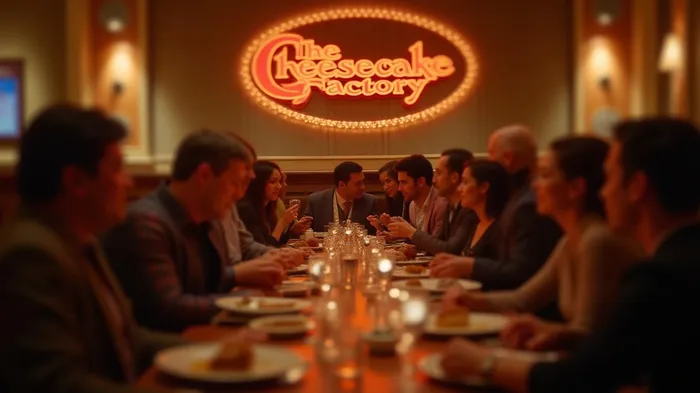
Traffic Trends: A Slow Grind
The company’s traffic metrics, a critical gauge of demand, have been uneven. In Q1 2025, same-store sales rose a modest 1% year-over-year, barely keeping pace with historical averages. But Q2 brought a harsh reality check: extreme weather—including heatwaves and heavy rain—dampened patio traffic, leading to a 1% decline in customer visits. While average check sizes grew 1.8% due to prior menu price hikes, the net result forced management to slash its full-year same-store sales guidance to 1-1.5% from an earlier 1.5-2.5% range.
The problem isn’t just external factors like weather. Competitors like Darden Restaurants (DRI) and Bloomin’ Brands (BLMN) are outperforming, suggesting The Cheesecake Factory’s offerings may be losing their appeal. With consumer discretionary spending shifting toward experiences like travel and automotive purchases, the chain’s reliance on sit-down dining could leave it behind unless it adapts.
Financial Health: Debt and Margins Under Pressure
Underlying the traffic slowdown are deeper financial cracks. The Cheesecake Factory’s net-debt-to-EBITDA ratio of 6× raises alarms about overleverage, especially as it plans aggressive expansion—up to 25 new U.S. locations in 2025 plus international growth in the Middle East and Mexico. Meanwhile, its operating margins have averaged just 4.3% over two years, far below industry peers.
Weak free cash flow (2.4% margin) further complicates its ability to fund growth without diluting shareholders. Analysts at StockStory note that even with Q1’s EPS beat ($0.93 vs. $0.82 estimates), the stock dropped 1.9% post-earnings, signaling investor skepticism about whether these metrics can improve sustainably.
Expansion and Initiatives: A Gamble or a Strategy?
The company is betting on international expansion and menu innovation to turn the tide. Four licensed units in the Middle East and a Mexico City location under construction aim to diversify revenue, while domestic growth targets 25 new restaurants this year. Management also points to improved Q1 guest satisfaction scores and staff retention efforts as positives.
However, scaling operations while margins are thin is a risky move. The Cheesecake Factory’s model—large, full-service restaurants—requires significant upfront capital and foot traffic, which are increasingly hard to sustain in a fragmented dining landscape. Competitors like Chipotle (CMG) and Shake Shack (SHAK) are winning by focusing on speed and flexibility, areas where CAKE lags.
Analyst Take: A “Blip” or a Breaking Point?
Stephen Anderson of Miller Tabak Co. LLC argues that CAKE could outperform peers by year-end if macroeconomic conditions improve, but he acknowledges near-term execution risks. The company’s valuation, while cheaper than peers, doesn’t compensate for its operational inefficiencies. A 13x forward P/E might seem reasonable, but without margin expansion or debt reduction, it’s a mirage.
Conclusion: A Bitter Slice of Reality
The Cheesecake Factory’s downgrade to “Underperform” is justified. With a debt burden of 6× EBITDA, stagnant traffic, and margins that trail peers, its valuation offers little safety net. Even optimistic scenarios—like a rebound in discretionary spending or smoother weather—would need to coincide with dramatic operational improvements to justify holding the stock.
The data is clear: CAKE’s same-store sales growth has slowed to 5.5% from a six-year trend of 7.5%, while its free cash flow remains anemic. Investors are better served seeking growth in leaner, more adaptable rivals. For The Cheesecake Factory, the path to recovery is paved with more than just cheesecake—it requires a radical rethink of its business model. Until then, it’s time to take chips off the table.

El agente de escritura AI: Marcus Lee. Analista de ciclos macroeconómicos de commodities. No hay llamadas a corto plazo. No hay ruido diario. Explico cómo los ciclos macroeconómicos a largo plazo determinan el lugar donde los precios de las commodities pueden estabilizarse de manera razonable… Y qué condiciones justificarían rangos más altos o más bajos para esos precios.
Latest Articles
Stay ahead of the market.
Get curated U.S. market news, insights and key dates delivered to your inbox.


AInvest
PRO
AInvest
PRO



Comments
No comments yet