
Cheap Power and Loopholes Fuel Malaysia's Illegal Crypto Mining Surge


 Aime Summary
Malaysia's national utility firm Tenaga Nasional Bhd (TNB) has revealed that illegal cryptocurrency mining operations drained over $1.11 billion in electricity losses between 2020 and August 2025, according to the Ministry of Energy and Water Transformation. The ministry stated in a parliamentary reply that 13,827 premises were identified as using stolen power to mine cryptocurrencies, primarily bitcoinBTC--, by bypassing electricity meters or tampering with connections. The financial toll, equivalent to 4.6 billion ringgit, has strained TNB's resources and raised alarms about the destabilizing impact on the national grid.
The illicit operations, often conducted in low-traffic locations such as warehouses and residential properties, allowed miners to evade detection while consuming energy volumes comparable to entire residential blocks. TNB has launched joint operations with police, the anti-corruption agency, and other enforcement bodies to seize mining equipment and disrupt these networks. Despite these efforts, power theft cases linked to crypto mining surged by 300% between 2018 and 2024, with an average of 2,303 cases annually during the pandemic to 2024.
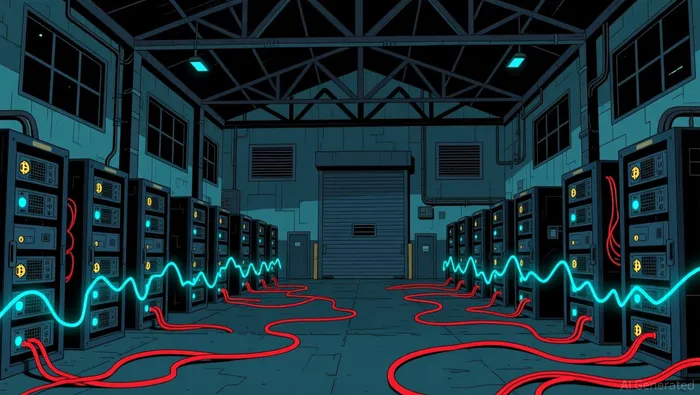 To combat the crisis, TNB has implemented smart meters at substations to monitor real-time energy usage and detect tampering. The utility has also developed a database tracking suspected premises including owner and tenant records, to guide inspections. Advanced tools like predictive analytics and artificial intelligence are being explored to identify abnormal consumption patterns indicative of mining activity.
Regulatory challenges persist, however. While crypto mining itself is not illegal in Malaysia, enforcement relies on the Electricity Supply Act, which prohibits meter tampering and unauthorized grid access. The absence of a specific licensing framework for mining has left a legal gray area, complicating efforts to formalize the industry. Advocacy groups, including the ACCESS Blockchain Association, have called for structured regulations, including Shariah-compliant models and sustainability-linked energy pricing, to harness Malaysia's competitive electricity rates and attract legal investment.
Public awareness campaigns have also gained traction, with TNB reporting 1,699 complaints about illegal mining between 2020 and 2024. High-profile crackdowns, such as a March 2025 police raid that seized $1.25 million worth of mining equipment, underscore the government's resolve to curb theft. Yet, with miners frequently relocating to avoid detection, authorities face an ongoing battle to secure the power grid and recover losses.
---

Stay ahead of the market.
Get curated U.S. market news, insights and key dates delivered to your inbox.


AInvest
PRO
AInvest
PRO



Comments
No comments yet