
Chasen's Collapse: A Cautionary Tale for Real Estate Lending and Urban Renewal Opportunities
The bankruptcy proceedings against Brandon Chasen and his firm, Chasen Cos., offer a stark reminder of the fragility of over-leveraged real estate ventures and the cascading risks they pose to urban development. As courts grapple with the fallout—stalled projects, unpaid debts, and tenant grievances—the case underscores systemic vulnerabilities in commercial real estate financing while also revealing opportunities in undervalued urban markets. For investors, the lesson is clear: avoid the pitfalls of Chasen's aggressive strategy and instead seek out resilient assets in cities with underlying demand but diminished valuations.
Systemic Risks in Commercial Real Estate Financing
Chasen's downfall stems from a reckless expansion playbook: a $100 million national growth plan, short-term debt reliance, and high-interest loans tied to Federal Reserve rates. When post-pandemic economic recovery faltered, these choices proved disastrous. The company's failure to secure long-term financing or build a contingency fund left it vulnerable to default, culminating in Chapter 11 filings for Chasen Construction LLC and a Chapter 7 petition targeting Chasen personally.
The ripple effects are significant. Creditors, including lenders like Sandy Spring Bank, face mounting losses, with unpaid loans and liens totaling over $345,000. The bank's exposure to Chasen's One Calvert Plaza project—a $34 million loan—has already triggered scrutiny of its underwriting standards.
This data will likely show pressure on the bank's equity, reflecting broader concerns about commercial real estate loan defaults. Such stress on lenders could tighten credit conditions, forcing borrowers to seek alternatives or scale back projects.
Urban Development: From Crisis to Opportunity
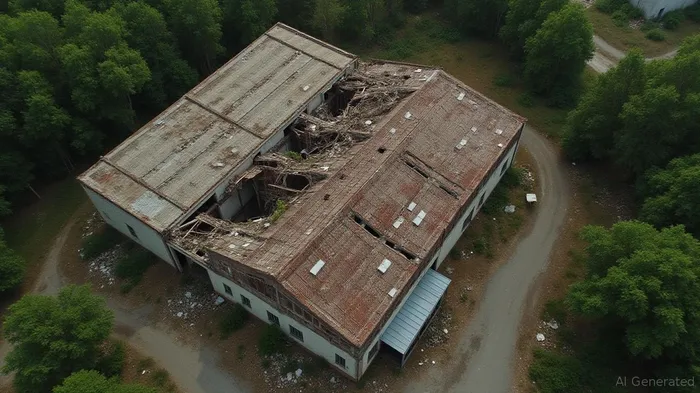
Chasen's abandoned projects, such as the $10 million Meyer Seed Co. warehouse (now a safety hazard) and stalled developments in Baltimore, Virginia Beach, and Florida, present a paradox: blight and potential coexist. For investors, these areas now offer entry points into undervalued urban markets, but with caveats.
Key Considerations for Investors:
1. Due Diligence First: Acquiring Chasen's assets requires careful scrutiny of liens, legal disputes, and environmental hazards. For example, Patriot Steel Fabrication's $600,000 lien on the Meyer warehouse complicates ownership claims.
2. Focus on Fundamentals: Target markets with strong demographic trends, job growth, or infrastructure projects. Baltimore's potential for revitalization—despite Chasen's missteps—could attract investors if paired with adaptive reuse strategies (e.g., converting warehouses into mixed-use spaces).
3. Avoid Overleveraging: Unlike Chasen, prioritize projects with stable cash flows and conservative debt ratios. Short-term loans should be minimized in favor of fixed-rate financing.
This index's trajectory will highlight whether broader real estate markets are undervalued, creating a buying window for patient investors.
Strategic Investment Plays
- Undervalued Urban Assets: Acquire Chasen's distressed properties in Baltimore, where stalled projects have depressed local valuations. Partner with experienced developers to reposition these sites into affordable housing or adaptive reuse projects.
- Tenant-Backed Income Streams: Target stabilized multifamily properties in Florida or Virginia Beach, where Chasen's poor management left vacancies but underlying demand remains.
- Public-Private Partnerships: Engage local governments to secure subsidies or tax incentives for redeveloping blighted sites, reducing risk.
Conclusion: Prudence Amid Collapse
Chasen's bankruptcy is both a cautionary tale and a roadmap. Lenders must tighten underwriting standards to avoid overexposure to speculative ventures, while investors can capitalize on undervalued urban assets—if they act with discipline. The key is to avoid the traps that brought down Chasen Cos.: overextension, poor risk management, and a lack of contingency planning.
In the coming years, the resolution of Chasen's legal battles—particularly the July 17 creditor meeting—will test the resilience of Baltimore's real estate ecosystem. For investors, this is a moment to pivot from speculation to strategy, turning systemic risks into long-term gains.
Investment Advice:
- Hold Cash: Wait for clearer resolution of Chasen's liabilities before committing to distressed assets.
- Prioritize Stability: Focus on markets with strong tenant demand and partnerships with seasoned operators.
- Monitor Fed Policy: Rising interest rates could further strain overleveraged real estate players, creating additional opportunities.
The collapse of Chasen Cos. is more than a single firm's failure—it's a wake-up call for a sector in need of sober risk assessment. For those who heed it, the rewards in undervalued urban markets may prove substantial.

Stay ahead of the market.
Get curated U.S. market news, insights and key dates delivered to your inbox.


AInvest
PRO
AInvest
PRO



Comments
No comments yet