
Chartwell's October 2025 Distribution and Occupancy Performance: Assessing the Stability and Growth Potential of Its Recurring Income Model in a Shifting Real Estate Market
 Aime Summary
The senior housing sector, long a cornerstone of stable income generation, is undergoing a transformation driven by demographic shifts and supply-demand imbalances. Chartwell Retirement Residences (TSE: CSH.UN) has emerged as a standout performer in this evolving landscape, with its October 2025 distribution announcement and occupancy forecasts underscoring the resilience of its recurring income model. This analysis evaluates the stability and growth potential of Chartwell's operations, contextualized within broader market dynamics.
Distribution Stability: A Pillar of Predictability
Chartwell's recurring income model is anchored by its consistent monthly cash distribution of $0.051 per Trust Unit, a rate maintained since 2023 and reaffirmed for October 2025, as detailed in Chartwell's October distribution announcement. This distribution, payable on November 17, 2025, to unitholders of record as of October 31, 2025, reflects the company's commitment to shareholder returns. The Distribution Reinvestment Plan (DRIP) further enhances this model by allowing unitholders to reinvest distributions at no commission cost, with a 3% bonus unit incentive, according to the DRIP terms. Such mechanisms not only stabilize cash flow for investors but also foster long-term ownership growth, a critical advantage in a market where liquidity can be volatile.
Occupancy Trends: Strong Demand Fuels Growth
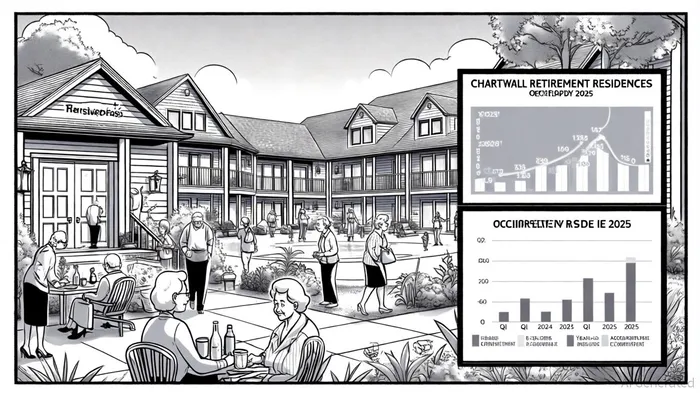
Chartwell's occupancy performance in Q2 2025 provides a compelling case for its growth trajectory. The company reported a 91.9% weighted average same property occupancy rate, a 490-basis-point increase from Q2 2024, as disclosed in the second-quarter results. This surge is attributed to a confluence of factors: an aging global population, a critical shortage of long-term care beds, and a slowdown in new seniors housing construction, according to Senior Housing Market Trends 2025. Analysts project occupancy to reach 93.5% by September 2025 and 95% by year-end, aligning with Chartwell's strategic goals, according to the Q2 earnings call transcript. These figures are not merely statistical-they signal a structural shift in demand, with Chartwell's diversified portfolio (spanning independent living, assisted living, and long-term care) well-positioned to capture market share.
Financial Performance: Revenue and Margin Expansion
The second quarter of 2025 revealed robust financial metrics underpinning Chartwell's recurring income model. Resident revenue surged by 41.4% year-over-year, while same property adjusted net operating income (NOI) rose by 20.0%, as reported in the second-quarter release. This growth is amplified by operational efficiencies, including a 50% reduction in staffing agency costs compared to Q1 2024, according to the Q1 earnings call. Analysts project 2025 revenues to reach CA$1.13 billion, a 15% increase from the prior 12 months, with statutory earnings per share (EPS) expected to rise 33% to CA$0.25, based on the 2025 projections. These figures highlight Chartwell's ability to convert occupancy gains into scalable profitability, a hallmark of a durable recurring income model.
Operational Strategies: Portfolio Optimization and Debt Discipline
Chartwell's operational playbook in 2025 has focused on three pillars: strategic acquisitions, portfolio optimization, and balance sheet strengthening. The company has completed $0.7 billion in acquisitions year-to-date, with an additional $0.6 billion in committed investments, targeting high-quality properties in core markets, according to the second-quarter results. Simultaneously, non-core assets are being divested, and underperforming properties repositioned, ensuring capital is allocated to high-growth opportunities. Financial discipline is evident in the reduction of net debt/EBITDA from 10.2x in 2024 to 8.3x, with a target of 7.5x by year-end, as highlighted in a LinkedIn analysis. This deleveraging enhances Chartwell's capacity to fund future growth without compromising stability.
Market Context: A Sector in Expansion Mode
The broader senior housing market is expanding at a 5.6% CAGR, projected to reach $374.7 billion by 2030, driven by aging demographics and rising demand for specialized care, according to the Mordor Intelligence report. Chartwell's focus on memory care-a segment growing at 10.7% annually-positions it to benefit from this trend, as noted in the CBRE investor survey. Meanwhile, cap rate compression across most segments (except memory care) indicates investor confidence in the sector's resilience, consistent with the Walker & Dunlop outlook. With new construction lagging demand, operators like Chartwell that prioritize occupancy and operational efficiency are uniquely positioned to outperform.
Conclusion: A Recurring Income Model with Long-Term Legs
Chartwell's October 2025 distribution and occupancy performance affirm the strength of its recurring income model. The combination of stable distributions, rising occupancy, and disciplined capital allocation creates a flywheel effect: higher occupancy drives revenue growth, which funds further acquisitions and margin expansion. In a real estate market characterized by volatility, Chartwell's focus on demographic-driven demand and operational excellence offers a compelling case for investors seeking both stability and growth. As the senior housing sector matures, Chartwell's ability to adapt to shifting dynamics-while maintaining its core strengths-will be critical to sustaining its trajectory.

Tianhao Xu is currently a financial content editor, focusing on fintech and market analysis. Previously, he worked as a full-time forex trader for several years, specializing in global currency trading and risk management. He holds a master’s degree in Financial Analysis.
Latest Articles
Stay ahead of the market.
Get curated U.S. market news, insights and key dates delivered to your inbox.


AInvest
PRO
AInvest
PRO



Comments
No comments yet