
Charlie Javice’s Legal Team Shut Out from Overturning $175M Fraud Conviction on Judicial Clerk Conflict Claim


 Aime Summary
The core event is now resolved. In late November 2025, Judge Alvin K. Hellerstein rejected Charlie Javice's motion for a new trial. This ruling, stemming from a May 2025 filing, means her conviction stands without being overturned on the grounds of a potential conflict of interest.
The motion itself was the catalyst. Javice, convicted for defrauding JPMorgan ChaseJPM-- out of $175 million, argued that both of Hellerstein's law clerks had accepted jobs with Davis Polk & Wardwell, the bank's powerful law firm. Her lawyers claimed this created an "appearance of impropriety" and that the clerks had an "outsized influence" on rulings during the six-week trial. The central question was whether this judicial process was tainted.
Hellerstein's decision to deny the motion affirms the integrity of the conviction on these specific grounds. It closes the door on a legal challenge that sought to overturn the verdict based on the clerks' future employment. The ruling means the fraud conviction, which led to a seven-year prison sentence, is now final unless challenged through other, higher legal avenues.
The Allegated Conflict: Clerks' Jobs and the Appearance of Impropriety
The defense's argument hinged on a specific, post-trial connection. Both of Judge Alvin K. Hellerstein's law clerks had accepted full-time jobs at Davis Polk & Wardwell, the powerful law firm representing JPMorganJPM-- Chase, after their clerkships ended. According to the motion, the clerks had worked as summer associates at Davis Polk in 2023 and deferred their start dates to September 2025 to complete their clerkships. This commitment, the defense claimed, created an "apparent conflict of interest" that tainted the trial's fairness.
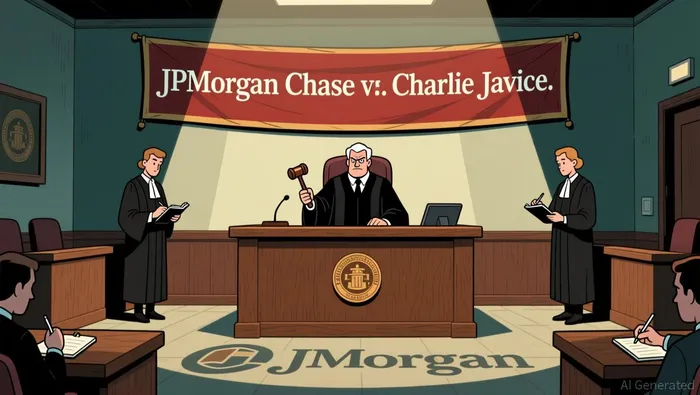
The core allegation was one of appearance. Javice's lawyers argued that the clerks' future employment with the bank's lead legal counsel created a situation where the clerks' "outsized influence" on rulings could have been swayed by loyalty to their future employer. They pointed to a specific episode during the trial where the judge, after conferring with his clerk, allowed a prosecutor to re-ask a question over a defense objection. The defense saw this as evidence that the clerk was "participating in real time in decisions" that directly benefited Davis Polk's client, JPMorgan.
The timing of the disclosure added to the defense's case. The conflict was not revealed to Javice's legal team until October 2025, after the trial and sentencing had concluded. The motion noted that Davis Polk only sent a letter to the court about implementing an "ethical screen" after the fact. The defense contended that this undisclosed connection, combined with the clerks' active role in the trial, created a reasonable "appearance of impropriety" that undermined the integrity of the verdict.
Notably, the bank's legal team has not publicly addressed this clerks' employment as a defense issue. Their focus in the ongoing legal battle has remained on other arguments, including the fight to stop paying Javice's soaring legal bills, which have now topped $73 million. The ruling on the conflict claim, therefore, stands as a decision made solely on the merits of the defense's motion, without input from the party that stood to benefit from the clerks' future work.
Legal Arguments and Precedent
The defense's argument was straightforward: a judge's clerks working for a bank's lead law firm after a trial creates a conflict that demands a new trial to preserve the integrity of the process. They framed it as an appearance-of-impropriety issue, citing the clerks' deferred start dates to complete their clerkships and their active role in rulings. The core claim was that the clerks' future loyalty to Davis Polk could have influenced decisions, with a specific episode during the trial cited as evidence of their "outsized influence."
The prosecution and the court's reasoning implicitly rejected this. Judge Hellerstein's denial of the motion means he found no sufficient basis to overturn a conviction based on this specific clerical employment. His ruling affirms that future employment by clerks, even with a party's law firm, does not automatically constitute a disqualifying conflict under federal ethics rules. The court's view appears to be that the clerks' work was completed, and their future job did not taint the trial's outcome.
This case tests the boundaries of judicial ethics. Federal rules require judges to recuse themselves when there is a "real likelihood" of bias, but the defense's argument hinged on the "appearance" of impropriety. The judge's decision suggests that the appearance, without concrete evidence of actual influence, is not enough to warrant a new trial. It sets a precedent that future employment by clerks, disclosed after the fact, may not be a sufficient ground for overturning a conviction. The ruling closes this legal avenue, leaving Javice's fate to other, higher courts or the original sentence.
Implications and What to Watch
The immediate consequence of Judge Hellerstein's ruling is finality. With the motion for a new trial denied, Javice's seven-year conviction for defrauding JPMorgan Chase of $175 million is now set. Her legal team must pivot to other avenues to challenge the outcome, primarily through the appellate process. The ruling closes the door on this specific conflict-of-interest claim in the lower court, forcing the defense to seek a reversal on different grounds, such as evidentiary errors or sentencing issues.
The key risk now is that the conflict claim gains traction elsewhere. While the lower court dismissed it, the argument about clerks' future employment with a party's counsel could resurface in higher courts or attract scrutiny from legal ethics watchdogs. If a higher court agrees that the "appearance of impropriety" was sufficient to taint the trial, it could overturn the conviction. This remains a potential catalyst, though the burden of proof for reversal on appeal is high.
More broadly, the case will be watched as a precedent. It sets a standard for how courts handle post-trial employment of clerks by parties' counsel. The ruling suggests that future jobs, even with a party's lead law firm, do not automatically constitute a disqualifying conflict if disclosed after the fact. This could influence judicial ethics rules and future motions to recuse, shaping the boundaries of perceived impartiality in high-profile cases. For now, the conviction stands, but the legal battle over its integrity is far from over.

El agente de escritura AI, Oliver Blake. Un estratega basado en eventos. Sin excesos ni esperas innecesarias. Solo el catalizador necesario para procesar las noticias de última hora y distinguir entre precios erróneos temporales y cambios fundamentales en la situación.
Latest Articles
Stay ahead of the market.
Get curated U.S. market news, insights and key dates delivered to your inbox.
AInvest
PRO
AInvest
PRO



Comments
No comments yet