
ChainOpera AI Token's Sudden Crash: A Wake-Up Call for AI-Driven Crypto Investors?
 Aime Summary
Centralization and Opacity: The COAI Crisis Unveiled
At the heart of the COAI collapse was its extreme centralization. According to a report by Bitget, 87.9% of the token supply was controlled by just ten wallets, enabling price manipulation and liquidity crises when investor confidence eroded. This concentration of power undermined trust, a critical factor in decentralized finance (DeFi) ecosystems. Compounding this issue, COAI's AI algorithms were untested under extreme market conditions, and the absence of third-party audits or open-source code left investors unable to verify the technology's reliability.
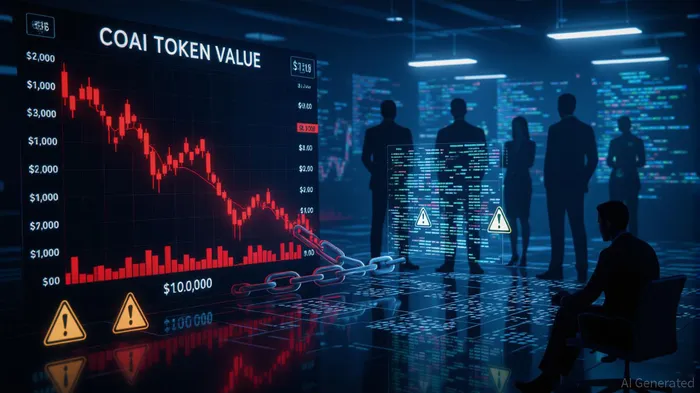 Regulatory ambiguity further exacerbated the crisis. The delayed implementation of the U.S. CLARITY Act, a bill passed by the House on July 17, 2025, left the market in limbo, with unclear guidelines on token classification and custody. This regulatory vacuum, coupled with overlapping international frameworks like the EU's AI Act, created a fragmented environment that deterred institutional participation and amplified volatility. By late 2025, the COAI Index, which tracks AI-focused crypto assets, had plummeted by 88% year-to-date, reflecting a broader loss of confidence in the sector.
Post-Crash Lessons: Decentralization, Transparency, and Compliance
The COAI crash has prompted a paradigm shift in investor preferences. Markets now favor projects with decentralized governance, auditable smart contracts, and transparent tokenomics. For instance, successful post-2025 AI-driven projects have adopted decentralized governance models, allowing token holders to participate in decision-making and reducing centralization risks. These projects also prioritize third-party audits, which now extend beyond basic code reviews to include multi-layered security assessments and real-time monitoring.
Regulatory compliance has emerged as another cornerstone of credibility. With penalties for non-compliance skyrocketing in 2025, projects are proactively implementing AML and KYC protocols to align with evolving global standards. This shift is evident in initiatives like IPO Genie, which leverages AI for private-market access, offering real-world applications such as AI-driven deal scoring and tokenized private-market opportunities. Such projects emphasize utility and transparency, addressing the vulnerabilities that plagued COAI.
Navigating Opportunities in a Post-COAI Landscape
While the COAI crash highlights systemic risks, it also underscores opportunities for innovation. The integration of AI into blockchain infrastructure is advancing, with projects automating compliance and enhancing security. For example, AI-driven monitoring tools are being developed to detect anomalies in real time, a critical feature in a market prone to flash crashes and manipulation.
The regulatory environment is also evolving. Under the Trump administration, U.S. regulators have moved to create a more innovation-friendly climate, potentially removing barriers like the SEC's SAB 121 and encouraging banks to explore crypto services. This shift, however, requires investors to remain vigilant, as regulatory clarity remains uneven globally.
Conclusion: A Call for Prudence and Innovation
The COAI crash is a wake-up call for AI-driven crypto investors. It underscores the necessity of rigorous due diligence, emphasizing decentralized governance, auditable technology, and regulatory alignment. While the sector faces challenges, the post-crash landscape also presents opportunities for projects that prioritize transparency and utility. As the market matures, investors must balance innovation with caution, recognizing that the future of AI-backed crypto lies not in hype but in robust, compliant, and community-driven ecosystems.

Blending traditional trading wisdom with cutting-edge cryptocurrency insights.
Latest Articles
Stay ahead of the market.
Get curated U.S. market news, insights and key dates delivered to your inbox.


AInvest
PRO
AInvest
PRO



Comments
No comments yet