
ChainOpera AI Token's Sudden Collapse: Causes and Lessons for Crypto Investors


 Aime Summary
Centralized Governance and Token Concentration: A Recipe for Crisis
At the heart of COAI's collapse was its hyper-centralized governance structure. Just ten wallets controlled 87.9% of the token supply at the time of the crash, a level of concentration that directly contradicted the decentralized ethos of blockchain technology. This centralization not only stifled community-driven decision-making but also left the project ill-equipped to respond to the liquidity crisis triggered by the depegging of algorithmic stablecoins like xUSDXUSD-- and deUSD according to on-chain data. Such governance models, as highlighted by BitGet analysts, create vulnerabilities where a small group of holders can disproportionately influence market outcomes, exacerbating panic during downturns.
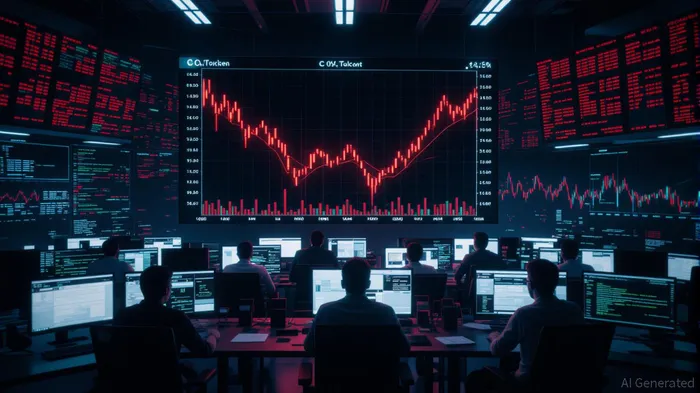 On-chain data further underscores the risks of token concentration. Over 94% of COAI's supply was held in the top 100 wallets, with 55.69 million tokens transferred to exchanges in the weeks preceding the crash-a potential signal of large-scale sell pressure. Binance's research report noted that one entity may have controlled 50% of the top-earning COAI wallets, raising concerns about market manipulation. These patterns highlight the fragility of projects lacking equitable token distribution.
Technical Failures in AI Systems: Opaque Algorithms and Systemic Risks
COAI's reliance on unproven AI algorithms for price and liquidity control proved catastrophic. BitGet reported a 270% surge in AI-related technical failures in Q3 2025, just before the collapse, as opaque models failed to adapt to market volatility. The lack of transparency in these algorithms-many of which were unaudited-created a feedback loop of panic selling and liquidity shortages when stablecoins lost their value pegs according to market analysis.
Experts warn that such "algorithmic monoculture," where similar AI strategies are deployed across platforms, increases the risk of simultaneous failures as observed in recent cases. The COAI crash exposed the dangers of deploying experimental models in DeFi without rigorous testing, a practice that has since drawn scrutiny from blockchain analytics firms according to industry reports.
Regulatory Pressures: GENIUS Act and CLARITY Act Challenges
Regulatory uncertainty also played a pivotal role. The 2025 GENIUS Act imposed stringent compliance demands on AI-driven projects, which COAI was unprepared to meet according to regulatory analysis. Meanwhile, the CLARITY Act left smaller AI-DeFi projects in a legal gray area, eroding investor confidence according to market observers. As stated by Bloomberg, these regulatory shifts forced projects to either adapt quickly or face existential risks-a challenge COAI failed to overcome according to financial analysis.
Market Sentiment and Investor Behavior: Fear, Greed, and the AI Sector
Market sentiment analysis reveals a bearish outlook for COAI. The token's 97.2% monthly drop in late 2025 mirrored broader crypto market weakness, with BitcoinBTC-- dominance rising to 58.41% as capital flowed to safer assets according to market data. The Fear and Greed Index, a barometer of investor psychology, reflected heightened anxiety, with metrics like the VIX and put/call ratios spiking according to financial indicators. Social media sentiment, though not directly tied to COAI, was further dampened by platforms like YouTube and Facebook introducing AI content labeling features, which may have reduced trust in AI-driven projects according to industry reports.
Lessons for AI-Driven Blockchain Projects
The COAI collapse underscores three critical lessons for the sector:
1. Decentralized Governance: Projects must prioritize equitable token distribution and community-driven decision-making to mitigate panic during crises according to on-chain data.
2. Transparent AI Frameworks: Algorithms must be audited, tested, and open to scrutiny to avoid technical failures according to technical analysis.
3. Regulatory Preparedness: Proactive engagement with evolving compliance frameworks is essential to avoid legal and operational shocks according to financial reports.
Experts like those at BitGet emphasize that AI-DeFi projects must demonstrate real-world utility and robust infrastructure to regain investor trust according to market analysis. The industry's future hinges on balancing innovation with accountability.
Conclusion
ChainOpera AI's collapse is a stark reminder of the risks inherent in AI-driven blockchain projects. From centralized governance to opaque algorithms and regulatory misalignment, the crisis highlights the need for structural reforms. For investors, the takeaway is clear: due diligence must extend beyond tokenomics to include governance transparency, technical rigor, and regulatory alignment. As the sector evolves, projects that heed these lessons will be better positioned to navigate the volatile crypto landscape.

Blending traditional trading wisdom with cutting-edge cryptocurrency insights.
Latest Articles
Stay ahead of the market.
Get curated U.S. market news, insights and key dates delivered to your inbox.






Comments
No comments yet