
ChainOpera AI Token's Sudden Collapse: A Cautionary Tale for AI-Driven Crypto Investors
 Aime Summary
Structural Vulnerabilities in AI-Integrated Crypto Models
At the heart of COAI's collapse lies a fundamental flaw: hyper-centralization. According to a report by Bitget, 88–97% of the token supply was controlled by just ten wallets, creating a system inherently susceptible to liquidity crises and coordinated sell-offs. This concentration of power not only undermines decentralization principles but also exposes projects to manipulation, as seen in COAI's dramatic price drop. Compounding this issue was the project's lack of public development activity, with its last code updates dating to September 2025. Such technical stagnation eroded trust in the project's long-term viability, leaving investors with little confidence in its ability to adapt to market or technological shifts.
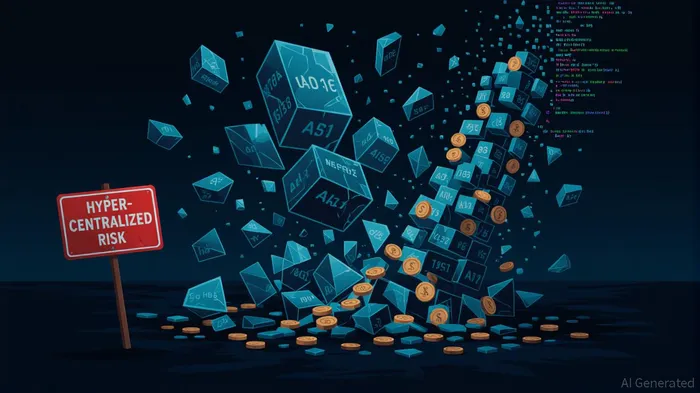
Regulatory uncertainty further exacerbated COAI's fragility. The U.S. CLARITY Act, introduced in 2025, left critical questions about the classification of AI-related tokens unresolved, creating a legal gray area that deterred institutional participation. This ambiguity, paired with the absence of audited algorithms and stress-testing for high-volatility scenarios, exposed COAI to cascading failures during market stress. The result was a perfect storm: a project built on speculative hype, unverified technology, and a governance structure that prioritized short-term gains over long-term sustainability.
Investor Sentiment Shifts and Market Reactions
The COAI crash triggered a broader reevaluation of AI-driven crypto projects, with investor sentiment shifting toward caution. Data from late 2025 reveals that nearly half of global venture capital funding was redirected to pure-play AI ventures, leaving AI-crypto hybrids starved of capital. This shift reflects a growing skepticism toward speculative crypto assets, particularly those lacking real-world utility or robust infrastructure. For instance, Bitcoin treasury companies and miners like IREN and CleanSpark faced setbacks as investors pivoted to AI data centers, prioritizing tangible applications over tokenized experiments.
Post-collapse behavior metrics highlight a strategic pivot toward regulated infrastructure and compliance tools. Institutional investors began favoring custodial services and CFTC-regulated exchanges, as seen in the launch of the first fully CFTC-regulated leveraged crypto platform in 2026. Meanwhile, retail investors increasingly relied on automated trading tools and tokenization platforms to mitigate risks, signaling a fragmented but adaptive market response. These trends underscore a broader demand for transparency and accountability-a demand that projects like COAI failed to meet.
Long-Term Implications for AI-Crypto Convergence
The COAI collapse has accelerated a critical conversation about the alignment of innovation with regulatory compliance. Successful post-crisis projects, such as Ocean Protocol and Bittensor, have demonstrated resilience by emphasizing decentralized governance, real-world AI use cases, and transparent tokenomics. These models suggest that long-term success in AI-crypto will hinge on balancing technological ambition with risk management frameworks that address centralization, liquidity, and regulatory alignment.
Regulatory clarity is also emerging as a linchpin for the sector's future. The proposed GENIUS Act in the U.S., which aims to streamline cross-border transactions and institutional adoption, could provide a blueprint for harmonizing AI-crypto policies. However, until such frameworks mature, investors must remain vigilant. The COAI case illustrates how even projects with AI-driven narratives can falter without addressing foundational governance and technical risks.
Lessons for Investors: Diversification and Due Diligence
For investors, the COAI collapse is a clarion call to adopt diversified exposure and rigorous due diligence. Key takeaways include:
1. Assess token distribution: Projects with extreme concentration of supply (e.g., >80% held by top wallets) should be approached with caution.
2. Demand audited algorithms: Unverified AI systems are a liability during volatility; prioritize projects with transparent, stress-tested codebases.
3. Evaluate governance structures: Decentralized decision-making and active community participation are critical for long-term resilience.
4. Monitor regulatory developments: Stay informed about evolving frameworks like the CLARITY Act, which can reshape market dynamics overnight.
As the AI-crypto space matures, the line between innovation and speculation will become increasingly blurred. The COAI case study reminds us that even the most hyped projects can crumble without addressing structural weaknesses. For investors, the path forward lies in balancing optimism with pragmatism-leveraging AI's transformative potential while anchoring portfolios in fundamentals.

Blending traditional trading wisdom with cutting-edge cryptocurrency insights.
Latest Articles
Stay ahead of the market.
Get curated U.S. market news, insights and key dates delivered to your inbox.






Comments
No comments yet