
The ChainOpera AI Token Crash: A Cautionary Tale for AI-Driven Crypto Investments


 Aime Summary
Centralized Governance and Liquidity Crisis
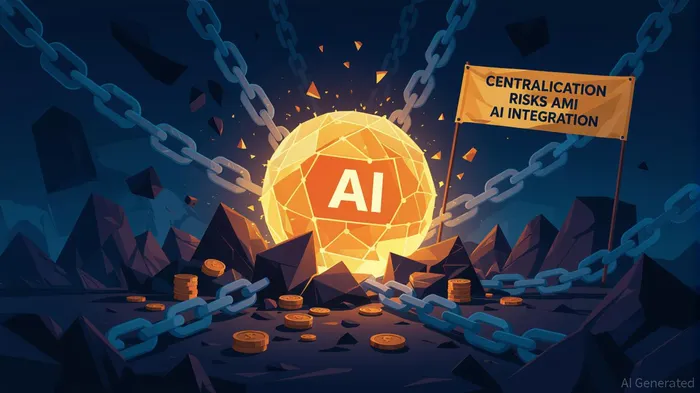
The COAI token's collapse was precipitated by hyper-centralized governance structures. According to Bitget's report, ten wallets controlled 87.9% of the token supply, a concentration that directly contradicted the decentralized ethos of DeFi and severely hampered the project's ability to respond to liquidity crises. Centralized control not only eroded trust but also created a feedback loop where panic selling-triggered by AI algorithmic failures-was exacerbated by the lack of distributed decision-making mechanisms. This scenario mirrors broader concerns in academic literature, which notes that hybrid governance models in AI-blockchain ecosystems often struggle to balance efficiency with accountability.
Technical Failures in AI Systems
The technical underpinnings of the COAI token further exposed critical flaws in AI integration. A 270% surge in AI-related issues during Q3 2025, including unvalidated "black box" models and algorithmic errors, directly contributed to the destabilization of algorithmic stablecoins like xUSDXUSD-- and deUSD. These failures triggered cascading liquidity crises, as AI systems failed to maintain dollar pegs amid market volatility. Such technical vulnerabilities align with findings from Web of Science studies, which caution that AI models are susceptible to bias, backdoor attacks, and data poisoning-risks that can be exploited in open innovation (OI) ecosystems.
Regulatory Ambiguity and Investor Confidence
Regulatory uncertainty also played a pivotal role in the COAI crash. The U.S. CLARITY Act and 2025 GENIUS Act created legal ambiguities that eroded investor confidence, particularly as AI-driven projects struggled to meet evolving compliance standards. This regulatory limbo is emblematic of a broader challenge: AI-blockchain ecosystems must navigate a fragmented global framework where innovation often outpaces oversight. Market reports indicate that organizations now dedicate 37% more time to managing AI-related risks compared to 2024, underscoring the growing complexity of compliance in this space.
Academic Insights on Algorithmic Governance
Recent academic research offers frameworks to address these vulnerabilities. For instance, the VOPPA model proposes enhancing decentralization and fault tolerance in AI-driven governance. Additionally, the NIST AI Risk Management Framework and ISO/IEC 42001 standard emphasize the need for robust governance policies to mitigate algorithmic bias and tampering. These insights suggest that investors should prioritize projects with transparent, auditable AI systems and decentralized governance structures.
Market Trends in Risk Management
The COAI crash has accelerated market trends toward AI-centric risk management. Emerging technologies like blockchain-backed AI infrastructure are being explored to enhance data integrity and auditability. For example, riskAIchain-a novel AI-driven IT infrastructure-combines predictive analytics with blockchain's immutable ledger to optimize risk mitigation. However, as Forbes warns, AI failures are expected to spike in 2025, necessitating a shift toward decentralized innovation and adaptive governance.
Broader Implications for Investors
For investors, the COAI collapse highlights three key lessons:
1. Demand Decentralized Governance: Projects with token distributions skewed toward a small number of wallets (e.g., 87.9% control by ten wallets) pose systemic risks.
2. Prioritize Technical Robustness: AI models must be validated, transparent, and resilient to manipulation. Investors should scrutinize projects for "black box" algorithms and inadequate testing.
3. Factor in Regulatory Dynamics: The rapid evolution of AI and blockchain regulations means compliance is no longer optional. Projects lacking clear legal strategies are likely to face investor skepticism.
Conclusion
The ChainOpera AI token crash is not an isolated incident but a symptom of deeper flaws in AI-integrated blockchain ecosystems. As academic and market insights converge on the need for decentralized governance, technical rigor, and regulatory clarity, investors must adopt a cautious, informed approach. The future of AI-driven crypto projects hinges on their ability to address these vulnerabilities-lessons that the COAI collapse makes painfully clear.

Mezclando la sabiduría tradicional en el comercio con las perspectivas más avanzadas sobre las criptomonedas.
Latest Articles
Stay ahead of the market.
Get curated U.S. market news, insights and key dates delivered to your inbox.






Comments
No comments yet