
ChainOpera AI Token Collapse: A Wake-Up Call for AI-Driven Crypto Investments?


 Aime Summary
The Anatomy of the COAI Collapse
The COAI token's collapse was not an isolated incident but a symptom of deeper flaws. A report by Bitget highlights that the top 10 holders controlled 88% of the supply, creating a market highly susceptible to manipulation and large-scale sell-offs. Blockchain analysis further revealed coordinated trading activity among 60 wallets, exacerbating volatility. These factors, combined with governance failures at the project level, created a perfect storm.
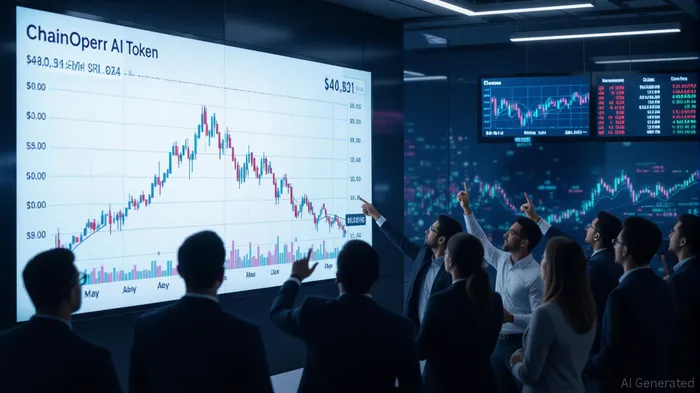 The collapse mirrored historical financial crises, such as the 2008 Global Financial Crisis, where centralized control and opaque risk management led to systemic breakdowns. COAI's failure exposed a critical truth: AI-driven crypto projects, despite their technological allure, remain vulnerable to traditional financial pitfalls when governance and transparency are lacking.
Market Impact and Regulatory Reactions
The COAI crash sent shockwaves through the AI-crypto sector. Bitget notes that the event triggered sector-wide volatility in AI-linked commodities and shifted investor preferences toward pure AI startups over blockchain-integrated projects. Regulators responded swiftly, with the European Union designating financial AI systems as "high-risk" under its AI Act and the U.S. advancing frameworks like the GENIUS Act to promote responsible innovation according to reports.
Globally, 2025 marked a turning point in crypto regulation. Over 70% of jurisdictions introduced new stablecoin frameworks, with 80% of financial institutions adopting digital assets under these rules. However, challenges persist, including regulatory inconsistencies and the risk of illicit finance in jurisdictions with weak oversight. The North Korean Bybit hack, which resulted in a $1.5 billion EthereumETH-- loss, further emphasized the need for real-time information sharing and global collaboration according to analysis.
Long-Term Viability: Risks and Opportunities
Post-2025, AI-driven crypto projects face a dual reality. On one hand, advancements in AI-such as large language models for unstructured data analysis and AI-native businesses-offer transformative potential. For instance, BlackRock leverages AI to parse macroeconomic commentary, while platforms like CelestiaTIA-- and Polygon deploy AI to enhance blockchain scalability and security.
On the other hand, structural risks loom large. Token Metrics warns that over-reliance on AI algorithms and data bias could undermine trust, particularly as models remain "black boxes" difficult to audit. Additionally, the rise of Central BankBANK-- Digital Currencies (CBDCs), such as China's digital yuan, threatens to erode the competitive advantages of decentralized cryptocurrencies according to analysis.
Investor Strategies and Risk Mitigation
Experts emphasize the need for disciplined risk management. Token Metrics recommends diversifying crypto portfolios, using AI tools like Token Metrics for data-driven decisions, and implementing automated stop-loss orders. Changelly highlights hedging with stablecoins and active portfolio rebalancing as critical strategies according to research.
Investor education has also evolved. AI-driven assistants on brokerage platforms now provide plain-language guidance, while blockchain-based digital identity systems enhance transparency. These tools aim to demystify complex markets, though their effectiveness remains untested in prolonged crises.
Conclusion: A Call for Prudence and Innovation
The COAI collapse serves as a stark reminder that AI-driven crypto projects are not immune to traditional financial risks. While technological advancements offer promise, they must be paired with robust governance, regulatory clarity, and investor education. As the U.S. and EU continue to refine their frameworks, the sector's long-term viability will depend on balancing innovation with accountability. For investors, the lesson is clear: prioritize projects with transparent utility, decentralized governance, and regulatory compliance. In a post-2025 world, the line between opportunity and catastrophe has never been thinner.

Mezclando la sabiduría tradicional del comercio con las perspectivas más avanzadas en el área de las criptomonedas.
Latest Articles
Stay ahead of the market.
Get curated U.S. market news, insights and key dates delivered to your inbox.






Comments
No comments yet