
The ChainOpera AI Token Collapse: A Cautionary Tale of Systemic Risks in AI-Driven Crypto Projects


 Aime Summary
Systemic Risks: Centralization, Regulation, and Technical Fragility
At the heart of COAI's collapse was its hyper-centralized structure. According to a Bitget report, 88% of the token supply was controlled by just ten wallets at the time of the crash, creating a liquidity trap that made the project susceptible to manipulation and sudden sell-offs. This concentration of ownership is not unique to COAI but is emblematic of a broader trend in AI-driven crypto projects, where governance is often concentrated in the hands of a few insiders. Such structures erode trust and amplify the risk of cascading failures, as the resignation of COAI's CEO and C3 AI's reported $116 million net loss triggered a liquidity crisis.
Regulatory uncertainty further compounded the problem. The U.S. CLARITY Act, introduced in late 2025, imposed new legal constraints on AI-powered tokens, including algorithmic stablecoins, which had already lost $3.4 billion in stolen funds that year. This regulatory turbulence, combined with the SEC's evolving framework for digital assets, created a climate of unpredictability. As the International Monetary Fund (IMF) warned, unregulated AI crypto projects pose significant contagion risks, particularly when they lack transparency and utility-driven design.
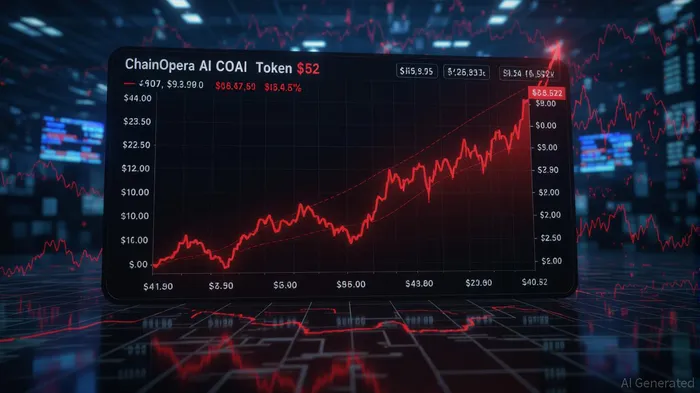 Technically, COAI's vulnerabilities were equally alarming. A surge in AI-related protocol flaws-up 270% in late 2025-and minimal code updates exposed the fragility of its underlying infrastructure. These issues were compounded by governance missteps, such as the absence of decentralized decision-making mechanisms, which left the project ill-equipped to respond to market shocks.
Early Warning Signals: Missed Red Flags and Market Psychology
Investors who ignored early warning signals were left scrambling as COAI's price volatility spiraled out of control. A 96% price surge in 24 hours in early 2025, driven by speculative retail trading, should have been a red flag. At that time, 97% of the token supply was held by top wallets, raising concerns about a potential liquidity drain. Technical indicators like the RSI and Money Flow Index also signaled weakening momentum, with analysts warning that a failure to break past a key resistance level at $22.44 could trigger further declines.
The broader market context also provided clues. The AI sector's rapid valuation growth, fueled by speculative hype and AI chip stocks like NVIDIA, created a bubble-like environment. Deutsche Bank explicitly warned of a potential "sharp reversal" in the AI sector, drawing parallels to historical speculative crashes like the 1929 stock market collapse. Meanwhile, the collapse of algorithmic stablecoins in late 2025-xUSD and deUSD-highlighted the fragility of synthetic assets, which often serve as the backbone of AI-driven crypto projects.
Lessons for Investors: Diversification and Regulatory Vigilance
The COAI crash offers critical lessons for investors. First, token concentration remains a red flag. Projects where a small number of wallets control the majority of the supply are inherently unstable and prone to manipulation. Second, technical due diligence is paramount. Investors must scrutinize code updates, governance structures, and risk management frameworks, such as the NIST AI Risk Management Framework and ISO/IEC 23894, to assess a project's resilience.
Regulatory developments, while still evolving, are another key consideration. The U.S. CLARITY Act and the SEC's no-action letters for certain tokens provide some clarity, but global regulatory fragmentation remains a challenge. Investors should prioritize projects operating in jurisdictions with mature frameworks, such as the EU's AI Act, which balances innovation with accountability.
Finally, the COAI collapse underscores the importance of portfolio diversification. As safe-haven assets like gold and BitcoinBTC-- gained traction in late 2025, investors began reallocating capital away from speculative AI tokens. This shift highlights the need to hedge against volatility in high-risk sectors.
Conclusion
The ChainOpera AI token crash is more than a cautionary tale-it is a wake-up call for the crypto and AI ecosystems. Systemic risks, from centralized governance to regulatory uncertainty, remain deeply embedded in the DNA of many AI-driven projects. For investors, the path forward lies in rigorous due diligence, a focus on utility-driven innovation, and a willingness to adapt to an ever-changing regulatory landscape. As the industry grapples with the aftermath of COAI's collapse, one thing is clear: the future of AI in crypto will be defined not by hype, but by resilience.

Blending traditional trading wisdom with cutting-edge cryptocurrency insights.
Latest Articles
Stay ahead of the market.
Get curated U.S. market news, insights and key dates delivered to your inbox.




Comments
No comments yet