
Chainlink and GLEIF Unite to Promote Unified Digital Identity Standards in Finance
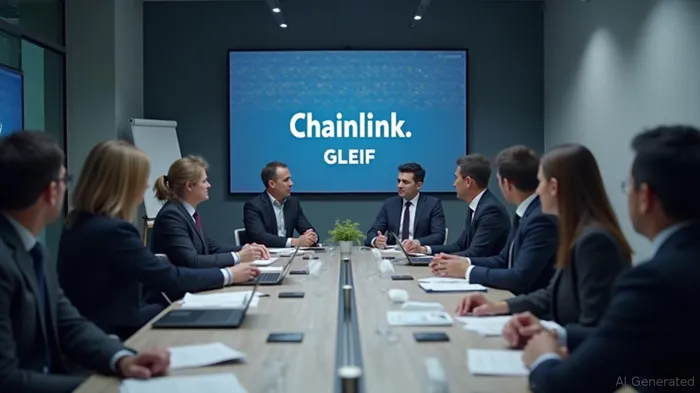
Chainlink and the Global Legal Entity Identifier Foundation (GLEIF) have united to promote unified digital identity standards within the financial sector. Their collaborative report emphasizes the potential of verifiable onchain identity to lower compliance costs, speed up onboarding processes, and encourage the adoption of digital assets through blockchain-integrated global identity standards.
The financial sector has gradually embraced identity standards since the 2008 financial crisis, aiming to boost transparency and trust. However, the current system remains fragmented, slow, and costly. The report highlights that these inefficiencies are not only inconvenient but also financially burdensome and stifling to innovation. A significant portion of compliance budgets, approximately 33%, is allocated to Know Your Customer (KYC) procedures. The average cost to onboard a new client stands at $2,598, and delays in this process have led to client losses for 67% of banks and 74% of asset managers. These figures illustrate the unsustainability of the current model in an era rapidly transitioning towards digital assets and global tokenization.
The report proposes blockchain-based, verifiable onchain identity as a transformative solution. By integrating globally recognized identity standards directly into blockchain networks, financial institutionsFISI-- could automate compliance, accelerate onboarding, and reduce operational costs without compromising security or regulatory adherence. Unlike traditional, siloed databases, blockchain-based identity systems offer a tamper-proof, transparent, and instantly verifiable format. These attributes make them ideal for financial ecosystems dealing with cross-border compliance, anti-money laundering (AML) requirements, and customer verification.
Chainlink, a prominent player in blockchain infrastructure, and GLEIF, the organization behind the globally recognized Legal Entity Identifier (LEI), are collaborating to bridge the gapGAP-- between traditional financial identity and decentralized systems. Their shared vision is to ensure that identity standards remain robust as the industry transitions into the blockchain era.
The call for improved digital verification is not limited to blockchain advocates. BlackRockREM-- Chairman Larry Fink, in his 2025 Annual Letter to Investors, emphasized the necessity of solving digital verification to build an efficient and accessible financial system. This sentiment reflects a broader regulatory and industry concern: future financial systems will require not only transparent asset infrastructure but also reliable and interoperable identity verification tools. Failure to address fragmented identity standards could hinder the wider adoption of digital assets.
The Chainlink-GLEIF report highlights a critical next step for digital finance: aligning the trust mechanisms of traditional institutions with the scalability and efficiency of blockchain technology. Embedding globally accepted identity standards onchain offers a pathway that balances regulatory compliance with innovation. While this transition will not be immediate, the groundwork is being laid. As financial institutions increasingly turn to blockchain for solutions, the demand for verifiable digital identity standards is expected to rise. If successful, these efforts could lead to a more unified, secure, and accessible global financial system, where onboarding is faster, compliance is streamlined, and trust is verifiable by design.

Stay ahead of the market.
Get curated U.S. market news, insights and key dates delivered to your inbox.


AInvest
PRO
AInvest
PRO



Comments
No comments yet