
Chainlink Expands Blockchain Interoperability and Oracle Adoption
 Aime Summary
Chainlink's oracle network and Cross-Chain Interoperability Protocol (CCIP) are critical for smart contract and enterprise blockchain adoption according to analysis.
Tokenized gold leverages smart contracts to enable fractional ownership and 24/7 accessibility, bridging traditional assets with DeFi ecosystems as explained.
Chainlink and Swift have conducted trials with major banks, demonstrating secure cross-chain asset settlement and compliance with institutional-grade identity verification based on reports.
Chainlink's oracle network continues to play a central role in the expansion of blockchain-based smart contracts and enterprise applications. By providing decentralized data feeds and secure cross-chain communication, ChainlinkLINK-- enables smart contracts to interact with external data sources and real-world events as noted. This infrastructure is particularly important for sectors like DeFi, insurance, and asset tokenization, where reliable and tamper-proof data is essential.
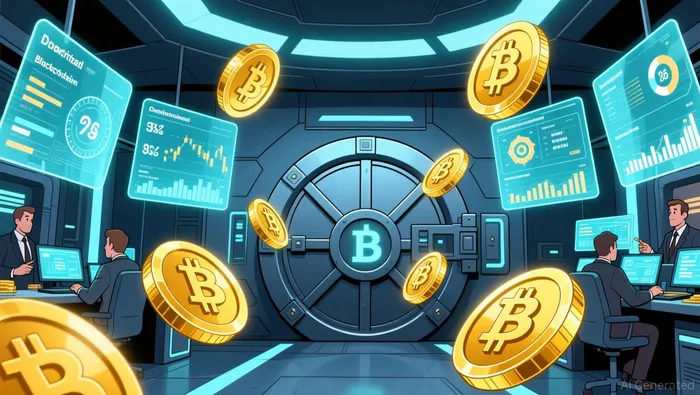
The integration of tokenized gold into blockchain ecosystems represents a significant step in bringing traditional assets into the digital economy. Smart contracts ensure that each token represents a specific weight of physical gold stored in audited vaults according to documentation. This approach not only enhances transparency and accessibility but also reduces the logistical challenges associated with physical commodities. Projects like PAX GoldPAXG-- and Tether GoldXAUt-- are examples of how traditional assets are being transformed into digital tokens for use in DeFi and other blockchain-based applications.
Chainlink's collaboration with Swift is further advancing the integration of traditional finance with blockchain technology. The trials with major banks have demonstrated the ability to settle tokenized bonds across multiple blockchain networks while maintaining compliance with regulatory standards as demonstrated. By leveraging Chainlink's Runtime Environment (CRE) and CCIP, institutions can securely transfer assets between public and private blockchains, supporting real-time settlement and reducing operational friction. This infrastructure is also embedding verifiable Legal Entity Identifiers (vLEIs) into blockchain assets, ensuring that institutions maintain compliance without sacrificing data privacy.
How Does Chainlink's Oracle Network Support Smart Contracts?
Chainlink's oracle network acts as a bridge between blockchain-based smart contracts and external data sources. Smart contracts are self-executing agreements that operate on the blockchain, but they require real-world data to function effectively as highlighted. Chainlink's decentralized oracle network ensures that this data is reliable, tamper-proof, and available in real time. This is particularly important for DeFi protocols, which rely on accurate price feeds and other data inputs to execute transactions securely.
The oracle network also plays a key role in enterprise adoption by enabling smart contracts to interact with traditional financial systems. For example, tokenized assets can be settled across multiple blockchain networks with the help of Chainlink's CCIP and CRE according to trial results. This allows institutions to tokenize bonds, commodities, and other financial instruments while maintaining compliance with existing regulatory frameworks. By providing secure and scalable infrastructure, Chainlink is helping to bridge the gap between traditional finance and the decentralized economy.
What Are the Implications of Tokenized Gold for DeFi and Traditional Finance?
Tokenized gold is a prime example of how blockchain technology is transforming traditional asset classes. By representing physical gold as digital tokens on a blockchain, tokenized gold offers several advantages over conventional gold ownership as detailed. These include fractional ownership, which allows investors to own small amounts of gold, and 24/7 accessibility, which enables global trading without the limitations of traditional markets. This is particularly beneficial for DeFi applications, where tokenized assets can be used as collateral in lending protocols or traded on decentralized exchanges.
For traditional finance, tokenized gold provides a way to integrate physical assets into blockchain-based systems without compromising security or regulatory compliance. Custodians verify the physical reserves to ensure that each token is backed by a specific amount of gold, and smart contracts enforce these rules automatically according to documentation. This model is being adopted by various projects, including PAX Gold and Tether Gold, which illustrate the different approaches to tokenized commodities. As more institutions explore the benefits of tokenized assets, the role of blockchain oracles like Chainlink will become increasingly important in ensuring transparency and trust.
How Is Chainlink Advancing Blockchain Interoperability and Compliance?
Blockchain interoperability is a key challenge in the development of multi-chain applications. Protocols like IBC, XCM, and CCIP are being used to facilitate secure and scalable cross-chain communication as reported. Chainlink's CCIP, in particular, is designed to support a new standard for cross-blockchain communication, enabling secure asset transfers and data validation. This infrastructure is essential for applications that require interactions between multiple blockchain networks, such as cross-chain lending platforms or global trade systems.
In addition to technical interoperability, Chainlink is also advancing compliance and data verification in the blockchain space. The collaboration with GLEIF to embed vLEIs into blockchain assets ensures that institutions can maintain regulatory compliance while using decentralized systems as demonstrated. This is particularly important for enterprises that need to meet legal and financial requirements while adopting blockchain technology. By providing verifiable identity solutions, Chainlink is helping to build trust in the digital economy and support the widespread adoption of tokenized assets.

Blending traditional trading wisdom with cutting-edge cryptocurrency insights.
Latest Articles
Stay ahead of the market.
Get curated U.S. market news, insights and key dates delivered to your inbox.


AInvest
PRO
AInvest
PRO



Comments
No comments yet