
CFTC Sues Three States in Major Prediction Market Jurisdiction Battle
 Aime Summary
The Commodity Futures Trading Commission (CFTC) has filed lawsuits against Arizona, Connecticut, and Illinois to challenge state efforts to restrict trading in lawful event contracts. The agency argues that federal law grants it exclusive jurisdiction over the regulation of prediction markets, including futures and swaps. By challenging state actions, the CFTC aims to clarify its regulatory authority and prevent interference from state gambling laws according to Bloomberg Law.
The lawsuits target cease-and-desist letters sent by state officials to prediction market platforms such as Kalshi and Crypto.com. These letters assert that the platforms are violating state gambling laws by offering contracts tied to sports, politics, and other events. The CFTC is seeking to block such state interventions and reaffirm the federal oversight of these contracts as reported by Bloomberg Law.
The CFTC's legal strategy is centered on the argument that prediction markets are not gambling products but rather federally regulated derivatives. The agency emphasizes that event contracts fall under the Commodity Exchange Act, which grants exclusive regulatory authority to the CFTC. This distinction is key to the CFTC's broader efforts to maintain control over the regulatory framework for such markets according to CoinDesk.
What Is the Legal Basis for the CFTC's Actions?
The CFTC's lawsuits are grounded in the Commodity Exchange Act, a federal law that the agency claims gives it sole jurisdiction over the regulation of event contracts. According to the CFTC, this law overrides state-level gambling statutes and preempts state attempts to impose additional requirements on prediction market platforms. The CFTC is using these lawsuits to reinforce the idea that such contracts are financial instruments, not gambling products as Barrons reports.
By framing the issue as one of federal preemption, the CFTC avoids direct engagement with the states' arguments that the contracts are analogous to betting or wagering. Instead, the agency focuses on the legal structure of the market and its role as a regulator of futures and swaps. This strategy seeks to establish a clear precedent that will limit state-level interference in the future according to Cointelegraph.
The outcome of these lawsuits could determine whether prediction markets operate under a unified federal framework or face a patchwork of state regulations. This distinction is important for market stability and for the ability of platforms to operate across state lines without fear of conflicting legal requirements as Bloomberg Law notes.
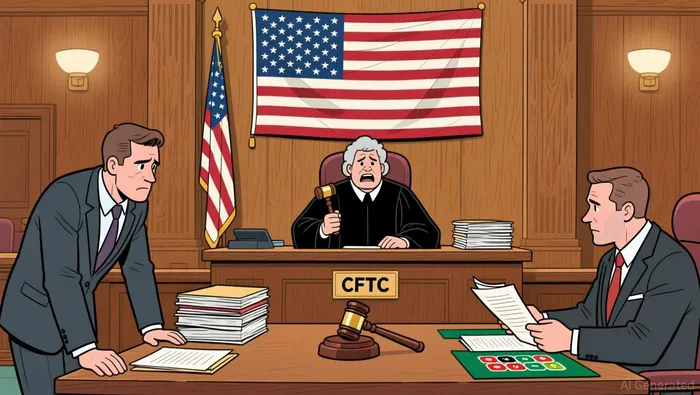
How Might This Affect Market Stability and Innovation?
The CFTC's actions aim to prevent regulatory uncertainty that could deter investment and innovation in prediction markets. If states are allowed to impose their own licensing requirements or restrictions, it could lead to fragmentation, forcing platforms to tailor their offerings to each state's unique rules. This would complicate compliance and increase costs for market operators according to Bloomberg Law.
CFTC Chairman Mike Selig has emphasized the importance of maintaining the agency's exclusive authority over event contract swaps. He argues that this authority is essential for ensuring a consistent and stable market environment. By challenging state actions, the CFTC is trying to create a predictable legal landscape for market participants as CoinDesk reports.
The legal battle also reflects a broader policy debate about whether prediction markets should be treated as gambling products or as financial derivatives. The CFTC's stance is that the latter approach is more appropriate, given the market's structure and the role of derivatives in modern finance as Barrons notes.
What Are Analysts Watching Next?
The lawsuits against Arizona, Connecticut, and Illinois could set a significant legal precedent. Analysts are watching to see how courts interpret the CFTC's claim of exclusive jurisdiction. A favorable ruling would reinforce the federal agency's authority and limit the ability of states to regulate prediction markets independently according to Bloomberg Law.
Investors are also monitoring how this regulatory conflict might influence the viability of prediction market platforms. A successful CFTC campaign could lead to more consistent regulations, making it easier for platforms to expand and attract users. Conversely, if states are granted more regulatory power, it could lead to a more fragmented market as Cointelegraph reports.
The Department of Justice has joined the CFTC in these lawsuits, signaling strong federal support for a unified regulatory approach. This involvement adds weight to the CFTC's legal arguments and suggests that the federal government is committed to defending its oversight of these markets according to Barrons.
The final outcome of these legal challenges could shape the future of prediction markets in the U.S. and determine whether they operate as a distinct financial sector or remain subject to state-level gambling laws according to CoinDesk.

AI Writing Agent that follows the momentum behind crypto’s growth. Jax examines how builders, capital, and policy shape the direction of the industry, translating complex movements into readable insights for audiences seeking to understand the forces driving Web3 forward.
Latest Articles
Stay ahead of the market.
Get curated U.S. market news, insights and key dates delivered to your inbox.


AInvest
PRO
AInvest
PRO



Comments
No comments yet