
CFTC's Regulatory Shift and Its Implications for U.S. Crypto Market Access: A New Era of Global Liquidity and Competition
 Aime Summary
The U.S. Commodity Futures Trading Commission (CFTC) has just rewritten the rules of the game for American crypto investors. By clarifying the Foreign Board of Trade (FBOT) registration framework, the agency has effectively opened the door for non-U.S. crypto exchanges to legally serve U.S. users. This move, part of a broader "crypto sprint" to modernize digital asset regulation, marks a pivotal shift in the global crypto landscape—and investors need to understand what it means for their portfolios.
A Regulatory Uncertainty Resolved
For years, U.S. traders were forced to navigate a fragmented market. Non-U.S. exchanges like BinanceETH--, OKX, and Bybit either blocked U.S. access entirely or created separate, limited domestic entities (e.g., Binance.US). The confusion stemmed from unclear interpretations of the FBOT framework, a 1990s-era rule that allows foreign exchanges to operate in the U.S. if they meet specific compliance standards.
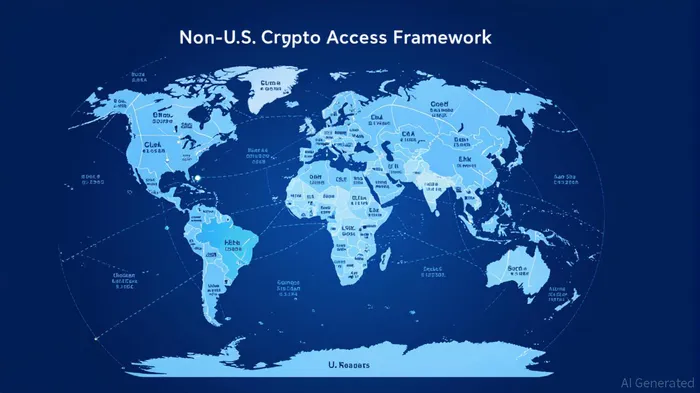
The CFTC's 2025 update now provides a clear pathway: non-U.S. exchanges registered under FBOT can offer direct market access to U.S. traders without registering as a Designated Contract Market (DCM) in the U.S. This eliminates the need for costly, redundant domestic entities and reduces regulatory friction. Acting Chair Caroline Pham emphasized that the change resolves "regulatory uncertainty" and aligns with President Trump's goal of reasserting U.S. leadership in crypto innovation.
Implications for Market Liquidity and Competition
The most immediate impact is a surge in liquidity. U.S. traders, previously confined to smaller domestic platforms, can now access deep liquidity pools on global exchanges. For example, Binance's order books for BitcoinBTC-- and EthereumETH-- are among the deepest in the world. This shift could reduce price discrepancies between U.S. and global markets, which often widened during periods of high volatility.
Moreover, the CFTC's move fosters competition. U.S. exchanges like CoinbaseCOIN-- and Kraken, which have long operated under stricter domestic regulations, now face direct competition from global peers offering lower fees, faster execution, and a broader range of products (e.g., leveraged tokens, perpetual futures). This pressure could drive innovation and cost reductions across the board.
Investment Opportunities in a Borderless Market
For investors, this regulatory shift unlocks new opportunities:
- Access to Global Liquidity: U.S. traders can now participate in markets with tighter spreads and higher trading volumes, potentially improving returns on spot and derivative trades.
- Diversification of Exposure: Non-U.S. exchanges often list a wider array of altcoins and DeFi tokens, allowing investors to diversify beyond the "blue-chip" assets available on domestic platforms.
- Structural Alpha for Compliant Exchanges: Exchanges that secure FBOT registration (e.g., Binance, Bybit) stand to gain significant market share. Investors should monitor their compliance progress and user adoption metrics.
However, risks remain. While the CFTC mandates that FBOT-registered exchanges operate under foreign regulators deemed "comparable" to U.S. standards, enforcement gaps could persist. Investors must weigh the benefits of global access against potential regulatory or operational risks.
Strategic Considerations for Investors
- Rebalance Portfolios Toward Global Platforms: Consider allocating a portion of crypto holdings to accounts on FBOT-registered exchanges to access deeper liquidity and a broader range of products.
- Monitor Regulatory Developments: The CFTC's "crypto sprint" is likely to generate further changes. Stay informed about updates to FBOT requirements or new enforcement actions.
- Leverage Derivatives and Structured Products: Global exchanges often offer advanced derivatives (e.g., perpetual futures, options) that can hedge against volatility or amplify returns in a diversified portfolio.
Conclusion: A Win for Innovation, a Test for Regulation
The CFTC's regulatory shift is a win for U.S. investors and a test for global regulators. By embracing the FBOT framework, the U.S. is positioning itself as a hub for crypto innovation while ensuring market integrity. For investors, this means a more competitive, liquid, and accessible market—but also a need for vigilance in navigating the evolving regulatory landscape.
As the dust settles, one thing is clear: the U.S. crypto market is no longer an island. The era of global liquidity is here, and investors who adapt will reap the rewards.

Delivering real-time insights and analysis on emerging financial trends and market movements.
Latest Articles
Stay ahead of the market.
Get curated U.S. market news, insights and key dates delivered to your inbox.




Comments
No comments yet