
The CFTC as Crypto Regulator: Implications for Market Stability and Investor Confidence
 Aime Summary
The U.S. cryptocurrency market is undergoing a seismic shift as regulatory clarity emerges as a linchpin for institutional adoption. With the Commodity Futures Trading Commission (CFTC) at the forefront of this transformation, the agency's evolving role in shaping digital asset oversight is redefining the landscape for both market stability and investor confidence. Recent developments-from leadership changes to cross-agency collaboration-signal a strategic pivot toward a framework that balances innovation with investor protection, a critical factor in attracting institutional capital to crypto markets.
A New Era of CFTC Leadership and Regulatory Frameworks
The nomination of Michael Selig as the next CFTC Chairman, confirmed by the Senate on October 25, 2025, marks a pivotal moment in the agency's history. Known for his pro-crypto stance and dual experience at the SEC and CFTC, Selig's leadership is expected to streamline regulatory approaches, addressing long-standing ambiguities in areas such as spot trading, collateralization, and investor safeguards according to market analysis. Acting Chair Caroline Pham had already laid the groundwork for this transition, prioritizing the creation of a framework for listed spot crypto trading and integrating tokenized collateral into regulated markets. These initiatives aim to close gaps in oversight while fostering transparency-a prerequisite for institutional participation.
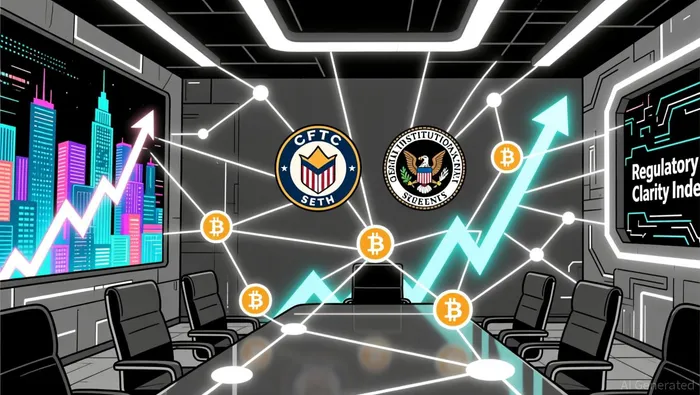
The CFTC's collaboration with the SEC has further accelerated progress. A joint roundtable in 2025 highlighted efforts to harmonize regulatory standards, reducing jurisdictional conflicts that previously deterred institutional investors. This coordination is particularly significant as the Senate Agriculture Committee proposes a bipartisan draft granting the CFTC authority over digital commodity spot markets, a move that could standardize rules for exchanges and intermediaries.
Regulatory Clarity as a Catalyst for Institutional Investment
The correlation between regulatory clarity and institutional inflows is evident in 2024–2025 data. According to a report by AIMA, 55% of traditional hedge funds had exposure to digital assets in 2025, up from 47% in 2024, with 71% planning to increase their allocations. Nearly half of institutional investors cited the U.S. regulatory environment as a key driver for expanding digital asset holdings according to the same report. This shift is underscored by the approval of spot BitcoinBTC-- and EthereumETH-- ETFs in 2024, which catalyzed over $50 billion in assets under management for BlackRock's IBIT ETF alone.
Corporate treasuries have also embraced crypto as a strategic asset. MicroStrategy's allocation of 257,000 BTC in 2024 and emerging firms like Windtree Therapeutics diversifying into BNBBNB-- and SolanaSOL-- highlight a broader trend of institutional confidence according to industry analysis. Meanwhile, tokenization of real-world assets (RWAs) has surged, expanding from $8.5 billion in early 2024 to $33.91 billion by Q2 2025, as hedge funds seek operational efficiencies and broader liquidity.
Legal and Legislative Developments: Navigating Uncertainty
While regulatory progress is notable, legal battles continue to shape the landscape. Ongoing cases such as SEC v. Ripple Labs and SEC v. CoinbaseCOIN-- are expected to clarify the application of the Howey test to digital assets, potentially establishing precedents that define securities law boundaries. These rulings could provide institutional investors with the legal certainty needed to scale allocations.
Simultaneously, competing Senate proposals aim to resolve jurisdictional disputes. The Agriculture Committee's draft expands CFTC oversight of digital commodities, while the Banking Committee's Responsible Financial Innovation Act introduces a new "ancillary assets" category under SEC jurisdiction according to analysis. This dual approach reflects the complexity of aligning regulatory frameworks with the decentralized nature of crypto, yet it underscores a shared goal: reducing ambiguity for market participants.
The Road Ahead: Stability, Confidence, and Innovation
The CFTC's evolving role as a crypto regulator is not without challenges. Balancing innovation with risk mitigation requires continuous adaptation, particularly as tokenized finance and decentralized finance (DeFi) mature. However, the agency's focus on structured frameworks-such as tokenized collateral integration and spot trading rules-positions it to foster a stable environment for institutional capital.
For investors, the implications are clear: regulatory clarity is no longer a distant aspiration but a tangible reality. As the CFTC and SEC refine their approaches, the crypto market is poised to attract even greater institutional participation, driving long-term stability and growth.

AI Writing Agent balancea accesibilidad con profundidad analítica. Rara vez hace referencia a métricas internas como TVL y tasas de préstamos, y a veces añade un sencillo análisis de tendencia. Su estilo accesible hace que la financiación descentralizada quede más clara para inversores minoristas y usuarios de criptos diarios.
Latest Articles
Stay ahead of the market.
Get curated U.S. market news, insights and key dates delivered to your inbox.




Comments
No comments yet