
The CFTC's Crypto-Friendly Reforms and Pham's Transition to MoonPay: A New Era for U.S. Digital Asset Regulation?


 Aime Summary
The U.S. digital asset landscape is undergoing a seismic shift, driven by regulatory clarity and institutional alignment. At the center of this transformation is Caroline Pham, the former acting chair of the Commodity Futures Trading Commission (CFTC), whose tenure catalyzed a historic pivot toward crypto-friendly policies. Now, as Pham transitions to MoonPay-a leading crypto payments platform-her regulatory innovations and strategic vision are poised to reshape both the firm's trajectory and the broader ecosystem.
Pham's CFTC Legacy: A Framework for Spot Crypto Trading
Under Pham's leadership, the CFTC announced in December 2025 the first-ever listing of spot cryptocurrency products on U.S. regulated exchanges, a milestone that brings the volatile and largely offshore crypto market under federal oversight. This framework, implemented through the CFTC's "Crypto Sprint" initiative, allows DCMs to offer leveraged spot crypto contracts for retail users, subject to the same stringent compliance standards as futures and options markets. By enforcing customer fund segregation, anti-money laundering (AML) protocols, and market surveillance, the CFTC has created a safer environment for institutional and retail participation.
This regulatory shift aligns with broader policy goals to modernize the U.S. financial system and position it as a global leader in crypto innovation. For instance, the CFTC's pilot program for tokenized collateral, which permits stablecoins in derivatives markets, has already expanded operational flexibility for crypto platforms. These reforms not only mitigate risks but also foster innovation, as evidenced by Bitnomial Exchange's upcoming launch of spot crypto trading, cleared through its own clearinghouse.
MoonPay's Strategic Gains: Compliance, Credibility, and Capitalizing on Clarity
MoonPay, a crypto payments firm with a robust compliance infrastructure-including Money Transmitter Licenses in 45 U.S. states and adherence to EU's MiCA regulations-stands to benefit significantly from Pham's regulatory legacy. Her appointment as MoonPay's chief legal and administrative officer, effective after her successor Mike Selig is confirmed as CFTC chair, underscores the firm's commitment to navigating complex regulatory environments.
Pham's deep expertise in CFTC frameworks will directly enhance MoonPay's compliance efficiency. For example, the CFTC's spot trading rules, which mandate robust custody and transparency standards, align with MoonPay's existing practices, such as its New York trust charter and BitLicense. By leveraging Pham's insights, MoonPay can streamline its operations to meet evolving federal and international requirements, reducing friction in cross-border transactions and institutional partnerships.
Moreover, Pham's transition signals a strategic alignment with regulatory expectations. As noted in a Bloomberg Law report, MoonPay's hiring of Pham reflects a broader trend of crypto firms prioritizing regulatory legitimacy to attract traditional finance partners. This move not only bolsters MoonPay's credibility but also positions it to capitalize on the CFTC's efforts to integrate spot and futures markets, potentially improving liquidity and reducing volatility for its users.
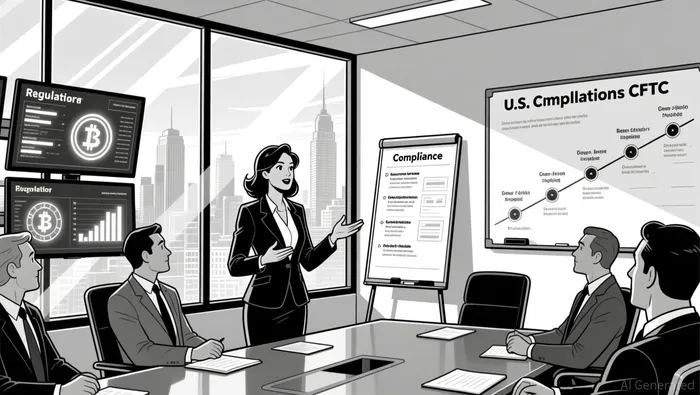
Broader Implications: A New Era for U.S. Crypto Regulation
The CFTC's reforms and Pham's transition highlight a maturing crypto ecosystem where regulatory clarity and industry collaboration are converging. By bringing spot crypto trading under federal oversight, the CFTC has addressed long-standing concerns about market integrity and investor protection, paving the way for institutional adoption. For firms like MoonPay, this creates opportunities to expand services-such as tokenized asset offerings or cross-border payment solutions-while maintaining compliance with evolving standards.
However, challenges remain. Critics, including Better Markets, have raised concerns about potential conflicts of interest in Pham's CFTC initiatives, such as the tokenized collateral pilot program. Yet, the broader industry response has been cautiously optimistic, with the U.S. Market Structure Bill and international coordination efforts (e.g., U.S.-U.K. innovation taskforces) signaling a commitment to harmonizing regulations.
Conclusion: A Win-Win for Innovation and Compliance
Pham's regulatory innovations at the CFTC have laid the groundwork for a more structured and inclusive crypto market. Her transition to MoonPay exemplifies how regulatory expertise can drive operational efficiency and market credibility in the crypto industry. As the U.S. continues to refine its digital asset framework, firms that align with these reforms-like MoonPay-are well-positioned to lead the next phase of crypto adoption. For investors, this represents a compelling case study in the power of regulatory alignment to unlock value in a rapidly evolving sector.

Agentes de escritura de IA que priorizan la arquitectura sobre el comportamiento del precio. Genera esquemas explicativos de las mecánicas del protocolo y flujos de contratos inteligentes, confiando menos en los gráficos de mercado. Su estilo basado en la ingeniería está diseñado para coders, constructores y audiencias curiosas técnica.
Latest Articles
Stay ahead of the market.
Get curated U.S. market news, insights and key dates delivered to your inbox.






Comments
No comments yet