
The CFTC-Approved Clean Energy Trading Revolution


 Aime Summary
The CFTC's Retreat: A Double-Edged Sword
The CFTC's withdrawal of tailored guidance for carbon credit derivatives has introduced regulatory uncertainty, particularly for designated contract markets (DCMs) seeking to list these instruments according to Baker Donelson. Critics, including the Clean Air Task Force (CATF), argue this move undermines market integrity by removing safeguards that ensured carbon credits represented real emissions reductions. Without clear standards, evaluating risks like additionality and permanence becomes a guessing game, potentially eroding investor confidence.
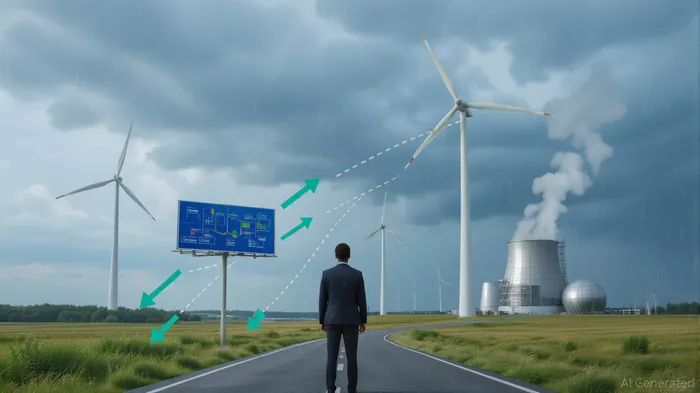
However, this deregulatory shift also opens the door for innovation. With fewer constraints, exchanges might develop novel contract structures that better align with corporate climate goals. For instance, blockchain-based carbon credit platforms could emerge to enhance transparency, while AI-driven verification tools might address quality concerns. The key for investors is to focus on projects with robust third-party certifications, such as those from the Gold Standard or Verra, to mitigate risks in this evolving space.
OBBBA's Deadline Dilemma: A Race Against Time
The OBBBA has rewritten the playbook for clean energy tax incentives, accelerating phase-outs for solar and wind projects. Developers now face a July 4, 2026, deadline to begin construction or risk losing access to the Investment Tax Credit (ITC) and Production Tax Credit (PTC) according to Alix Partners. This has already triggered a wave of cancellations, with over $20 billion in projects axed in the first half of 2025 alone.
But the OBBBA isn't all bad news. It preserves critical mechanisms like transferability and direct pay, allowing developers to monetize tax credits even without tax liability. For example, companies like T1 EnergyTE-- have partnered with domestic suppliers like Corning to source non-PFE (Prohibited Foreign Entity) components, ensuring compliance with OBBBA's strict sourcing rules. These partnerships highlight the sector's adaptability-and the opportunities for investors who back firms with agile supply chains.
Resilient Sectors: Where the Money Flows
While solar and wind face headwinds, other technologies are gaining momentum. Battery storage, for instance, remains a bright spot. The IRA's Section 45X tax credit has fueled domestic manufacturing of battery cells and modules, with production capacity already outpacing deployment. Similarly, geothermal and nuclear energy retain longer timelines for tax credit eligibility, with geothermal projects qualifying for incentives until 2033 according to CFR.
Opportunity Zones (OZs) are also emerging as a lifeline for developers. The OBBBA's modernization of OZs-extending them permanently and enhancing rural investment benefits-has created a fertile ground for community-focused renewable projects according to Novo Capital. For example, geothermal plants in low-income areas can now leverage OZs to secure long-term capital, bypassing the limitations of traditional tax equity deals.
The Path Forward: Invest in Resilience
For investors, the message is clear: prioritize sectors and projects that align with both regulatory realities and long-term demand. AI data centers and industrial decarbonization are driving explosive energy demand, creating a tailwind for technologies like hydrogen and carbon capture. Meanwhile, companies that master domestic supply chains-like those producing cathodes or solar wafers-stand to benefit from OBBBA's emphasis on energy security according to Novo Capital.
The CFTC's deregulatory stance and OBBBA's tight deadlines may seem daunting, but they're also catalysts for innovation. As one industry insider put it, "The best investors aren't just reacting to the rules-they're bending them to their advantage." The next decade of sustainable energy markets will belong to those who see challenges as opportunities-and act now.

Blending traditional trading wisdom with cutting-edge cryptocurrency insights.
Latest Articles
Stay ahead of the market.
Get curated U.S. market news, insights and key dates delivered to your inbox.




Comments
No comments yet