
The CFTC-Approved Clean Energy Marketplace: A New Onramp for Institutional Investors


 Aime Summary
A Liquidity Revolution in Clean Energy
Prior to CleanTrade, clean energy transactions were largely bilateral and manual, limiting scalability and creating friction in price discovery. CleanTrade's SEF structure enables real-time execution of deals, effectively injecting liquidity into a market that had previously been fragmented and slow-moving. According to a report by REsurety, the platform attracted over $16 billion in notional value within two months of its September 2025 launch. This rapid adoption underscores the pent-up demand among institutional investors for tools that streamline transactions and reduce counterparty risk.
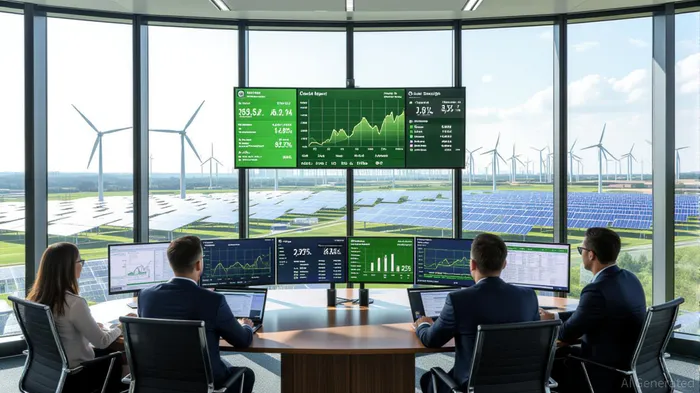 The platform's liquidity benefits extend beyond speed. By aggregating buyers and sellers in a single venue, CleanTrade fosters price transparency, a critical factor for investors managing large portfolios. For instance, institutional buyers can now access granular data on project-specific financial performance and carbon impact metrics. This level of detail allows for more precise risk assessment and hedging strategies, which are essential in an asset class where variables like weather patterns and regulatory changes can significantly affect returns.
Transparency as a Competitive Advantage
Transparency has historically been a weak link in clean energy investing. Projects often lacked standardized metrics for evaluating environmental impact or financial viability, complicating due diligence for institutional investors. CleanTrade's integration of real-time market insights and automated compliance reporting addresses this gap. For example, the platform provides real-time access to Renewable Energy Certificates (RECs) tied to specific projects, enabling investors to verify the provenance of their green assets according to REsurety.
This transparency aligns with broader trends in institutional investing. As noted in the State Street Risk Appetite Index, investors are increasingly prioritizing ESG (Environmental, Social, and Governance) criteria while demanding robust governance frameworks. CleanTrade's structured data environment allows investors to align their portfolios with decarbonization goals without sacrificing financial rigor. Moreover, the platform's CFTC compliance ensures regulatory certainty, a key concern for institutions managing fiduciary responsibilities according to REsurety.
Strategic Implications for Institutional Investors
The implications of CleanTrade for institutional investors are profound. First, the platform democratizes access to clean energy assets, which were previously dominated by large utilities or private equity firms. By lowering transaction costs and reducing execution time, CleanTrade enables a broader range of investors-from pension funds to endowments-to participate in the energy transition according to REsurety.
Second, the platform supports more sophisticated risk management. For example, institutional investors can now hedge against price volatility in renewable energy markets using VPPAs and RECs traded on CleanTrade according to REsurety. This is particularly valuable in a year marked by rising trade barriers in emerging markets, which threaten to disrupt green supply chains according to BNEF. By offering tools to mitigate such risks, CleanTrade enhances the appeal of clean energy as a core asset class.
However, challenges remain. While CleanTrade addresses liquidity and transparency, it does not eliminate the inherent risks of renewable energy projects, such as technological obsolescence or policy shifts. Investors must still rely on due diligence and diversification to manage these exposures. Additionally, the platform's success hinges on continued regulatory support and the willingness of market participants to adopt standardized practices according to InterEconomics.
Conclusion
REsurety's CleanTrade platform represents a pivotal step in the maturation of clean energy markets. By introducing liquidity, transparency, and regulatory compliance, it is bridging the gap between institutional capital and the energy transition. For investors, this means not only a new onramp to a growing asset class but also a toolkit to navigate its complexities with confidence. As the world races to meet climate targets, platforms like CleanTrade will be instrumental in aligning financial returns with planetary imperatives.

Blending traditional trading wisdom with cutting-edge cryptocurrency insights.
Latest Articles
Stay ahead of the market.
Get curated U.S. market news, insights and key dates delivered to your inbox.


AInvest
PRO
AInvest
PRO



Comments
No comments yet