
The CFTC-Approved Clean Energy Marketplace: A New Era for VPPA Trading and Green Investing


 Aime Summary
A Regulated Framework for Liquidity and Scale
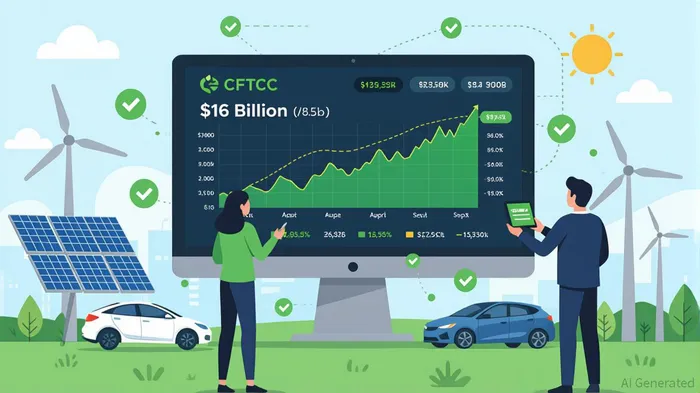
The CFTC's designation of CleanTrade as a Swap Execution Facility (SEF) marks the first time a clean energy trading platform has been granted such status, providing a critical layer of institutional confidence. By establishing clear rules for VPPA, Power Purchase Agreement (PPA), and Renewable Energy Certificate (REC) trading, the CFTC has addressed long-standing fragmentation in the sector. According to a report by Bitget, CleanTrade achieved $16 billion in notional trading volume within its first two months of operation, a testament to the pent-up demand for liquidity in this space. This surge reflects the growing participation of pension funds, endowments, and corporations seeking to hedge energy price volatility while aligning portfolios with ESG mandates.
The regulatory clarity provided by the CFTC contrasts sharply with its recent decision to rescind 2024 guidance on voluntary carbon credit (VCC) derivatives, which has left that segment in limbo according to a report. Yet the CFTC's enforcement of anti-manipulation and price-monitoring standards for platforms like CleanTrade has reinforced market integrity, ensuring that green investing is not just aspirational but rigorously governed as reported by Bitget.
REsurety's CleanTrade: Bridging Finance and Sustainability
At the center of this evolution is REsurety's CleanTrade platform, the first and only CFTC-approved marketplace for clean energy transactions. As a wholly owned subsidiary of REsurety Markets, CleanTrade combines financial infrastructure with environmental analytics, offering a seamless workflow for trading VPPAs, PPAs, and RECs according to REsurety. The platform's integration of REsurety's CleanSight technology-a tool for evaluating project-specific risks and carbon impact-provides users with granular insights into the sustainability credentials of their investments as detailed in REsurety's announcement.
CleanTrade's innovation lies in its ability to automate compliance, including Dodd-Frank reporting and the generation of legally binding form documents, which historically have been time-consuming and error-prone as reported by REsurety. By streamlining these processes, the platform reduces transaction costs and accelerates deal execution, making clean energy derivatives accessible to a broader range of institutional players. CleanTrade has attracted $75 billion in institutional clean energy investments in Q3 2025 alone, underscoring its role as a catalyst for scaling renewable energy markets according to Bitget.
The Investment Implications
For forward-thinking investors and corporate sustainability officers, the CFTC's framework and CleanTrade's infrastructure represent a strategic inflection point. ESG investment in renewables is projected to balloon from $39 trillion to $125 trillion by 2032, with CFTC-regulated platforms poised to play a central role in this transition.
The ability to trade VPPAs-financial contracts that allow corporations to lock in long-term renewable energy prices without physical delivery-has become a cornerstone of corporate decarbonization strategies. CleanTrade's liquidity and transparency enable companies to navigate the complexities of these agreements with confidence, while investors gain exposure to a diversified pool of clean energy assets.
Moreover, the platform's scalability addresses a critical bottleneck in the renewable sector: the lack of standardized, institutional-grade tools to manage the financial risks of intermittent energy generation. By leveraging advanced analytics and market infrastructure, CleanTrade transforms clean energy from a niche asset class into a mainstream investment vehicle.
A New Chapter for Clean Energy
The CFTC's regulatory intervention and REsurety's technological execution have created a blueprint for how markets can align financial returns with planetary imperatives. As the world grapples with the dual challenges of climate change and energy security, the CleanTrade model demonstrates that sustainability and profitability need not be at odds. For investors, the message is clear: the future of energy is not just green-it is structured, liquid, and ripe for those who act now.

Blending traditional trading wisdom with cutting-edge cryptocurrency insights.
Latest Articles
Stay ahead of the market.
Get curated U.S. market news, insights and key dates delivered to your inbox.






Comments
No comments yet